
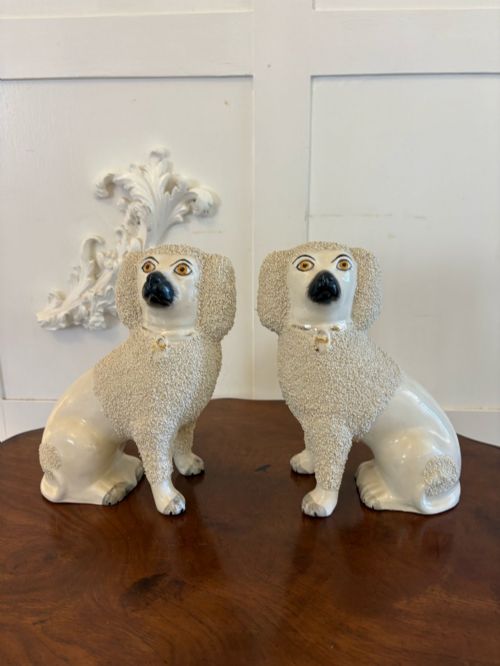
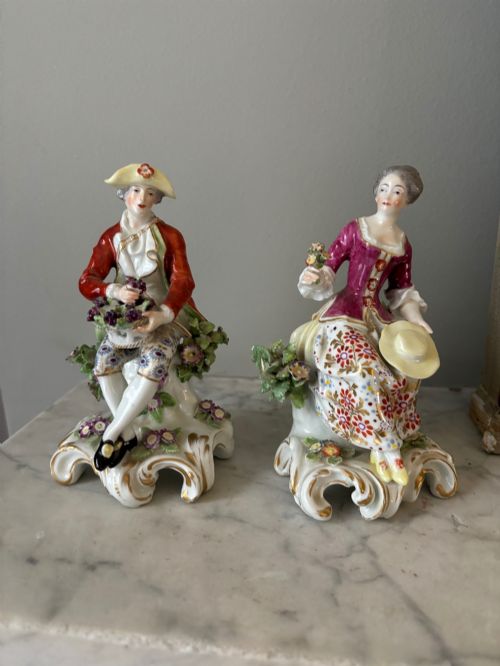

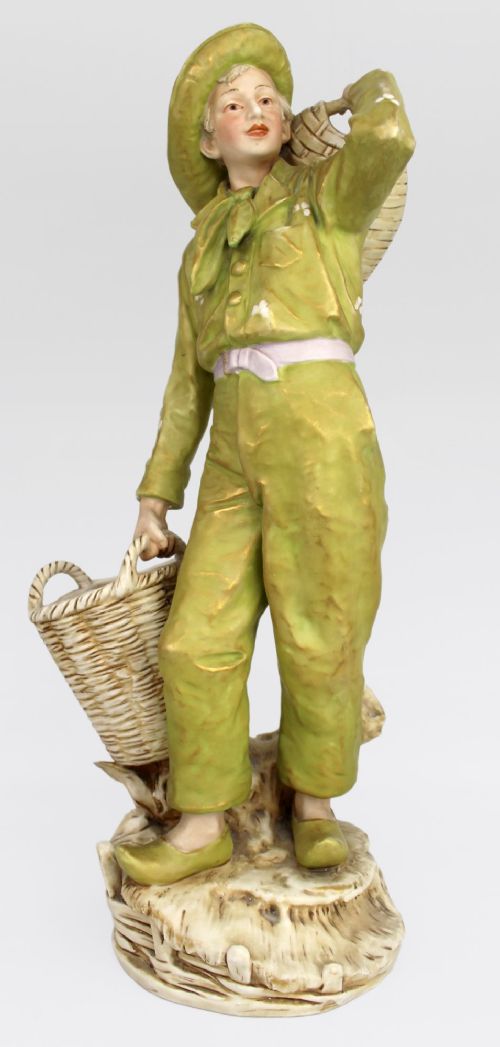


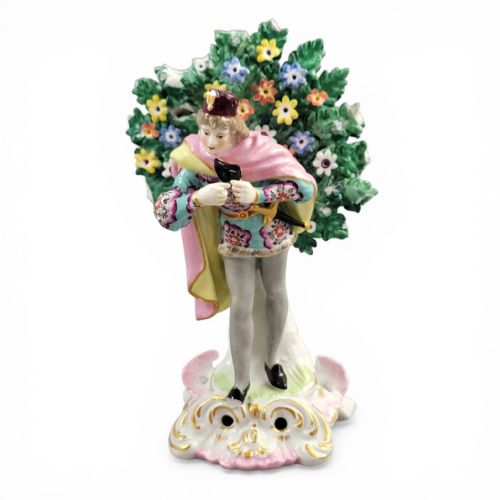


Gilded Ceramic Statuettes
These gilded ceramic statuettes bring theatrical figures, animals and allegorical scenes into the room with metallic highlights.
Gilded Ceramic Statuettes
Gilded ceramic statuettes encompass porcelain and earthenware figures shaped into human characters, mythological subjects, animals and allegorical groups. Buyers looking for gilded ceramic statuettes encounter work spanning the eighteenth and nineteenth centuries, originating from English potteries and continental European factories.
The pieces on this page are most commonly nineteenth-century Continental porcelain figures and English factory productions, often decorated with hand-painted enamel and gold leaf. Many nineteenth-century examples emulate earlier eighteenth-century designs from factories like Chelsea, Meissen and Derby.
Forms range from small single figures of rustic characters and actors to large pairs of musicians, children and orientalist subjects. These objects served primarily as decorative table ornaments and mantelpiece displays during the Georgian and Victorian eras.
How they were made
Makers utilised soft-paste and hard-paste porcelain bodies, shaping the ceramic figures in multiple moulds before applying liquid clay details and hand-painting the surfaces with enamel colours. Firing took place in ceramic kilns to fix the glaze and pigments.
Gilding was applied using gold leaf, liquid gold or gold paint, which required a subsequent lower-temperature firing to bond the metal to the glazed ceramic surface. Artisans then burnished the gold highlights to create a polished metallic contrast against the white porcelain and coloured enamels.
Several eighteenth-century ceramic groups immortalise rustic musicians, playing violins and hurdy-gurdies while ignoring their grazing farm animals.
What varies in quality
The application and burnishing of the gilding separate standard production from exceptional work, with higher-grade pieces displaying thick, neatly contained gold leaf rather than dull or rubbed paint. The weight of the porcelain body and the complexity of multi-figure compositions also dictate the standing of the piece.
Royal Worcester·Meissen·Derby·Chelsea·Samson Paris·Sitzendorf·Edme Sampson·Royal Dux Bohemia·Volkstedt·Ludwigsburg·Carl Thieme Dresden·Ernst Wahliss·Helena Wolfsohn·Letu and Mauger
The Gilded Ceramic Statuettes Glossary
- Hard-paste porcelain
- A dense, vitrified ceramic compound fired at high temperatures using kaolin and petuntse. It produces a durable body that resists scratching and absorbs very little water.
- Soft-paste porcelain
- An artificial ceramic mixture fired at lower temperatures, common in eighteenth-century English factories. It has a warmer, softer appearance and a slightly porous body beneath the glaze.
- Gilding
- The application of gold leaf, powder or liquid to the surface of the ceramic. Burnishing tools are often used afterwards to polish the gold to a bright sheen.
- Enamel
- Coloured vitreous glass fused to the surface of fired porcelain during a secondary low-temperature kiln firing. It provides the vibrant palette seen on garments and facial details.
- Paste
- The specific ceramic formula or body used by a pottery to form the base of the figurine before glazing and decoration.
Gilded Ceramic Statuettes: Frequently Asked Questions
How do I identify a reproduction figure?
Examine the base, glaze texture, and gilding quality under good light to understand the manufacturing period. Earlier pieces often show kiln stilt marks, unglazed foot rims, and hand-mixed enamels that differ from modern chemical pigments.
Factory marks can help, but many nineteenth-century French and German factories intentionally copied earlier eighteenth-century marks. Compare the sharpness of the moulding and the weight of the porcelain body against verified examples from the same period.
What is the difference between soft-paste and hard-paste?
Hard-paste porcelain is fired at much higher temperatures, resulting in a robust, vitrified body that resists scratching with a steel blade. Soft-paste is an earlier European formulation containing glass frit and white clay, which fires at lower temperatures and presents a warmer, slightly creamy texture.
Under magnification, soft-paste often shows pooling in the glaze where it gathered in crevices. Hard-paste exhibits a harder, colder brilliance that does not scratch easily.
How should I clean these porcelain figures?
Dust the figures gently using a soft, dry artist's paintbrush or a feather duster. Avoid using water, detergents, or chemical solvents, as these can damage old enamel paints and lift fragile nineteenth-century gilding.
Keep the pieces out of direct sunlight to prevent the hand-painted enamel colours from fading over time. Ensure they are placed on stable, vibration-free surfaces away from high-traffic edges.
Why do some figures have anchor marks?
Anchor marks are most famously associated with the eighteenth-century Chelsea porcelain factory in London. A gold anchor indicates a piece made during the factory's peak period between roughly 1756 and 1769.
Later nineteenth-century makers, particularly Samson of Paris, reproduced these exact anchor marks on their revival pieces. Evaluating the paste body and painting style helps determine whether a piece is an original eighteenth-century work or a later Continental copy.