



Salt Glazed Stoneware Pottery
Salt glazed stoneware pottery encompasses durable ceramic vessels defined by textured surfaces and historic origins.
Salt Glazed Stoneware Pottery
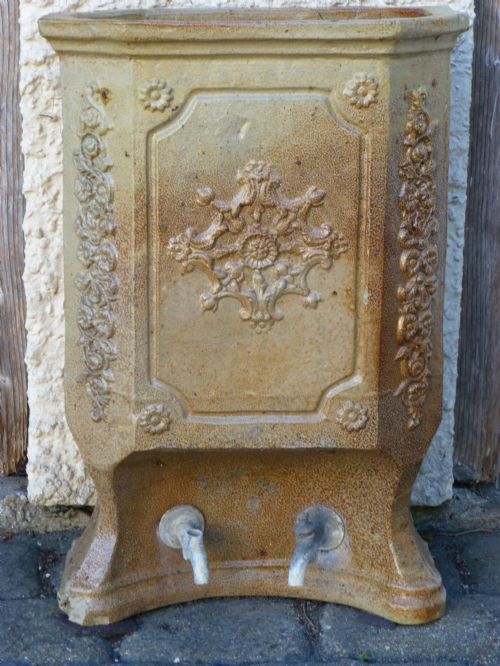
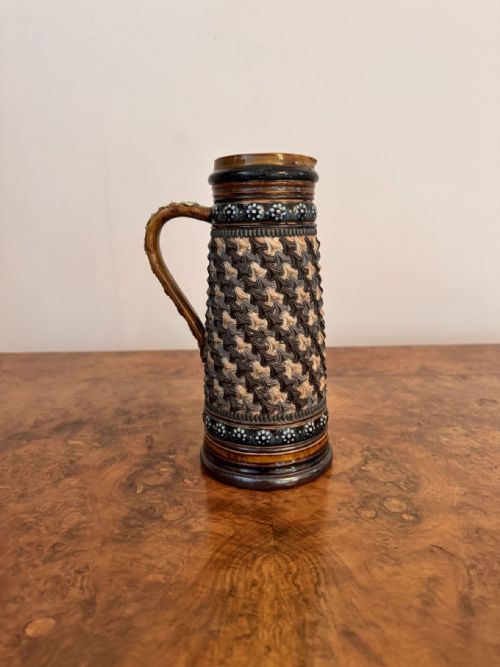
Salt glazed stoneware pottery comprises utility and decorative vessels including jugs, tankards, water filters, and garden ornaments spanning multiple centuries. Buyers searching for salt glazed stoneware pottery frequently encounter Victorian examples alongside continental pieces originating from German kilns.
Production and materials
Potters shaped dense clay bodies into utilitarian and decorative forms before introducing salt directly into the kiln fire during high temperature firing. This chemical reaction produced the characteristic orange-peel textured glaze across the ceramic surface.
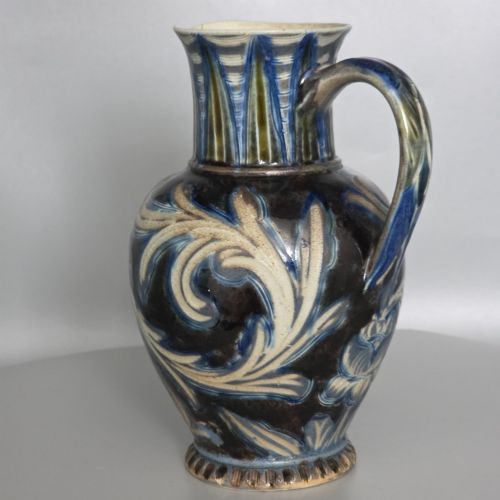
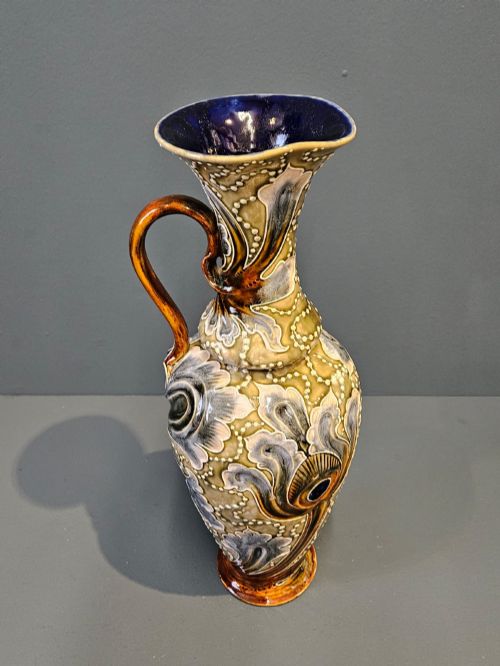
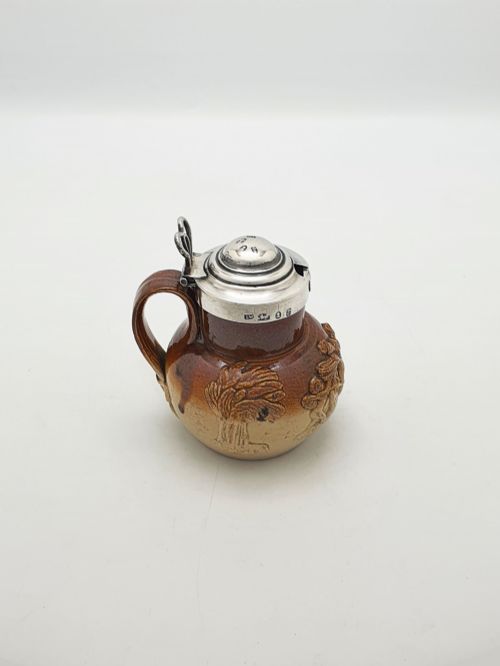
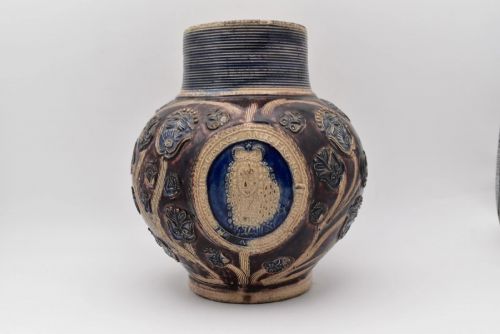
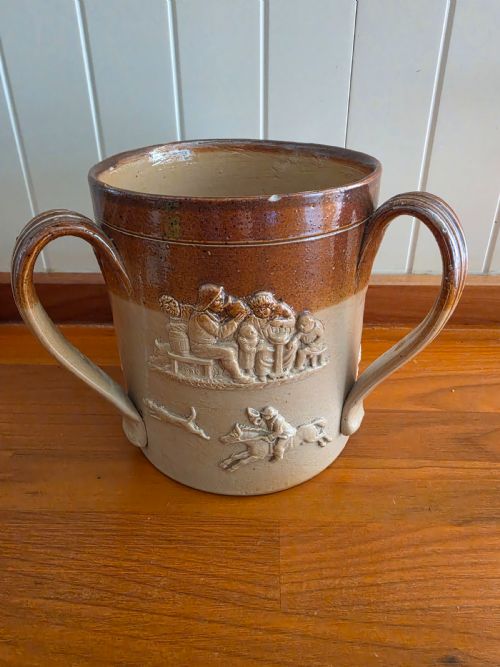
Many English and continental pieces received additional surface detail through cobalt decoration, sprigged relief moulding, or incised patterns. Workshop production frequently incorporated applied silver or plated collars and hinged lids on drinking vessels.
Materials appearing across current items include basic clay, cobalt oxide, and applied sterling silver collars.
Assessing craftsmanship and execution
Quality separates standard utilitarian storage vessels from exhibition pieces created by named artists working within established potteries. Crispness in incised ornamentation, depth of cobalt application, and the integration of precious metal mounts indicate higher execution levels.
Balance in form and the successful distribution of the salt glaze texture across complex surfaces distinguish superior examples. Pieces bearing specific studio signatures or commemorative historical ciphers generally reflect greater artisan involvement.
Doulton Lambeth·Emma Shute·Emily Stormer·C & A Painter·Fulham Pottery·Florence Barlow·C.J.C. Bailey·Roger Guerin
The Salt Glazed Stoneware Pottery Glossary
- Stoneware
- A dense, hard ceramic fired at high temperatures until vitrified and completely non-porous. It withstands liquids without requiring internal glazing.
- Salt glaze
- A surface finish created by throwing common salt into the kiln during firing, which vaporizes and reacts with the silica in the clay. This process leaves a pitted, glossy texture resembling orange peel.
- Cobalt
- A blue metallic oxide used under the glaze to paint decorative motifs onto stoneware bodies. It maintains stability under intense kiln heat.
- Sprigged
- A technique where separately moulded clay reliefs are applied to the unfired vessel body using slip as an adhesive. These raised ornaments often depict heraldic ciphers or floral motifs.
- Bartmann jug
- A historic German stoneware vessel featuring a bearded mask applied to the neck, also known as a Bellarmine. These date primarily from the sixteenth and seventeenth centuries.
Salt Glazed Stoneware Pottery: Frequently Asked Questions
What is salt glazed stoneware?
Salt glazed stoneware is a hardy ceramic material created when salt is introduced into a hot kiln, fusing with the clay to form a vitreous, pebbled surface.
This chemical interaction produces a durable, waterproof barrier that requires no internal glaze lining for liquid storage.
How were these vessels used?
These vessels served primarily practical domestic and commercial functions, including holding ale, wine, water, and preserves in taverns and households.
Larger forms functioned as filtration units, storage jars, and garden ornaments, while finer decorated pieces marked royal jubilees or exhibition displays.
How do you date Westerwald pieces?
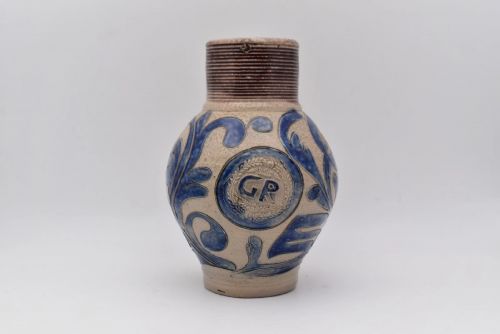
Westerwald pieces are dated by analyzing the specific Royal ciphers, such as GR for George Rex, stamped into the salt glaze body during manufacture.
Stylistic shifts in the cobalt floral motifs and the shape of the applied medallion masks also help determine the active production decade.
How should I clean my antique stoneware?
Antique stoneware requires gentle cleaning using warm water and a soft cloth to protect the historic surface texture and any attached metal mounts.
Harsh chemical detergents and abrasive brushes should be avoided to preserve the integrity of the original salt glaze and cobalt pigments.