




Relief Sprigged Stoneware
Relief sprigged stoneware pieces are tactile vessels and tableware adorned with distinct applied moulded ornament, offering exceptional historical character for the home.
Relief Sprigged Stoneware
Relief sprigged stoneware encompasses robust ceramic vessels and table objects featuring decorative motifs applied in relief onto the body before firing. These pieces span the nineteenth century, including Georgian, Regency, and Victorian eras.
How they were made
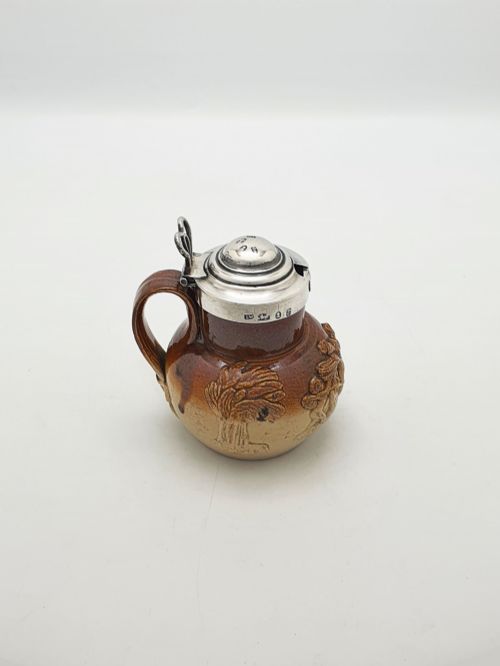
Potters shaped the dense ceramic bodies using stoneware and earthenware clays, frequently finishing pieces with salt glazes or smooth ceramic surfaces. Some functional items incorporate sterling silver collars and hinged lids.
Moulded decorative details, known as sprigs, were individually formed and pressed onto the unfired vessel body by hand before the entire piece underwent kiln firing.
Several heavy harvest jugs stand ready to pour ale, echoing nineteenth-century rural gatherings.
What varies in quality
Quality rests upon the crispness of the applied moulded ornament and the balance of the overall ceramic form. Finer examples display sharply defined sprigged details that adhere cleanly to the main body.
The inclusion of precious metal mounts, such as sterling silver rims or hinged lids, elevates the status of functional vessels like harvest jugs. Scale and coordination within graduated sets also dictate the tier of craftsmanship.
James Dudson·Doulton Lambeth·W. Hackwood·Wedgwood·Copeland Spode·Staffordshire
The Relief Sprigged Stoneware Glossary
- Sprigged
- A decorative technique where individually moulded clay motifs are applied to the surface of an unfired vessel. This method creates a pronounced three-dimensional effect against the background body.
- Salt glaze
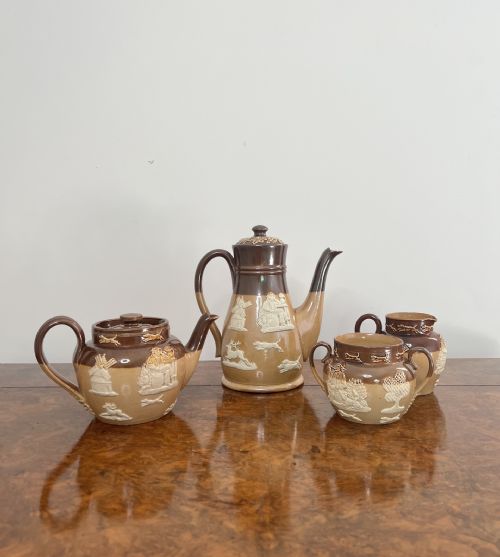
- A vitreous coating formed by throwing common salt into the kiln during high-temperature firing. This process produces a characteristic textured finish resembling orange peel.
- Jasperware
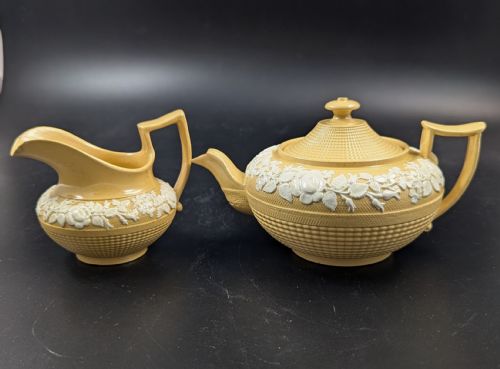
- A fine-grained, unglazed vitrified ceramic developed to display contrasting applied white reliefs against a coloured clay ground. It is frequently associated with neoclassical tableware and decorative objects.
- Harvest jug
- A large, robust ceramic vessel traditionally used for serving ale during agricultural gatherings. These pieces often feature hunting or rural scenes rendered in applied relief.
Relief Sprigged Stoneware: Frequently Asked Questions
How were these ceramic vessels used?
These ceramic pieces served primarily functional roles in nineteenth-century domestic life, ranging from pouring ale and milk to storing cheese. Large harvest jugs and mugs were standard fixtures for communal dining and social gatherings.
Finer tea sets and creamers fulfilled formal hospitality duties within the home, combining practicality with decorative appeal.
How do I care for antique stoneware?
Antique stoneware requires gentle handling, particularly pieces featuring delicate applied sprigs or attached sterling silver collars. Hand washing in warm water with mild soap preserves the ceramic body and any metal mounts.
Avoid abrasive scrubbers and harsh chemical cleaners to protect the original salt glazes and surface textures from damage.
How can I tell the period of a piece?
Dating these ceramics involves examining the clay body, glaze type, stylistic markers, and any maker marks or metal mounts present. Pieces range from early nineteenth-century Georgian and Regency examples to later Victorian salt-glazed and jasperware productions.
Comparing the form and decorative motifs with documented maker styles helps narrow down the production era.