



Sailing Vessel Picture
A sailing vessel picture captures the power and history of maritime travel, offering buyers a direct window into naval architecture and coastal life through oils and watercolours.
Sailing Vessel Picture
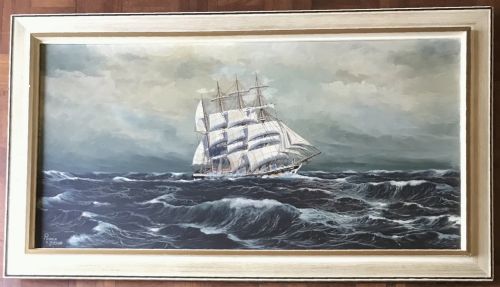
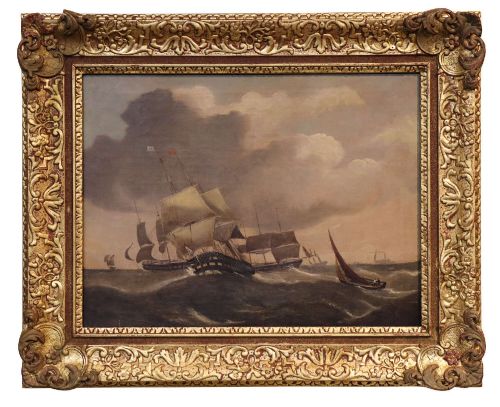
A sailing vessel picture spans works originating from the eighteenth century through to the mid-twentieth century, capturing ships upon the open sea, in busy harbours, and along coastal shores. These artworks record specific vessels like the clipper ship Garthpool alongside unnamed barques, junks, and fishing boats.
Buyers will most frequently encounter nineteenth-century works and Edwardian maritime watercolours, often housed in period wood, giltwood, or oak frames. The subjects range from heavy seas and dramatic marine scenes to calm harbour moorings and detailed ship portraits.
Materials and construction
Artists working on these maritime subjects relied primarily on oil on canvas and watercolour applied to paper, capturing the translucent qualities of water and the dense textures of billowing canvas sails. Many examples are framed in wood, gilt wood, or giltwood, protecting the fragile paper or canvas surfaces beneath glass.
The technique balances precise draughtsmanship of rigging and hull structures with looser, atmospheric brushwork used to render turbulent waves, stormy skies, and hazy coastal horizons.
One recorded painting captures a junk leaving the Pearl River, proving that artists were documenting global shipping lanes long before modern travel.
Judging quality and execution
The distinction between standard works and superior examples rests upon the artist's command of maritime anatomy, ensuring that masts, cordage, and hull proportions reflect genuine nautical knowledge. Stronger pieces convey motion and atmosphere convincingly, whereas lesser works treat the vessel as a rigid diagram rather than an active participant in the elements.
The handling of light and water separates fine paintings from routine topographical records, with master painters using subtle tonal shifts to describe foam, spray, and deep sea swells.
Ebeneezer Colls·Frank Wood·Samuel John Milton Brown·Thomas Bush Hardy·Edward Wesson
The Sailing Vessel Picture Glossary
- Barque
- A sailing vessel with three or more masts, having the foremast and mainmast square-rigged and the mizzenmast fore-and-aft rigged. This rig was common for long-distance cargo transport.
- China Trade
- Art produced in China primarily for Western markets, often depicting local harbours, junks, and Western trading vessels. These works combine Eastern painting techniques with European subject matter.
- Giltwood
- Wood carved and coated with a thin layer of gold leaf or gold paint. It frequently frames formal nineteenth-century marine paintings.
- Lithograph
- A print made from a flat stone or metal plate on which the image area is rendered ink-receptive. Sets of these prints were often produced to record notable ships.
- Watercolour
- A painting method in which the paints are made of pigments suspended in a water-based solution. It is typically applied to paper to achieve transparent washes of colour.
Sailing Vessel Picture: Frequently Asked Questions
How do I date a maritime painting?
Dating relies heavily on the rig and design of the depicted vessels, alongside the materials of the canvas, paper, and frame. Costume details of any figures on deck or shore also provide reliable chronological markers.
Signatures, inscriptions naming specific ships like the Garthpool, and historical events recorded in the title help narrow the decade of creation.
What is the difference between oil and watercolour marine art?
Oil paintings on canvas offer rich textures and deep tonal contrasts, allowing artists to render heavy seas and dramatic weather with physical body. They were traditionally suited for larger, formal compositions.
Watercolours on paper provide a lighter, more luminous quality well-suited for capturing coastal air, transparent water, and swift atmospheric shifts.
How should I care for antique watercolours?
Antique watercolours on paper require protection from direct sunlight to prevent the pigments and paper from fading and discolouring over time. Maintaining stable indoor humidity prevents foxing and mould growth.
Displaying them away from direct heat sources and using UV-filtering glass helps preserve the integrity of both the paper support and any original framing.
Are ship portraits historically accurate?
Many nineteenth-century ship portraits were commissioned by captains or owners who demanded strict accuracy regarding rigging, flag placement, and vessel dimensions. Artists often worked from direct observation or detailed plans.
However, dramatic scenes depicting heavy seas or naval battles may take artistic liberties with the weather and wave formations to heighten the emotional impact.