
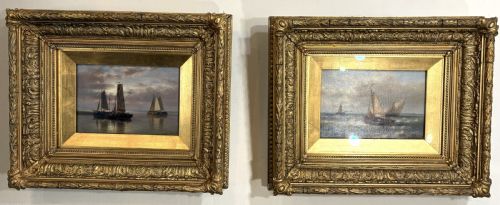


Sailing Boat Wall Art
Sailing boat wall art brings coastal atmospheres indoors through centuries of marine painting and diorama craft.
Sailing Boat Wall Art
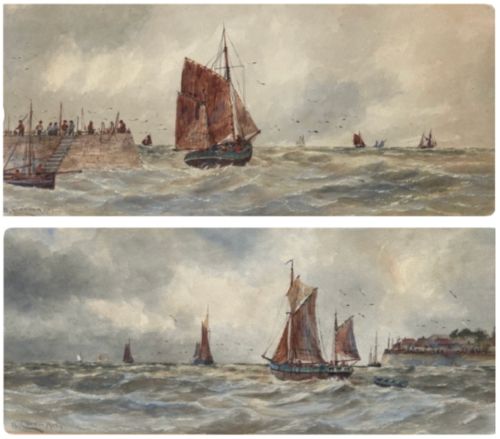
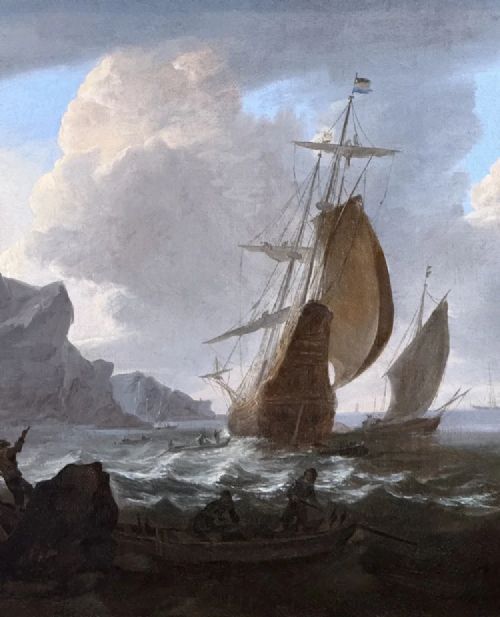
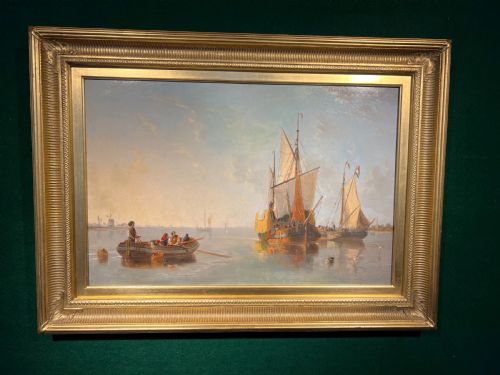
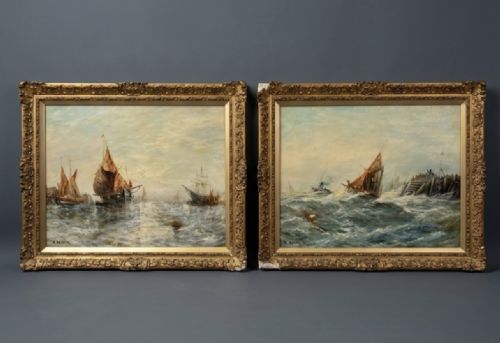
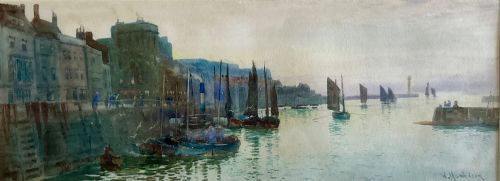
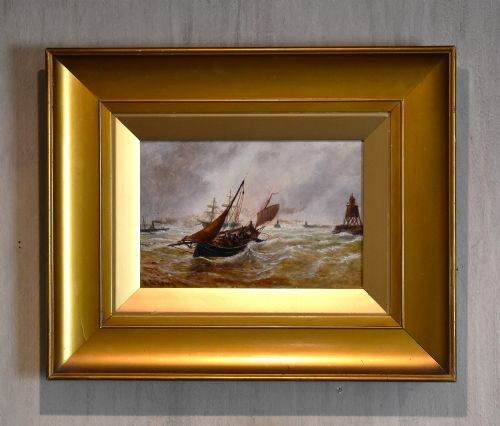
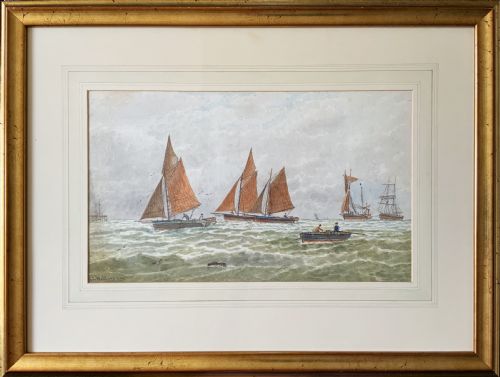
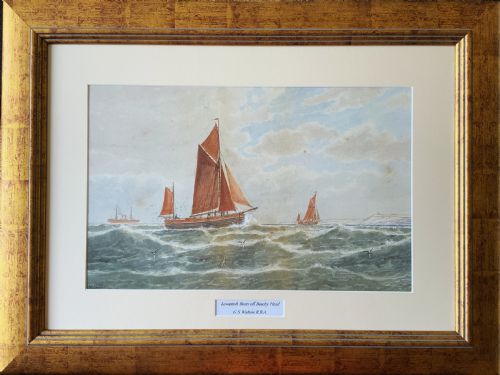
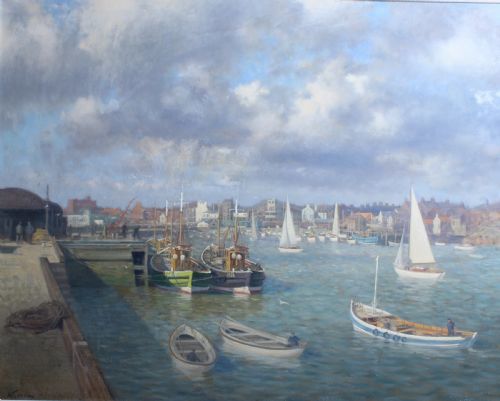
Sailing boat wall art spans traditional oil paintings, delicate watercolours, and detailed three-dimensional dioramas depicting maritime scenes. These works capture vessels navigating choppy seas, resting in bustling harbours, or caught in coastal squalls.
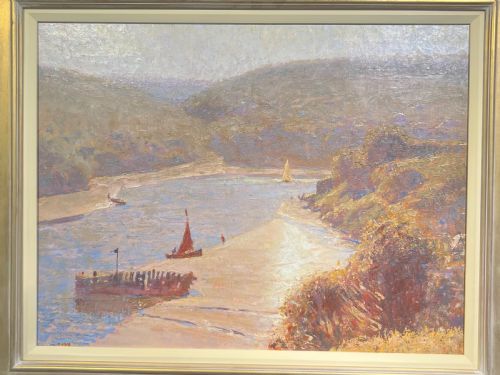
The selections here frequently draw from the nineteenth and early twentieth centuries, reflecting a period of intense artistic interest in shipping and coastal life. Works range from intimate watercolour studies to large canvases housed in gilt wood frames.
British and continental coastal views dominate the selection, showing specific locations such as Whitby, Lowestoft, and the Dutch coast. Buyers encounter both named artists of the marine school and anonymous regional practitioners.
Materials and Construction
Artists relied primarily on oil on canvas, oil on board, and watercolour on paper to record maritime subjects. Canvases often sit within heavy gilt wood frames, while works on paper utilise glass protection and paper mounts.
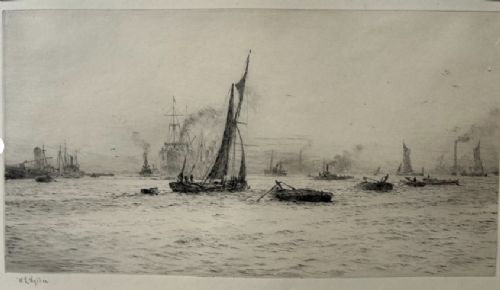
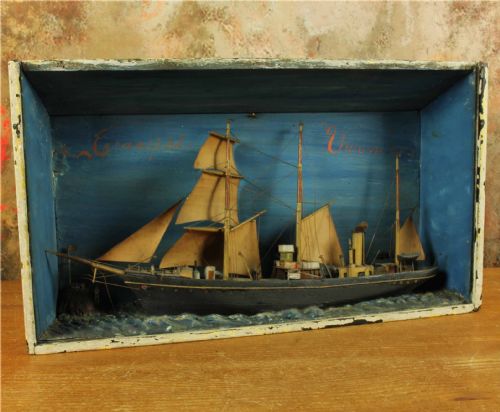
Three-dimensional pieces incorporate handmade boat models housed inside shadow boxes or dioramas utilising wood, canvas, and painted card. Etchings and aquatints introduce printed graphic techniques alongside hand-painted works.
A French diorama box preserves a tiny handmade ship sailing eternally inside its wooden enclosure.
Evaluating Quality
Quality rests upon the artist's command of maritime atmosphere, rigging accuracy, and the natural movement of water. Skilled hands render the weight of heavy swells and the play of light on canvas with convincing depth.
Materials contribute significantly to a piece's standing, distinguishing original watercolours and oils from later prints or photographic reproductions. The preservation of the paper, canvas, and original framing helps maintain the integrity of the work.
William Lionel Wyllie·Bernard Benedict Hemy·George Stanfield Walters·Abraham Hulk·Thomas Bush Hardy
The Sailing Boat Wall Art Glossary
- Diorama
- A three-dimensional scene enclosed in a box, often featuring a handmade model ship set against a painted background. These pieces combine carpentry and miniature painting.
- Seascape
- A work of art depicting the sea, coastal views, ships, or marine engagements. This broad term covers both calm harbour scenes and stormy open-water compositions.
- Aquatint
- A printmaking technique that produces tonal areas resembling watercolour washes. It was frequently utilised for maritime prints and naval subjects.
- Impasto
- Paint applied thickly to a canvas, standing in relief to create texture and catch light. Artists often utilised this technique to render frothing waves or cloudy skies.
Sailing Boat Wall Art: Frequently Asked Questions
What is sailing boat wall art?
Sailing boat wall art encompasses historical paintings, watercolours, prints, and dioramas depicting ships and coastal scenes. These works reflect maritime traditions and coastal topography from past centuries.
The pieces serve as decorative focal points, bringing historical maritime atmosphere into domestic interiors through diverse artistic mediums.
How do I date a marine painting?
Dating relies on stylistic markers, artist signatures, framing methods, and the type of vessel depicted in the composition. Nineteenth-century works often feature specific riggings and clothing styles typical of the era.
Examines any inscriptions on the reverse of the canvas or board, which frequently record titles, locations, and dates of creation.
Where should I hang these pieces?
These works suit studies, living rooms, and hallways where adequate wall space allows proper framing and lighting. Rooms with stable humidity help protect older watercolours and paper works.
Keep pieces away from direct sunlight to prevent fading on nineteenth-century watercolours and oil pigments.
What is the difference between oil and watercolour?
Oil paintings utilise pigment suspended in drying oil on canvas or board, offering rich textures and deep colour blending. Watercolours use water-soluble pigments on paper, presenting a lighter, more translucent finish.
Oils generally require sturdy frames without glass protection, whereas watercolours need glass and mounts to shield the paper surface.