


French Harbour Painting
A french harbour painting captures the bustling maritime life and coastal light of fishing ports and Riviera quays through the eyes of artists working across the nineteenth and twentieth centuries.
French Harbour Painting
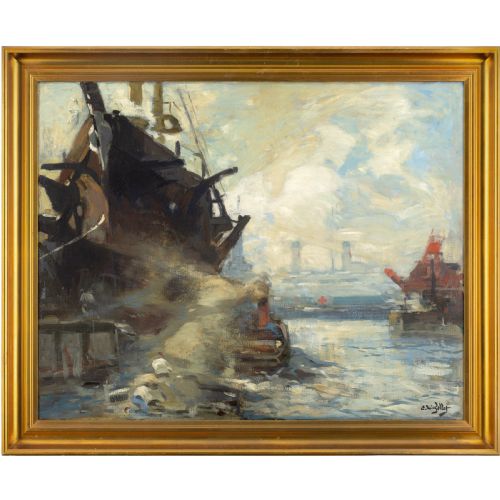
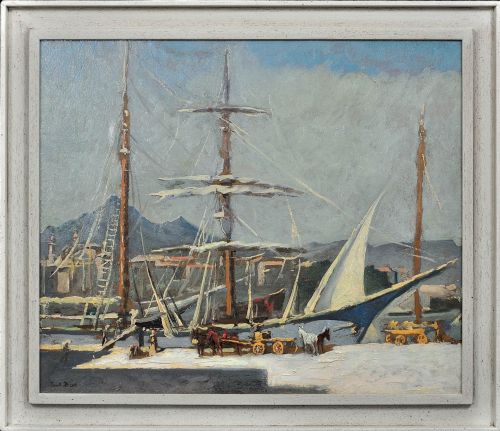
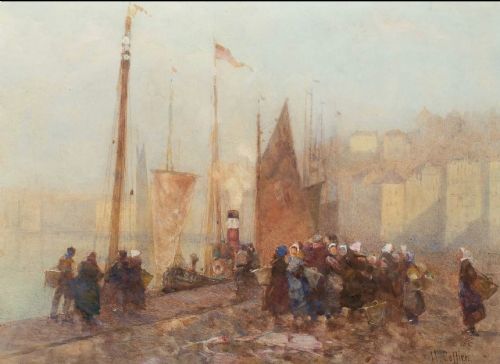
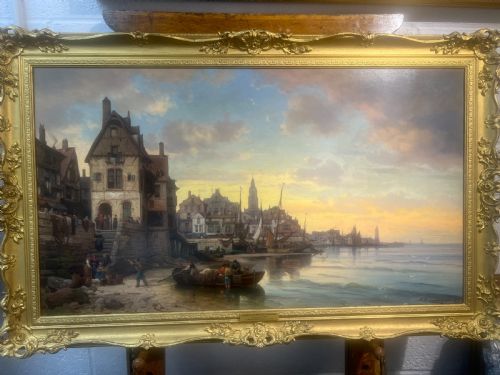
When searching for a french harbour painting, collectors encounter maritime scenes ranging from nineteenth-century coastal vistas to mid-century modernist interpretations of bustling ports. The selection includes views of Norman fishing villages like Honfleur and Concarneau, alongside sun-drenched quays along the Mediterranean coast.
Works appear in various forms, with oil on canvas dominating alongside delicate watercolours, pastels, and occasional oil on board supports. These pieces frequently record specific locations such as Toulon, Marseille, and Le Havre during distinct eras spanning from the late nineteenth century through the 1960s.
The styles shift dynamically across the decades, moving from academic realism and early impressionist brushwork into post-impressionism, abstract impressionism, and twentieth-century realism. Buyers find both framed finished exhibition pieces and intimate studies capturing fleeting moments of maritime labour and leisure.
Materials and Techniques
Painters applied oil paint directly to canvas, wood panels, or boards, building rich textures that describe the shifting light on water and stone quays. Watercolour on paper offered artists a fluid medium suited to capturing transparent sea washes and hazy atmospheric conditions on the spot.
Pastel and ink occasionally supplement the core media, allowing for rapid execution of coastal weather effects and bustling promenade scenes. Surviving works are frequently housed within period giltwood or custom frames that complement the painterly ambitions of the era.
One canvas captures the hustle of a wartime hospital ship alongside ordinary harbour traffic, proving artists painted history right between the fishing smacks.
Evaluating Quality and Execution
The strength of a composition rests on the artist's handling of coastal light and atmosphere, whether describing the bright sun of the Riviera or the muted tones of a northern winter port. Superior works demonstrate a confident command of tone and brushwork that brings movement to the water and solidity to the harbour architecture.
Provenance and documentation elevate certain pieces, particularly when signed by established painters associated with recognised regional schools or avant-garde movements. The intimacy of execution separates hurried sketches from fully resolved studies that successfully communicate the character of a specific French port.
Eugène-Louis Gillot·Paul Bret·Hector Caffieri·Charles Euphraisie Kuasseg·Paul-Jean Anderbouhr·Paul Delvaux·Jean-Baptiste Olive·Raymond Picque·William Lee Hankey·Fred Pailhes·Edward Henry Holder·Owen Bowen·Henri Ottman·Yves Brayer·Augustus William Enness
The French Harbour Painting Glossary
- Post-Impressionism
- A stylistic development following impressionism where artists explored structural form and expressive colour rather than purely optical effects. This approach appears frequently in mid-period coastal scenes.
- Canvas
- A heavy woven fabric stretched across a wooden frame to serve as a sturdy support for oil paint. It remains the most common substrate found in these maritime works.
- Watercolour
- A paint consisting of pigment suspended in a water-soluble binder, applied to paper to create luminous, translucent washes. It was often utilised for direct studies painted along the quayside.
- Giltwood
- Wood carved and coated with a thin layer of gold leaf or metallic gilt, commonly used for traditional picture frames. These frames enhance the visual weight of period oils.
- Gouache
- An opaque water-based paint that provides solid, flat areas of colour and sharp detail. It appears alongside watercolour in mixed-media coastal sketches.
French Harbour Painting: Frequently Asked Questions
How do I date a french harbour painting?
Dating relies heavily on recorded artist lifespans, stylistic shifts from impressionism to modernism, and stretcher construction. Signatures and exhibition labels on the reverse also provide precise chronological markers.
Clothing styles of figures on the quays and depictions of harbour infrastructure help narrow the decade of creation when signatures are absent.
What regions are most commonly painted?
Normandy ports such as Honfleur, Concarneau, and Rouen appear frequently alongside Mediterranean scenes from Cannes, Marseille, and Toulon. Artists gravitated towards these locations for their distinct light and maritime activity.
Northern harbours often emphasise industrial grit and tidal shifts, while southern locations focus on intense sunlight and leisure craft.
Are watercolours as durable as oils?
Waterworks on paper require careful framing behind glass away from direct sunlight to prevent fading of pigments and degradation of the paper support. When properly conserved, they remain remarkably stable over generations.
Oil on canvas is inherently more robust against environmental fluctuations, though both formats benefit from stable indoor humidity.
How should I display these paintings at home?
Select wall spaces with indirect natural light to protect pigments from ultraviolet damage while allowing the textured brushwork of oil paintings to catch ambient room light. Avoid hanging works near active heat sources or in damp environments.
Pairing period pieces with complementary lighting enhances the atmospheric qualities captured by the artist.