
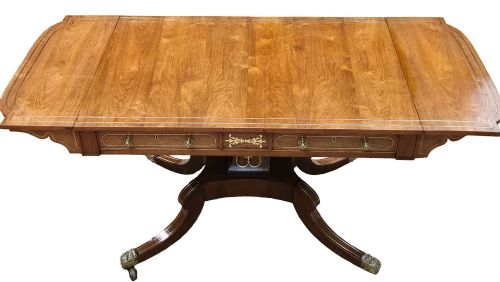


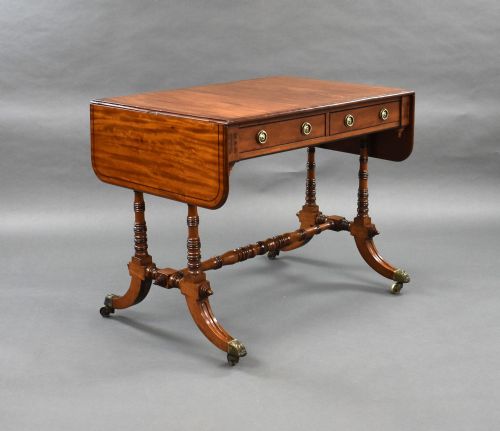
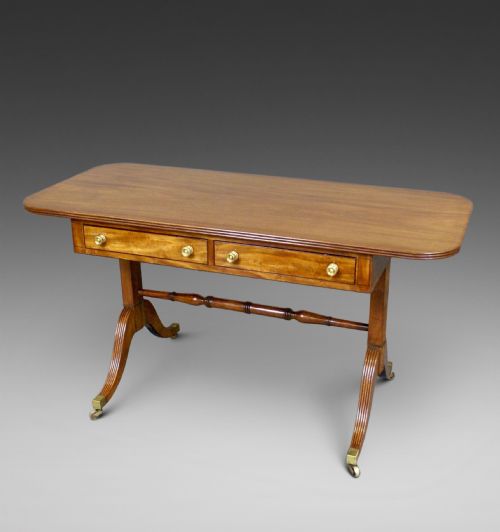

Sabre Leg Sofa Table
A sabre leg sofa table brings architectural grace to a room, offering a long drop-leaf top and sweeping upright supports.
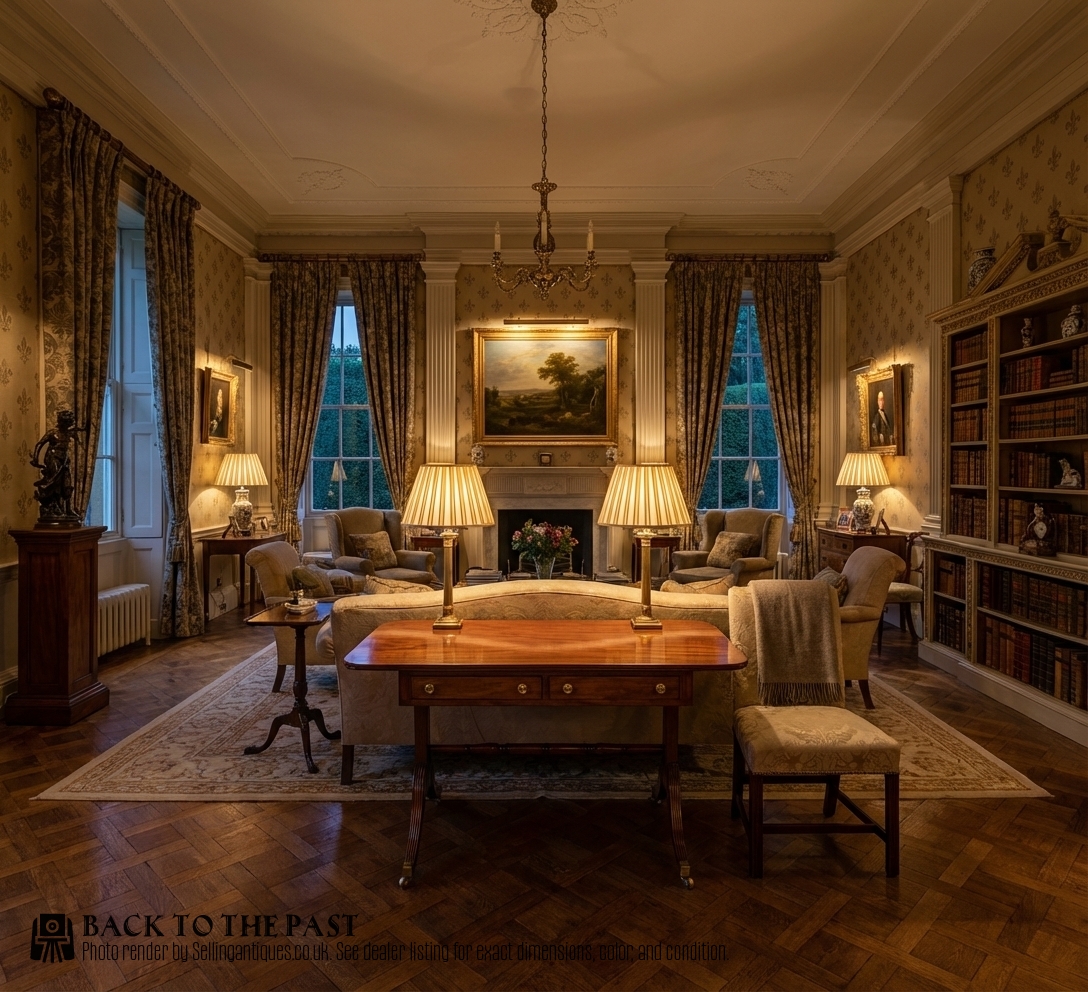
Sabre Leg Sofa Table
A sabre leg sofa table typically dates from the Regency period, the early nineteenth century, and the late eighteenth century, though occasional twentieth-century examples appear. These pieces function as versatile centre or side tables, featuring drop leaves designed to sit comfortably in front of a sofa.
The selections span standard sofa tables, side tables, and card tables sharing the characteristic saber leg form. Mahogany and rosewood dominate the listings, alongside walnut, satinwood, ebony, and ebonised wood.
Makers and regional workshops produced diverse expressions of the form, from Irish Regency pieces to grand Regency designs with inlaid brass. Buyers encounter both plain timber surfaces and elaborately figured veneers across the inventory.
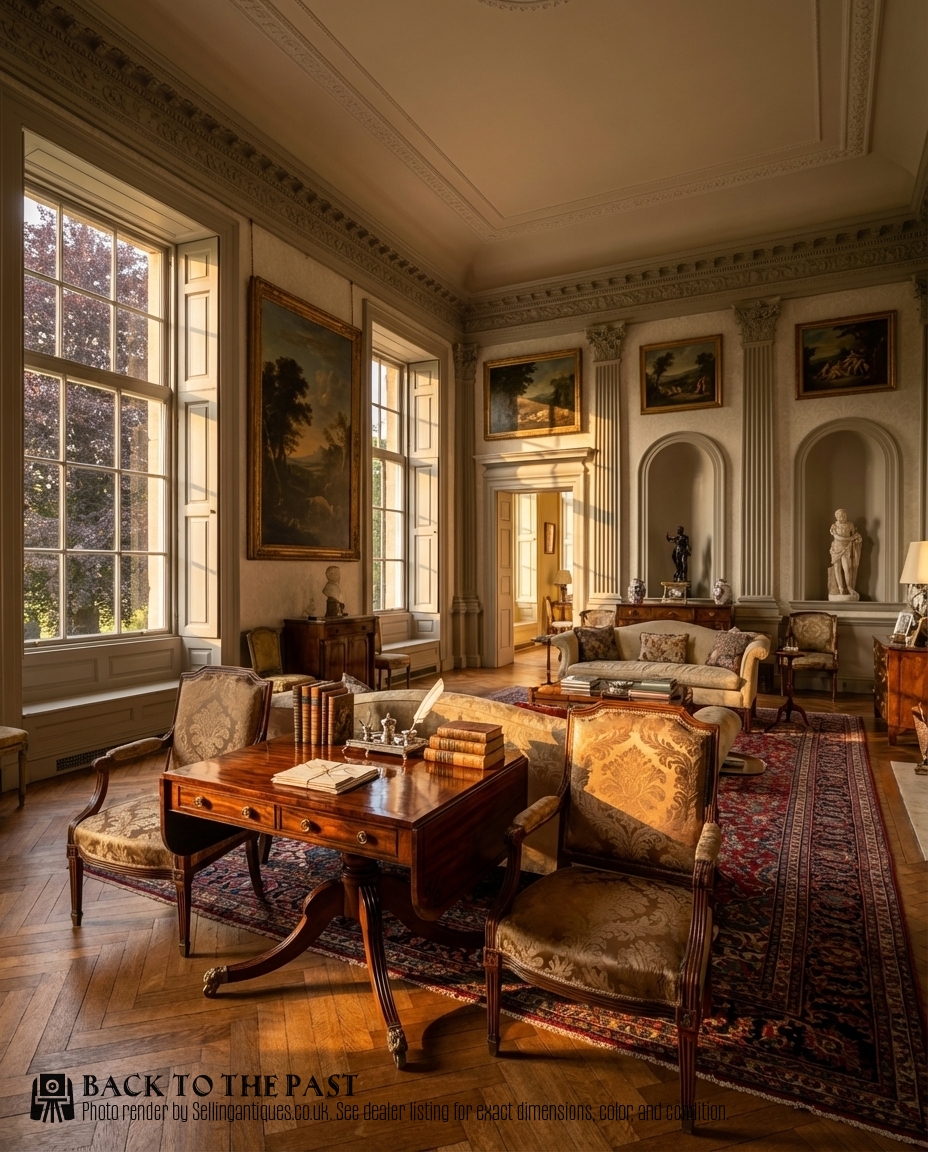
Materials and construction
Cabinet makers utilised dense timbers such as mahogany and rosewood, often highlighting figured grain patterns on the table tops. Satinwood and ebony served as contrasting stringing or inlay materials to frame the primary surfaces.
Brass featured prominently in the construction, taking the form of gilded mounts, stringing inlay, and castors on the sweeping legs. Drop leaves were secured with pivoting wooden flaps or brass hinges to ensure stability when extended.
Sabre Leg Sofa Table Retail Price Guide 2026
Typical asking prices for sabre leg sofa table among the pieces listed under this phrase on Sellingantiques today, from the lower quarter to the upper quarter. They describe what is for sale here now, not the wider market.
Dublin cabinet makers contributed distinct regional flair to the inventory, ensuring Irish Regency pieces hold their own unique charm.
Factors of distinction
The choice of timber grain dictates much of the visual appeal, with highly figured mahogany and richly toned rosewood representing the upper tier of execution. Finely matched veneers across the drop leaves indicate greater skill in the cabinet workshop.
The refinement of the sabre leg itself, coupled with the precision of brass inlay and mounts, separates standard production from superior examples. Integrated structural elements like cross-banding and reeded edges demonstrate meticulous attention to detail.
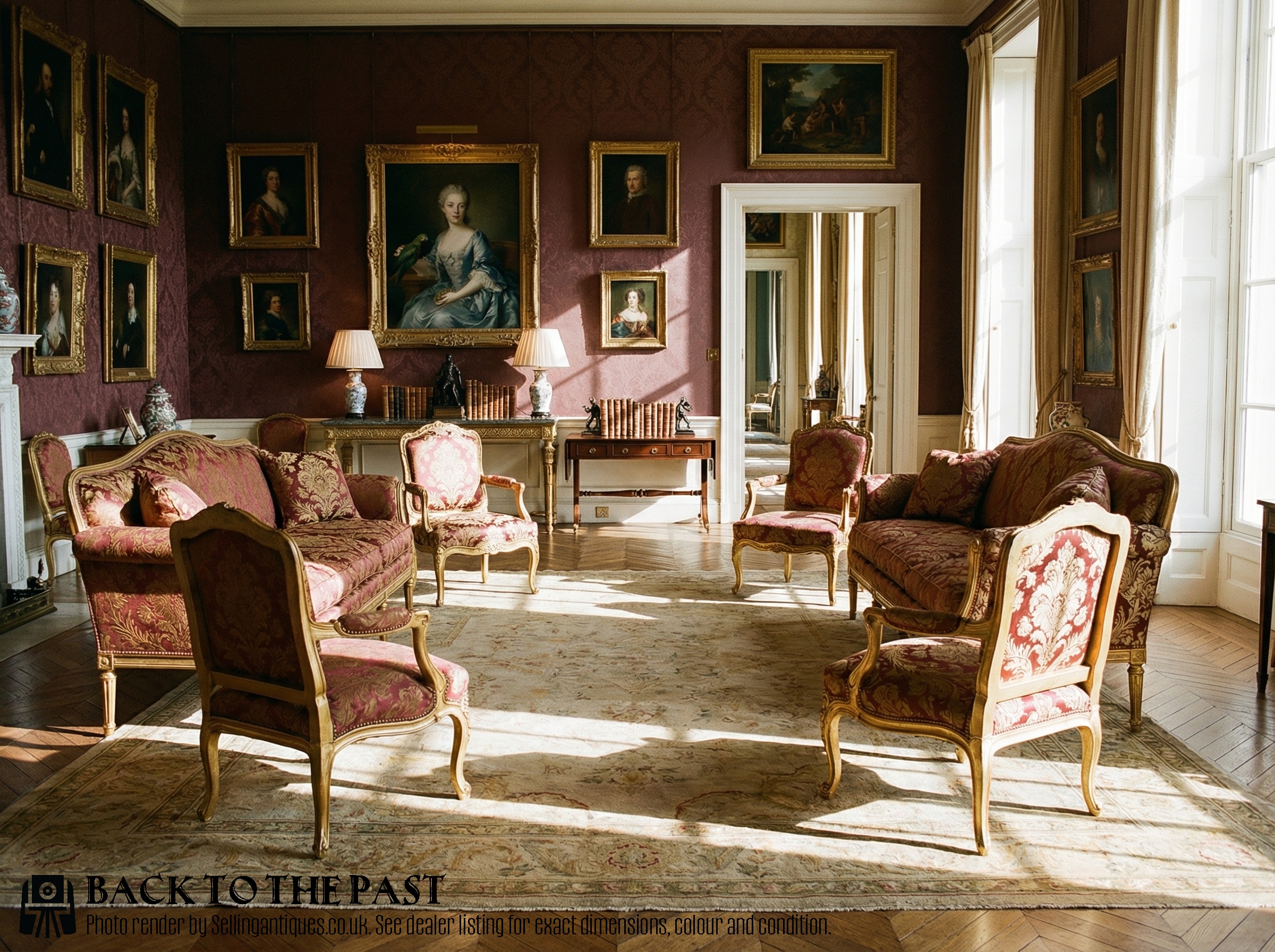
Gillingtons Dublin
The Sabre Leg Sofa Table Glossary
- Sabre leg
- A concave tapering furniture leg that curves outward in the manner of a cavalry sabre. This form defines much of Regency seating and table design.
- Drop leaf
- A hinged flap on the side of a table that raises to extend the surface area. It rests on hinged wooden brackets or swing legs.
- Cross-banding
- A strip of veneer applied to the border of a table top with the grain running perpendicular to the centre. This technique creates a contrasting frame.
- Reeded
- Carved with a series of parallel convex mouldings resembling parallel reeds. It provides decorative texture to table edges and legs.
- Stringing
- A narrow strip of contrasting wood or metal inlaid into the surface of furniture. It forms delicate linear borders around panels and table tops.
Sabre Leg Sofa Table: Frequently Asked Questions
How do I date a sabre leg sofa table?
Dating relies upon examining the timber, construction methods, and stylistic markers such as brass inlay and leg geometry. Most authentic examples originate from the Regency period and the early nineteenth century.
Secondary woods and hinge types also provide clues to the exact decade of manufacture.
Are these tables suitable for everyday use?
These tables adapt well to modern living spaces, functioning effectively as console tables, desks, or occasional side tables. The drop leaves allow the footprint to adjust according to available space.
Careful placement away from direct heat sources protects the antique veneers and polished timber surfaces.
Which woods are most common?
Mahogany and rosewood appear most frequently in these listings, often enriched with satinwood or ebony details. Walnut and ebonised wood also feature in select pieces.
Craftsmen selected these dense hardwoods for their durability and capacity to take a fine polish.