

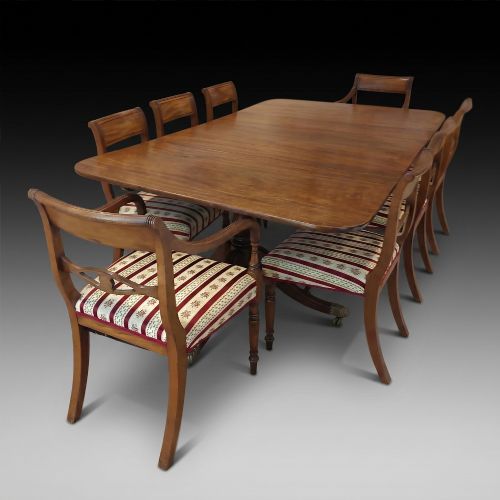


Sabre Leg Pedestal Table
A sabre leg pedestal table brings architectural elegance and crisp classical line to a room through curved supports and sturdy central pillars.
Sabre Leg Pedestal Table
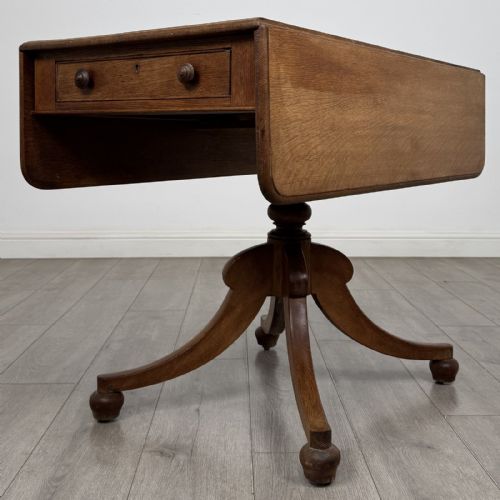
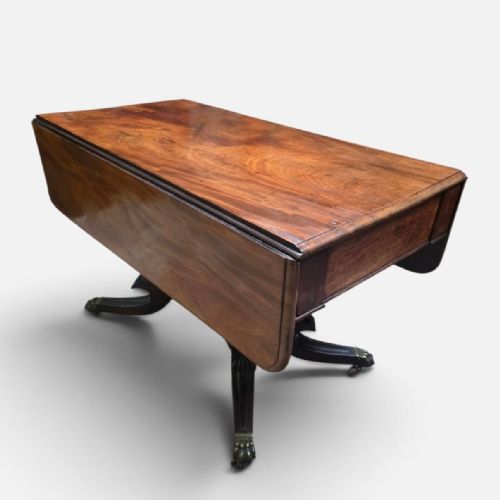
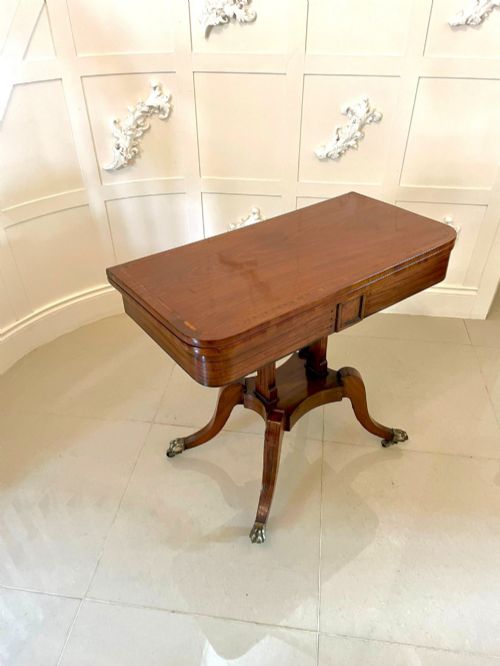
A sabre leg pedestal table combines a central columnar support with sweeping, outward-curving legs that draw inspiration from classical antiquity. These pieces appear across dining tables, card tables, tea tables, and sofa tables originating chiefly from the Regency, Georgian, and George IV periods.
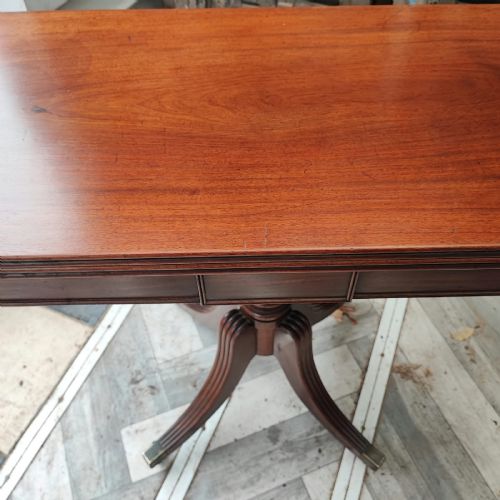
The version most frequently encountered on this page is the mahogany dining or card table, often featuring drop leaves, tilt-top mechanisms, or crossbanded borders. Walnut, rosewood, and satinwood examples also surface alongside later Sheraton Revival interpretations from the twentieth century.
Makers designed these items for versatility in formal drawing rooms, libraries, and dining spaces. Their structural geometry allows chairs to tuck neatly beneath the top while maintaining a stable stance on floors.
How they were made
Cabinetmakers constructed these tables using dense timbers such as mahogany and rosewood, frequently selecting figured veneers for table tops and borders. They integrated contrasting lighter woods like satinwood, boxwood, and ebonised wood for delicate stringing and inlay work.
Gilded brass mounts, castors, and inlaid brass lines appeared regularly on the legs and friezes of finer Regency examples. Joinery relied on stable pedestal bases secured to heavy pillar shafts to support drop leaves and tilt-top mechanisms.
Sabre Leg Pedestal Table Retail Price Guide 2026
Typical asking prices for sabre leg pedestal table among the pieces listed under this phrase on Sellingantiques today, from the lower quarter to the upper quarter. They describe what is for sale here now, not the wider market.
Some drop-leaf variants were cleverly dubbed metamorphic when engineers hid clever folding mechanisms inside modest side tables.
What varies in quality
The distinction between standard examples and top-tier pieces lies in the choice of timber and the precision of the cabinetwork. Superior tables display highly figured mahogany or richly grained rosewood matched across the top boards, paired with crisp, well-defined brass inlay rather than plain timber.
Proportion and the graceful sweep of the sabre legs dictate overall elegance. Master makers ensured the curve of the leg balanced harmoniously with the central pillar and the thickness of the top, whereas lower-tier production often appeared stiff or clumsy in its lines.
The Sabre Leg Pedestal Table Glossary
- Sabre leg
- A concave-curving support tapering outward from the pedestal base, echoing the profile of a cavalry sabre. This form defines much of the Regency and late Georgian seating and table design.
- Crossbanding
- A border of veneer laid around the perimeter of a table top with the grain running perpendicular to the centre. It creates a neat framing effect on mahogany and rosewood surfaces.
- Tilt-top
- A mechanism allowing the table surface to pivot upright on its pedestal when not in use. This clever engineering saved floor space in period drawing rooms.
- Card table
- A folding table designed for evening games, featuring a hinged top that opens to reveal a baize-lined surface. Many examples incorporate sabre legs and concealed frieze compartments for counters.
- Sofa table
- A rectangular occasional table intended to stand in front of a sofa, equipped with drop leaves at either end. They frequently feature twin pillars or trestle supports.
Sabre Leg Pedestal Table: Frequently Asked Questions
How do I date a sabre leg pedestal table?
Dating relies on timber selection, structural hardware, and decorative motifs like brass inlay. Regency and Georgian examples display hand-cut joinery and dense native or imported woods, while later revivals often show twentieth-century construction traits.
Examining the underframe and the method used to attach the pillar to the top provides further clues. Earlier pieces utilise heavy cast-iron brackets or pegged tenons unique to the early nineteenth century.
Were these tables meant for dining?
Many large pedestal examples served dining rooms, often expanding with additional leaves for dinner parties. Smaller variants functioned as breakfast tables or supper tables.
Non-dining forms include card tables, tea tables, and Pembroke tables designed for parlour use. Their adaptable size made them central pieces for daily domestic life.
How do I care for rosewood and mahogany?
Maintain timber surfaces by dusting regularly with a soft, dry cloth and avoiding silicone-based polishes. Keep the wood away from direct sunlight and heat sources to prevent veneer shrinkage.
Applying a light coat of natural beeswax periodically helps nourish the grain. This preserves the subtle sheen on older polished finishes without building up a heavy film.
What is the difference between a tea table and a card table?
Tea tables feature folding or fixed tops designed to hold porcelain during afternoon tea service. They often stand against a wall when closed.
Card tables incorporate a pivoting or swing-leg mechanism to support a double-sided leaf for gaming. The interior surface typically retains traces of original baize or leather playing felts.