



Regency Style Extension Table
A regency style extension table brings generous proportion and classic pedestal support to the dining room.
Regency Style Extension Table
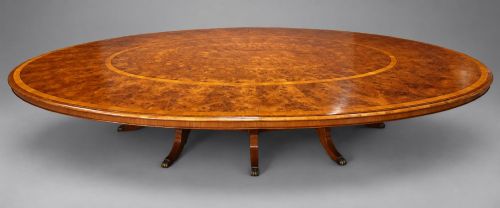
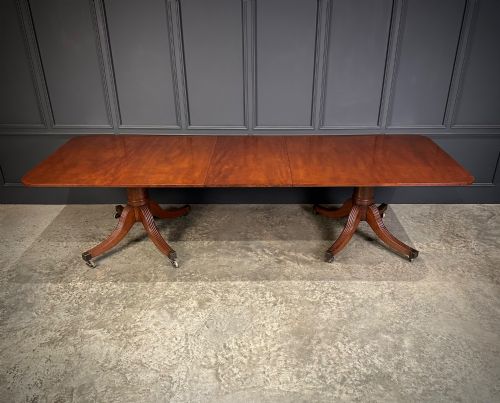
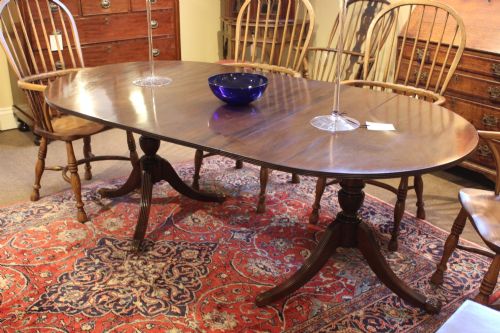
A regency style extension table serves as a flexible centrepiece for hosting dining gatherings, adapting in length through removable leaves. The examples found here range from twin pillar formats to larger triple pedestal versions capable of seating substantial numbers.
Most pieces date across the nineteenth and early twentieth centuries, drawing on the aesthetics of the Regency, George III, and William IV eras. Buyers encounter traditional dining tables alongside freestanding sofa table variants suited to versatile interior layouts.
The aesthetic vocabulary relies on balanced proportions, polished timber surfaces, and architectural pillar supports that anchor the dining space. These tables combine period character with mechanical adaptability for modern domestic use.
Construction and materials
Makers built these tables primarily from solid and figured mahogany, often enhancing the surfaces with satinwood inlay or pairing the deep red timber with rosewood. This selection of dense hardwoods provided the structural integrity required for large extending frames.
Brass fittings appear in the hardware and castor mounts that support the heavy pedestals, allowing the sections to move smoothly. Cabinetmakers joined twin and triple pillars to strong plinths, ensuring stability when the additional leaves are inserted.
Regency Style Extension Table Retail Price Guide 2026
Typical asking prices for regency style extension table among the pieces listed under this phrase on Sellingantiques today, from the lower quarter to the upper quarter. They describe what is for sale here now, not the wider market.
Materials documented across the inventory include solid mahogany, rosewood, satinwood, and brass hardware.
Assessing quality and craftsmanship
The fineness of the figured mahogany grain and the precision of satinwood stringing distinguish the upper tier of tables from simpler workshops. Grain matching across the added leaves reveals the care taken by the original cabinetmaker.
The robustness of the pedestal mechanism and the smoothness of the extending track dictate daily utility. Superior examples maintain rigid alignment across multiple pillars, supporting extra leaves without sagging.
The Regency Style Extension Table Glossary
- Pedestal
- A central column support resting on splayed legs, usually fitted with brass castors. This design allows diners to sit comfortably without corner legs obstructing their chairs.
- Extending table
- A dining table fitted with a mechanism or loose leaves to increase its overall length. It allows the furniture to scale down for daily family use and expand for guests.
- Satinwood
- A lustrous, pale yellow timber native to India and Ceylon, frequently utilised for contrasting inlay work and banding on dark mahogany furniture.
- Figured mahogany
- Timber selected for its decorative, rippled, or flame-like grain patterns. It forms the primary visual appeal on top surfaces.
- Leaf
- A removable section of timber inserted into the centre of a dining table to lengthen it. Leaves are stored separately when not in use.
Regency Style Extension Table: Frequently Asked Questions
How do I add leaves to the table?
Most models require parting the pedestals manually and dropping the loose wooden leaves into the central gap. Brass pins or clips often secure the sections together for stability.
Ensure the floor is even before dropping the leaves into place to prevent strain on the runners.
Are these tables suitable for daily dining?
Their hardwood construction and durable polished finishes make them well-suited to everyday family meals. Using heat pads and placemats protects the polished surface from daily wear.
Regular polishing maintains the moisture balance of the mahogany timber over time.
How many people can these tables seat?
Capacity depends on the number of pedestals and extra leaves, ranging from standard eight-seater formats to grand designs accommodating sixteen or eighteen guests. Twin pillar versions typically seat ten to twelve.
Checking the length with leaves fully inserted ensures adequate space for dining chairs along the sides.
How do I distinguish a genuine period piece from a later revival?
Examination of the timber shrinkage, secondary woods inside the frame, and hand-cut joinery provides clues to the manufacturing date. Nineteenth-century examples show distinct tool marks and patina compared to twentieth-century revivals.
Hardware styles and the method of the extension mechanism also guide dating.