







Sabre Leg Drop Leaf Table
These sabre leg drop leaf table designs offer the refined proportions and versatile surfaces of the Regency era.
Sabre Leg Drop Leaf Table
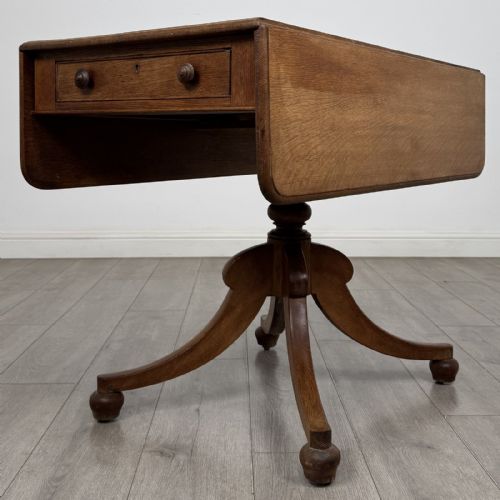
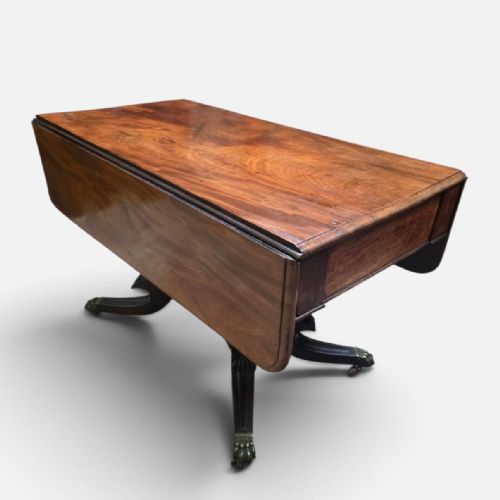
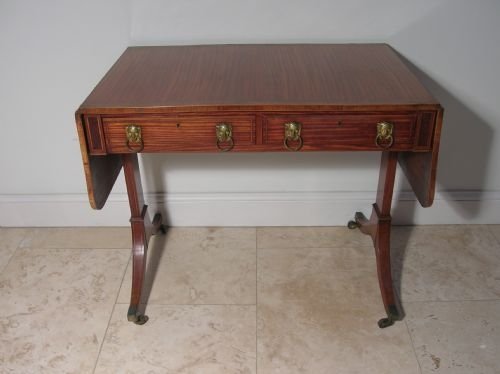
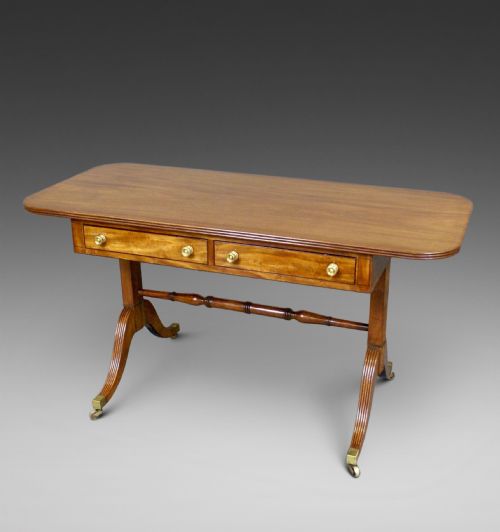
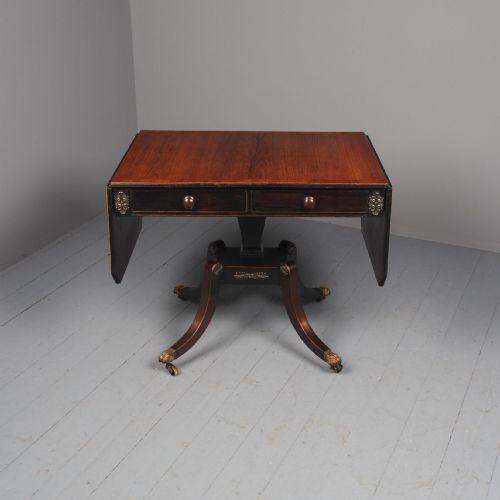
A sabre leg drop leaf table is typically found in forms such as sofa tables, Pembroke tables, and occasional side tables. Most examples on this page date from the Regency period, alongside pieces from the eighteenth and nineteenth centuries as well as the nineteen-twenties.
The primary forms utilise hinged leaves at either side which raise to extend the top surface when required. These pieces served versatile functions in period interiors, functioning as centre tables, serving surfaces, or writing desks.
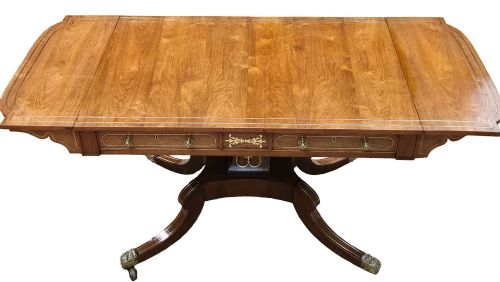
Makers of these tables worked predominantly within Georgian and Regency stylistic traditions, creating balanced proportions suited to polite rooms. Buyers encounter everything from simple mahogany Pembroke designs to elaborate rosewood sofa tables with brass inlay.
How they were made
Cabinetmakers constructed these tables using dense timbers such as mahogany and rosewood, occasionally incorporating satinwood or ebonised wood for contrast. Selected grain patterns were chosen to face the table tops and drop leaves, creating visual interest across the primary surfaces.
Brass fittings, including stringing, inlay, and castors, appear frequently on finer Regency pieces. The characteristic sabre legs curve gracefully outward from the frame, requiring skilled joinery to support the weight of the leaves when raised.
Sabre Leg Drop Leaf Table Retail Price Guide 2026
Typical asking prices for sabre leg drop leaf table among the pieces listed under this phrase on Sellingantiques today, from the lower quarter to the upper quarter. They describe what is for sale here now, not the wider market.
Several tables manage to look as though they are perpetually about to gallop away on their curving sabre legs.
What varies in quality
The distinction between standard and superior examples lies in the selection of timber veneers and the precision of decorative details like brass inlay. Finer tables display carefully matched grain patterns across the leaves and frieze drawers.
Structural refinement in the sabre legs and the stability of the drop leaf hinges dictate the overall execution. Superior workshops invested greater time in carving and finishing the leg profiles and supporting underframes.
The Sabre Leg Drop Leaf Table Glossary
- Drop leaf
- A table featuring hinged flaps on the sides that fold down to save space or lift up to enlarge the surface. These flaps are supported by swing brackets or pivoted wooden arms.
- Sabre leg
- A curved, outwardly splaying leg tapering toward the foot, characteristic of Regency furniture design. This form borrows from ancient Greek and Roman klismos chairs.
- Sofa table
- A rectangular occasional table traditionally placed in front of a sofa, featuring two drop leaves and often two small drawers. They emerged during the late eighteenth century and remained popular through the Regency period.
- Pembroke table
- A small, versatile table with two hinged leaves and usually one or two drawers. It was designed to stand against a wall when closed and move into the room when opened.
- Stringing
- A narrow strip of contrasting wood or metal inlaid into the surface of a piece for decorative effect. It creates delicate geometric borders around drawer fronts and table tops.
Sabre Leg Drop Leaf Table: Frequently Asked Questions
What is a sabre leg drop leaf table?
These pieces are portable tables featuring curving outward legs and folding leaves that alter the surface area. They functioned historically as secondary dining spaces, sofa companions, or side furniture.
Most examples seen here belong to the Regency period and utilise rich timbers like mahogany or rosewood. Their adaptable design made them practical for multiple rooms within the home.
How do I date a Regency table?
Dating relies upon timber selection, hardware, and stylistic indicators such as the profile of the sabre legs. Regency and Georgian pieces often employ solid mahogany or figured rosewood veneers over secondary woods.
Cabinetmaking methods, including hand-cut dovetails in the drawers and early brass castors, help confirm the period. Later reproductions from the twentieth century show distinct modern machining marks.
Where should I place this table?
A drop leaf table suits spaces where surface area needs to adapt throughout the day. With the leaves dropped, it fits neatly against a wall as a side or hall table.
Raised leaves allow the piece to function as a small dining table, a desk, or a centre table in a living room. The finished back and sides of sofa tables mean they look correct viewed from any angle in an open room.
Are these tables sturdy enough for daily use?
The structural integrity of a period table depends on the soundness of the hinges and the sabre leg joints. Properly maintained joints easily support everyday objects like lamps and books.
When opening the leaves, ensure the supporting mechanisms are fully engaged to protect the pivot points. Gentle use preserves the eighteenth and nineteenth century joinery.