

Sabre Leg Chairs
Sabre leg chairs are quintessential Regency seating pieces defined by their sweeping, curved supports that bring enduring elegance to any dining room.
Sabre Leg Chairs
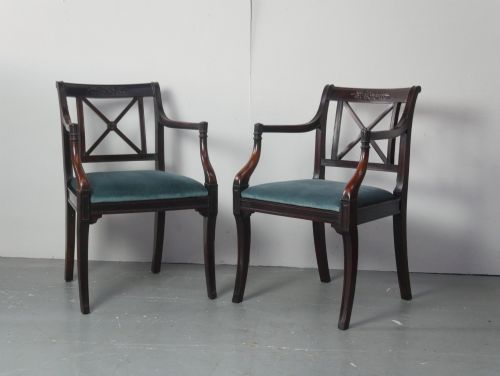
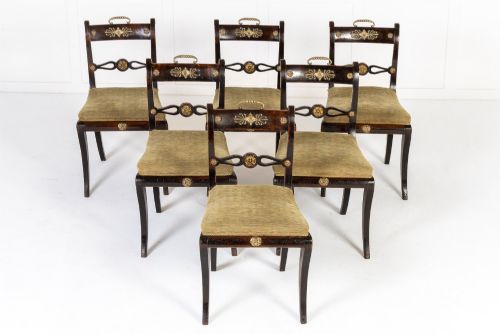
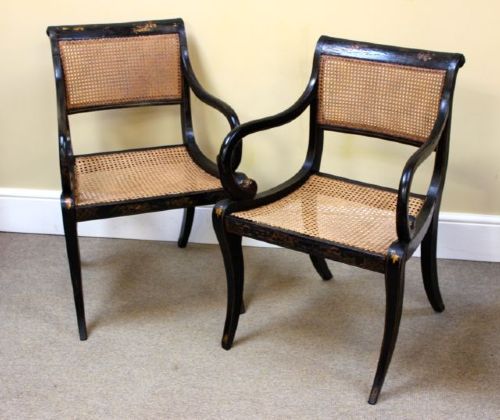
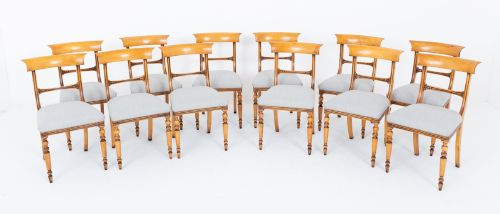
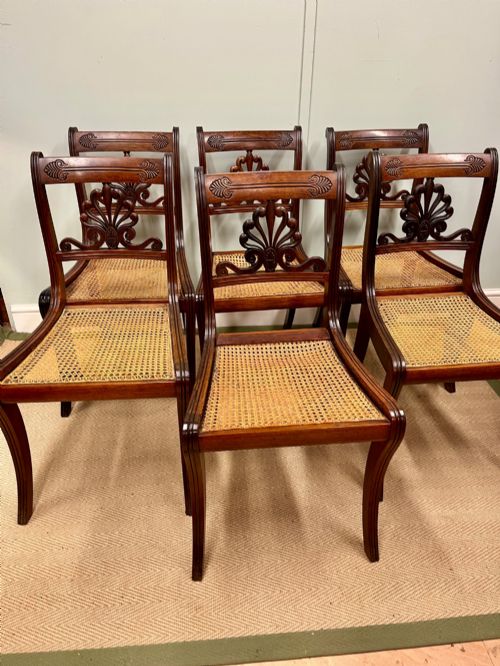
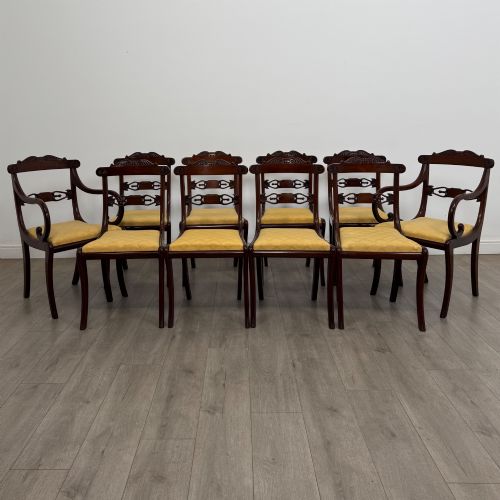
Sabre leg chairs encompass dining chairs, armchairs, and side chairs primarily originating from the Regency and Georgian eras, alongside later revival pieces. Buyers exploring this category encounter single examples as well as large matched sets intended for formal dining tables.
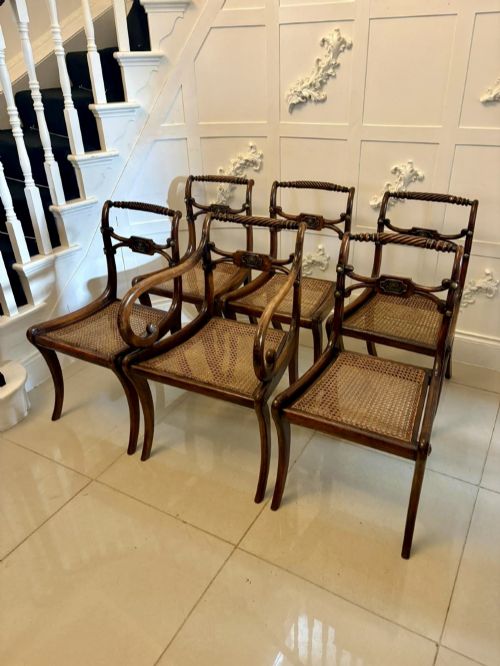
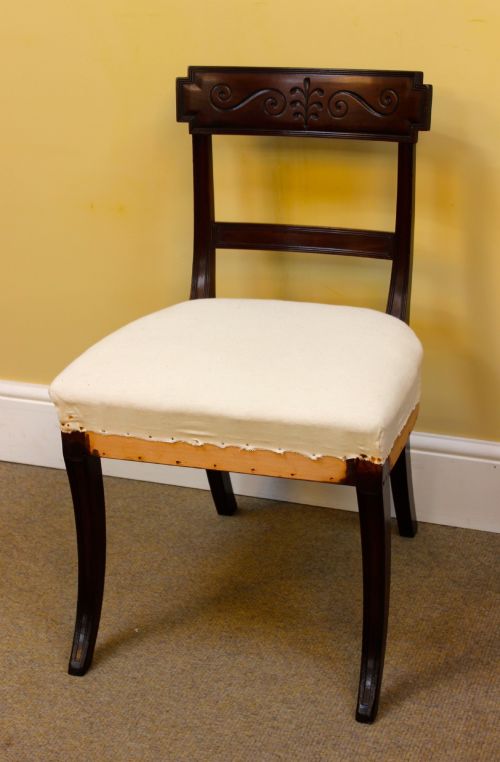
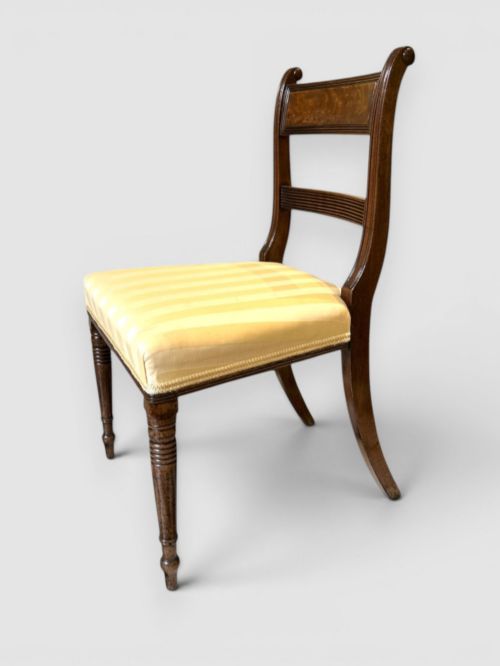
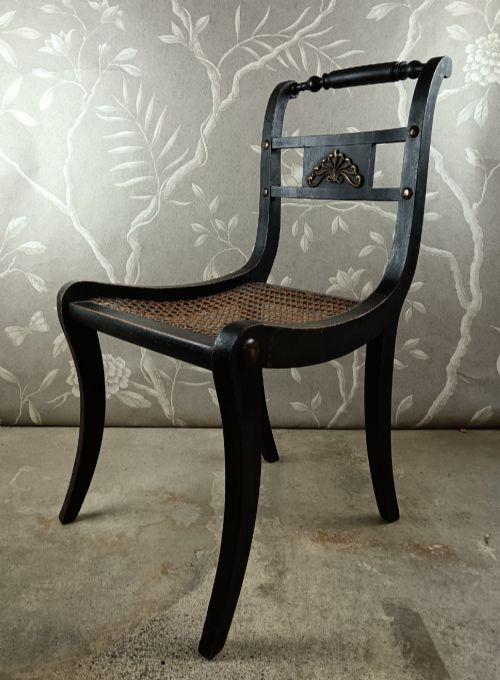
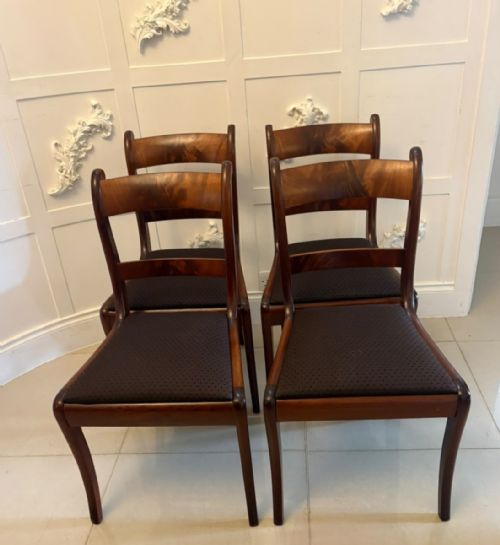
The dominant forms display curved backrests, including rope-back, bar-back, and tablet designs, supported by outward-sweeping rear and front legs. Many surviving pieces date from the early nineteenth century, reflecting the classical influences popular during the Regency period.
Later nineteenth-century and twentieth-century interpretations also appear, demonstrating the persistent appeal of the style through the Edwardian era and the 1900s. These later iterations maintain the characteristic leg geometry while adapting to changing interior tastes.
Materials and Construction
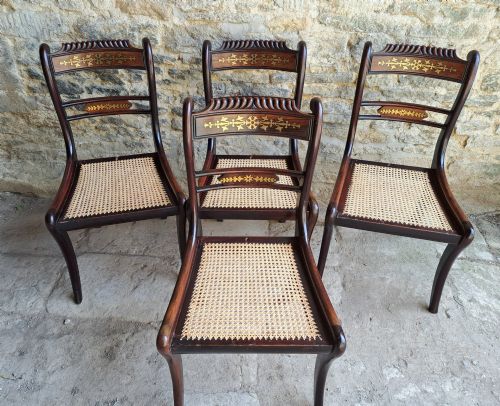
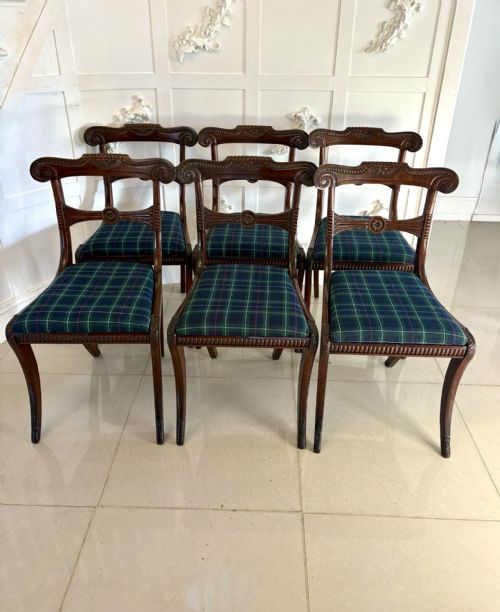
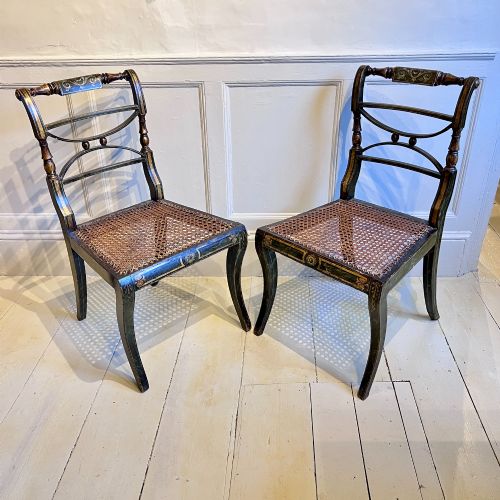
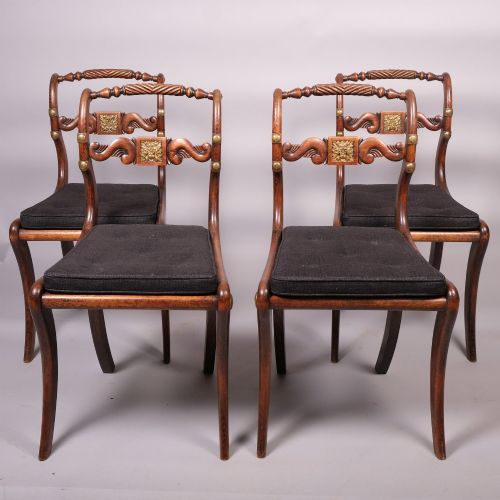
Mahogany remains the primary timber utilised for these chairs, often selected for its dense grain and structural strength necessary for supporting outward-curving legs. Alternative woods such as rosewood, ebonised timber, and satin birch appear frequently, sometimes painted or simulated to mimic exotic grains.
Decorative embellishments frequently include brass inlay, intricate carvings, and gilt accents that highlight the classical lines of the frame. Seat construction varies between traditional drop-in upholstery covered in fabrics like velvet, and woven cane panels offering lighter textural contrast.
Sabre Leg Chairs Retail Price Guide 2026
Typical asking prices for sabre leg chairs among the pieces listed under this phrase on Sellingantiques today, from the lower quarter to the upper quarter. They describe what is for sale here now, not the wider market.
Even cavalry officers occasionally appreciated a well-curved sweep, provided it stayed beneath the dining table rather than the battlefield.
Distinguishing Quality
The refinement of the carving and the selection of figured mahogany timber differentiate finer examples from standard production pieces. Superior sets display crisp detailing along the crest rails and uniform grain patterns across multiple chairs.
Structural integrity of the curved leg joints dictates longevity, as the sweeping design places specific stress on the timber. Chairs retaining original cane work or tightly fitted joinery without excessive repair represent higher standards of period craftsmanship.
J Kendell·Gillows
The Sabre Leg Chairs Glossary
- Sabre leg
- A chair leg that curves outward in a concave sweep, mimicking the shape of a cavalry sabre. This form provides stability while offering a lighter silhouette than straight or cabriole supports.
- Carver
- An armchair designed with open elbows, traditionally placed at the head of a dining table. These seating pieces match the smaller side chairs in a larger dining set.
- Ebonised
- Wood treated with a dark finish to imitate expensive ebony. This technique was popular during the Regency period to create high-contrast decorative effects.
- Caning
- Woven rattan material used for chair seats and back panels. It provides a flexible and breathable seating surface frequently paired with wooden frames.
Sabre Leg Chairs: Frequently Asked Questions
How do I identify a true Regency sabre leg chair?
Authentic Regency examples typically date from the early nineteenth century and exhibit hand-turned or carved mahogany frames with characteristic sweeping legs. Look for traditional construction methods such as pegged joints and aged timber patination.
Later revival pieces from the Edwardian period or the twentieth century often replicate these classic proportions but lack the specific wear patterns and wood density associated with the original Georgian era.
Can I mix sabre leg chairs with a modern table?
These versatile seating pieces complement contemporary dining tables by introducing historical contrast and elegant lines. The slender profile of the curved legs prevents the chairs from visually overwhelming the surrounding space.
Pairing antique side chairs with a minimalist or glass table highlights the sculptural quality of the timber framework without cluttering the room.
How should I care for caned seats on antique chairs?
Caned seating requires moderate humidity to prevent the natural rattan from drying out and becoming brittle. Avoid placing these chairs near direct heat sources or in overly dry environments.
Cleaning should be limited to gentle dusting with a soft brush, avoiding harsh chemical treatments that can degrade the historic plant fibres.
What is the difference between side chairs and carvers?
Side chairs feature a compact, armless design intended for placement along the sides of a dining table. They offer a streamlined profile that allows multiple seats to fit comfortably in a restricted space.
Carvers include supportive armrests and wider proportions, traditionally reserved for the host and hostess at either end of the dining arrangement.