



Sabre Leg Carver
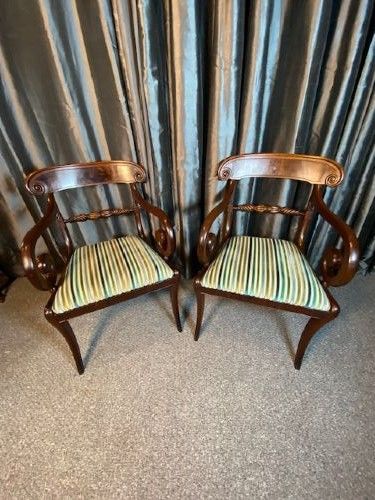
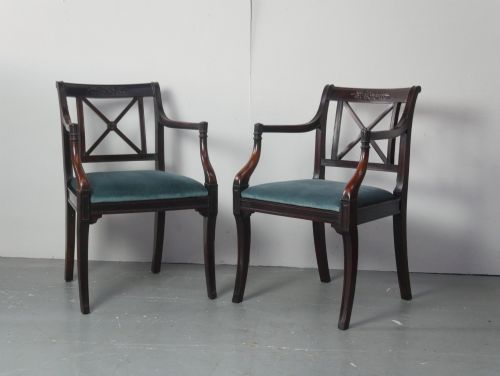
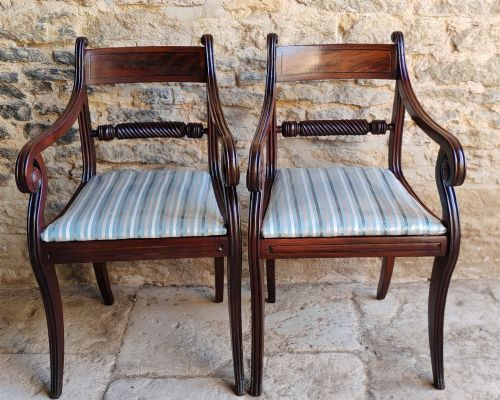
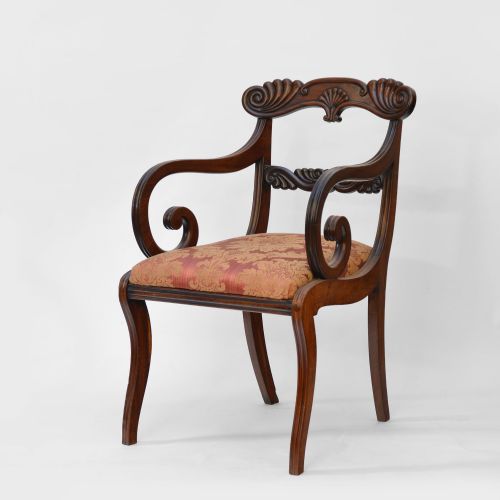
A sabre leg carver is a sturdy dining armchair with curved, outward-sweeping legs, offering both elegance and firm support at the table.
Sabre Leg Carver
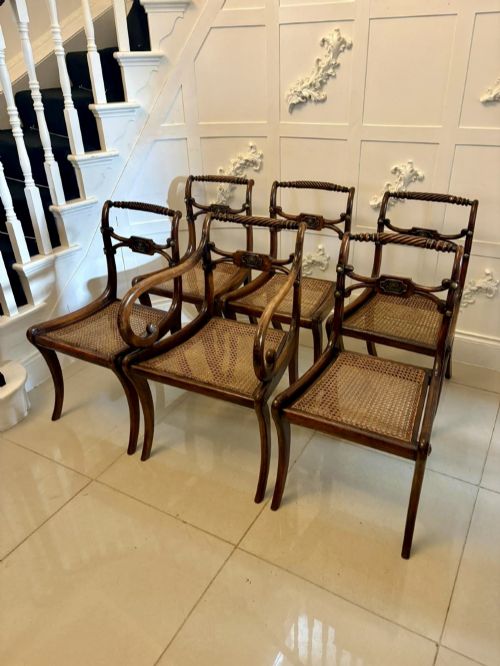
A sabre leg carver chair appears frequently across Regency, Georgian, and nineteenth-century periods, often accompanying larger sets of dining chairs as the principal elbow chair. The form combines an open arm design with distinctively curved rearward-sweeping legs that echo classical Greek and Roman klismos furniture.
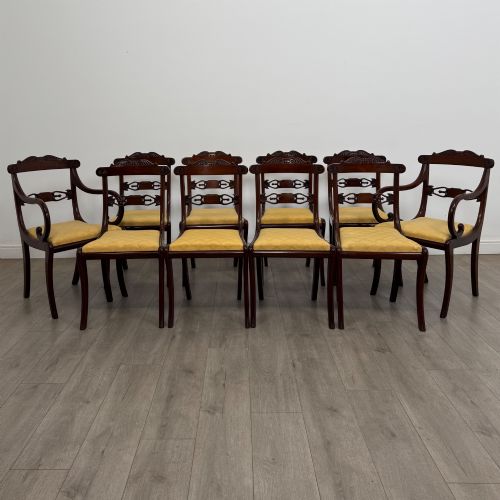
Buyers encounter single examples, pairs, or larger dining sets including both carvers and single chairs. These seats served primarily at the head of the dining table or within formal drawing rooms and studies.
Originating predominantly in mahogany, these pieces span authentic Regency periods through to later revival styles from the Edwardian era and the early twentieth century. The proportions remain generous, designed to accommodate the fashion and formal dress of the period.
Materials and construction
Makers relied heavily on solid mahogany and pollard oak, often selecting timber with rich grain patterns to accentuate the clean, curving lines of the frame. Ebonised wood and gilded accents appear in specific revival pieces from the twentieth century.
Seating surfaces vary between drop-in upholstery in fabric or leather and intricate cane work. Joinery is robust, designed to withstand the daily weight and movement expected of a functional dining room armchair.
These chairs were built wide enough for Regency gentlemen to sit comfortably without tangling their coattails.
Assessing quality
The distinction between standard examples and the finest pieces lies in the crispness of the timber carving and the harmony of the proportions. Superior carvers exhibit fluid curves in the arms and back rails without clumsy joints or heavy reinforcement.
Original surface patina and untouched timber finish elevate a piece significantly above examples that have undergone heavy stripping or modern re-polishing. The integration of the curved leg into the seat rail demonstrates the joiner's skill.
Henry Maxwell
The Sabre Leg Carver Glossary
- Carver chair
- An armchair designed with open sides to accommodate formal clothing, traditionally used at the head of a dining table. They form the matching elbow chairs in larger dining sets.
- Sabre leg
- A chair leg that curves outward in a concave sweep reminiscent of a cavalry sabre. This form provides structural stability while maintaining a light, classical silhouette.
- Caned seat
- A seating surface woven from split rattan cane. It offers a resilient, flexible mesh that provides cool and durable support.
- Pollard oak
- Timber taken from trees that have been pollarded, producing wood with dense, highly decorative growth marks and burr patterns. It was favoured for high-status cabinet work and seating.
- Drop-in seat
- A removable upholstered frame that drops into a rebate within the chair seat rails. This construction method allows for straightforward reupholstering without dismantling the main frame.
Sabre Leg Carver: Frequently Asked Questions
What is a sabre leg carver?
A sabre leg carver is an open-armed dining chair featuring distinctive curved legs that sweep outward like a blade. They typically match a larger set of dining chairs and sit at the head of the table.
These pieces date primarily from the Regency and Georgian periods, though revival versions appear in later nineteenth and twentieth-century furniture. Their design draws inspiration from classical antiquity.
How do I tell original Regency from revival?
Original Regency pieces exhibit timber characteristics, nail construction, and wear patterns consistent with the early nineteenth century. Revival pieces from around nineteen hundred often show different secondary woods and less natural surface degradation.
Examining the underside of the seat rail and the joinery methods provides clear clues to the actual age of the chair.
Can I use these chairs every day?
These carvers were built as durable, functional furniture for daily dining and domestic use. Their sturdy mahogany frames handle regular sitting well when the joints remain tight.
Periodic checking of the frame stability ensures safe daily use in a modern dining room.
What is the difference between single and carver chairs?
Carver chairs feature wooden elbow rests designed to support the arms, making them wider than standard single dining chairs. They were traditionally reserved for the host or guests of honour.
Dining sets generally include two carvers alongside a larger number of armless single chairs.