



Rustic Wooden Pub Stools
These rustic wooden pub stools are hardy utility pieces built for enduring taverns and alehouses, offering buyers a genuine piece of vernacular history.
Rustic Wooden Pub Stools
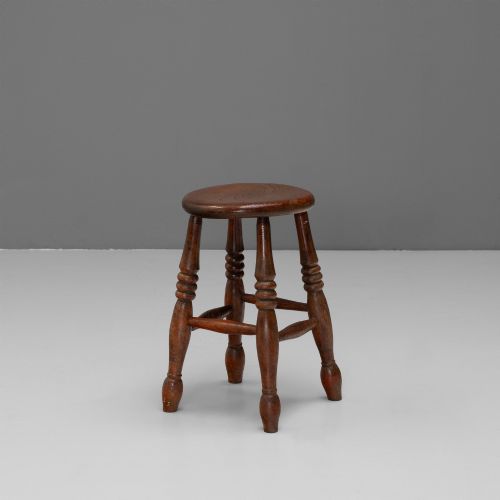
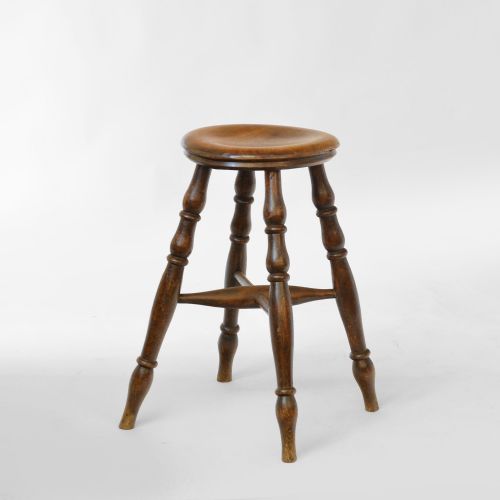
Rustic wooden pub stools encompass hard-wearing seating found in nineteenth-century taverns, alehouses, and rural establishments, designed for daily trade rather than formal drawing rooms. Buyers seeking these rustic wooden pub stools will most frequently encounter nineteenth-century examples alongside Victorian, Edwardian, and twentieth-century interpretations.
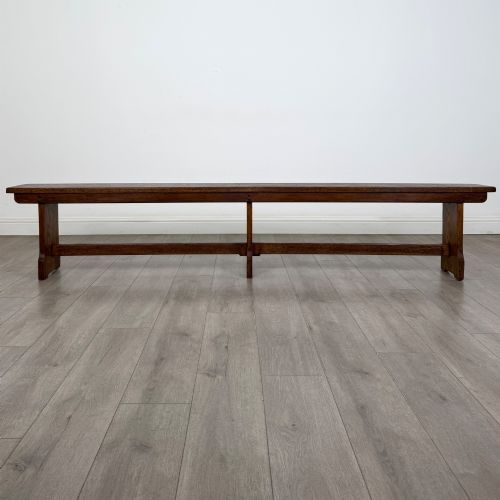
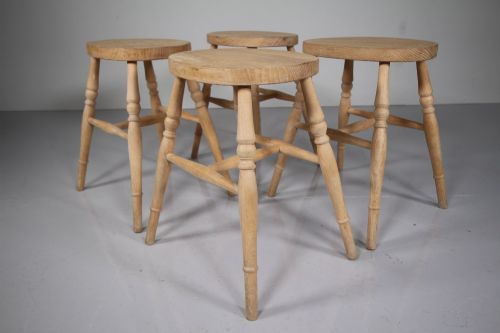
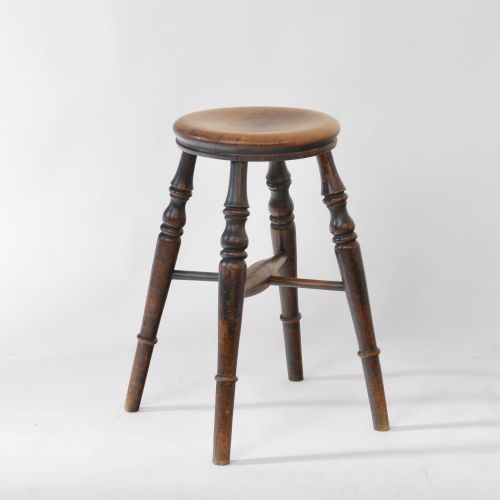
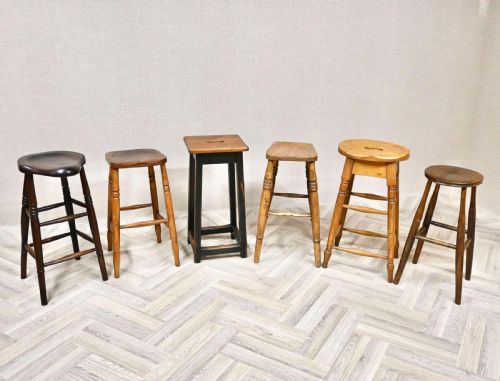
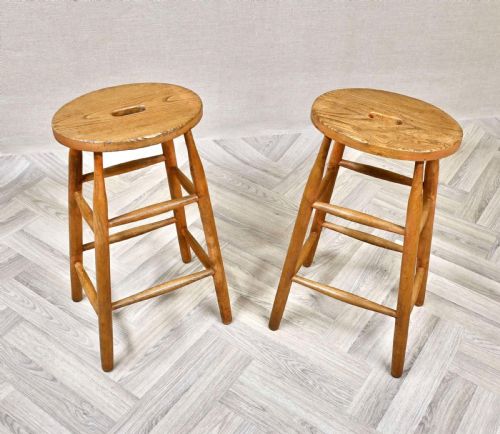
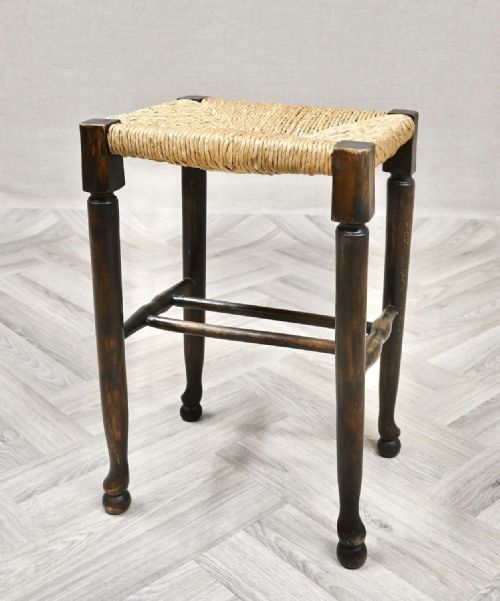
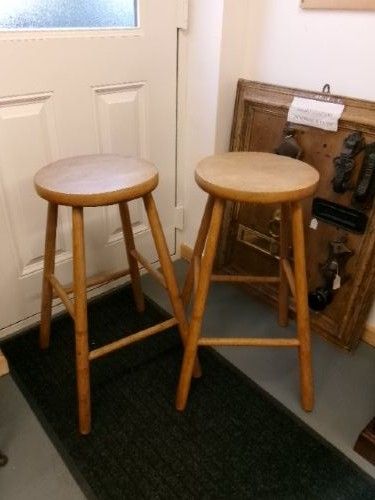
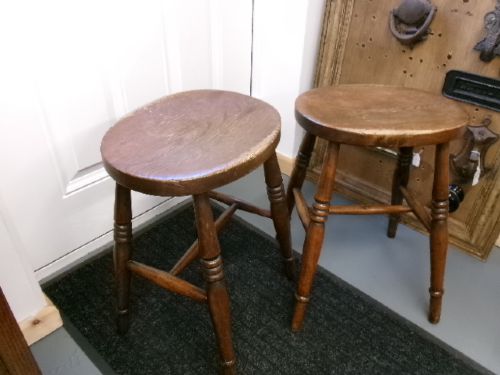
The inventory on this page ranges from tall bar stools and tavern stools to oval Edwardian dining stools, long tavern benches, and clerk's stools. Forms include plain tops, dished seats, and rush seating supported by sturdy turned or straight legs.
Origins stretch from English country workshops to Victorian vernacular settings, capturing a utilitarian aesthetic defined by honest construction and practical function. Each piece reflects the specific demands of public houses, inns, and mills where dependable seating was essential.
Materials and construction
Maker's workshops utilised local hardwoods suited to heavy use, turning frequently to elm for strong seats, beech for turned legs, and sycamore for pale, smooth tops. Additional pieces incorporate oak, pine, ash, birchwood, and hardwood to withstand the rigours of nineteenth-century alehouses.
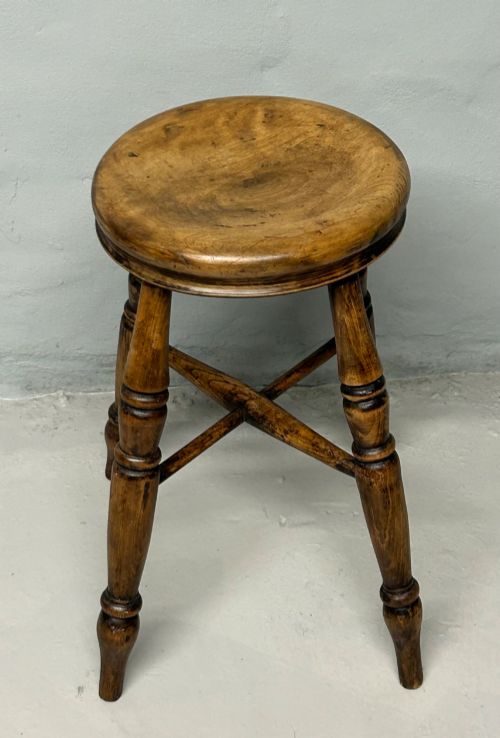
Joinery methods prioritized physical strength, utilising traditional techniques such as pegging and turning to secure legs firmly into thick wooden seats. Dished tops were carved directly into the timber to provide comfort during long hours at the bar or tavern table.
Listings feature pieces spanning the nineteenth century, Victorian era, Edwardian period, and the nineteen-thirties and forties, constructed in elm, oak, beech, pine, sycamore, ash, and birchwood.
Assessing quality and character
Quality in these utility seats rests upon the integrity of the timber selection and the retention of honest patination built through generations of use in public houses. Pieces fashioned from dense elm or figured sycamore with robust, untampered joints demonstrate superior craftsmanship.
Proportion and stability separate standard utility items from finer vernacular examples, particularly in tall bar configurations where structural balance is paramount. The presence of original surface wear tells an authentic story of tavern life without diminishing the physical strength of the frame.
The Rustic Wooden Pub Stools Glossary
- Dished top
- A wooden seat scooped into a shallow concave form to fit the body comfortably. This shaping required skilled adze work by the maker.
- Vernacular
- Everyday utilitarian objects made by regional craftsmen for local use rather than following high-style academic designs. These pieces prioritize function over fashionable ornamentation.
- Turned
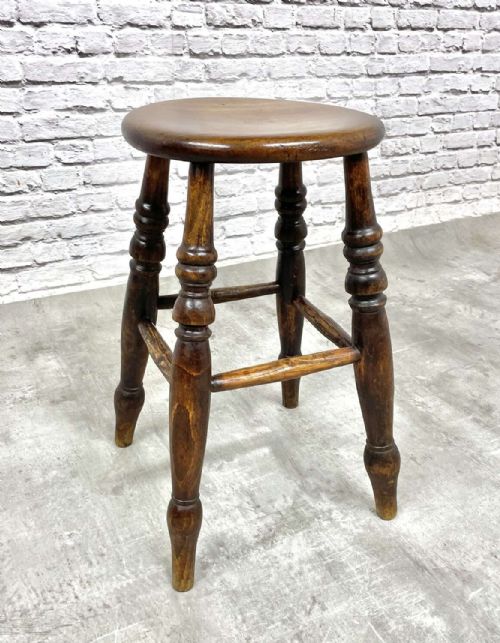
- Timber shaped on a lathe to create cylindrical, tapered, or decorative structural components like legs and stretchers. Beech was frequently chosen for this process due to its fine grain.
- Rush seat
- Seating woven from marsh rushes dried and twisted into cord around a wooden frame. This technique provided a resilient, slightly yielding surface for dining stools.
- Tavern stool
- A sturdy seating form created specifically for public houses and alehouses during the nineteenth century. These items were built to endure heavy commercial wear.
Rustic Wooden Pub Stools: Frequently Asked Questions
How are rustic wooden pub stools cleaned?
Maintain the aged timber surface by applying a gentle beeswax polish with a soft cloth, avoiding harsh chemical cleaners that strip the historic finish.
Keep the stools away from direct heat sources and excessive moisture to prevent the wood from splitting or warping over time.
Were these stools used in homes?
While originally built for nineteenth-century taverns, alehouses, and work environments, their robust charm makes them suitable for contemporary farmhouse kitchens and dining spaces.
Their varied heights allow them to function around standard dining tables, kitchen islands, or home bar setups.
How do I date a pub stool?
Examine the timber species, tool marks, and construction methods, as nineteenth-century pieces often display hand-turned components and distinct adze work on elm seats.
Edwardian and later twentieth-century iterations generally show more standardised machining and lighter framing suited to changing domestic interiors.
Are tall bar stools stable?
Authentic tavern and bar stools rely on sturdy underframing and splayed legs to ensure stability on uneven nineteenth-century flagstone floors.
Careful inspection of the leg joints and stretchers will confirm whether the stool retains its original structural integrity for daily use.