
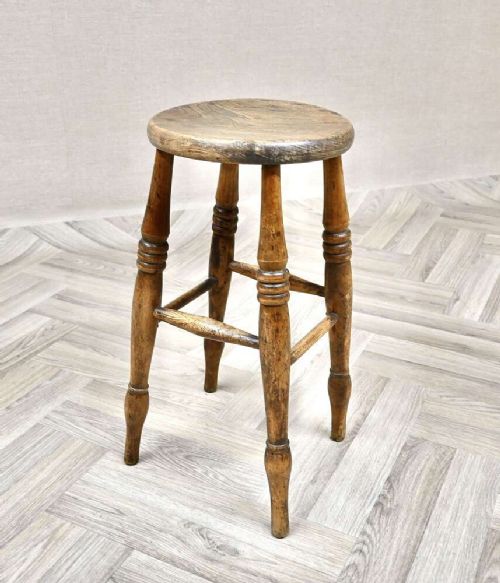
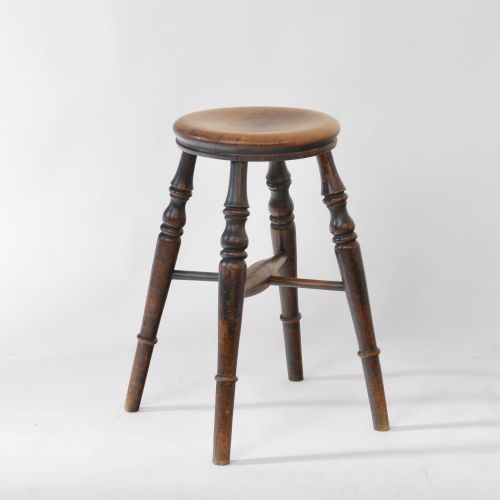
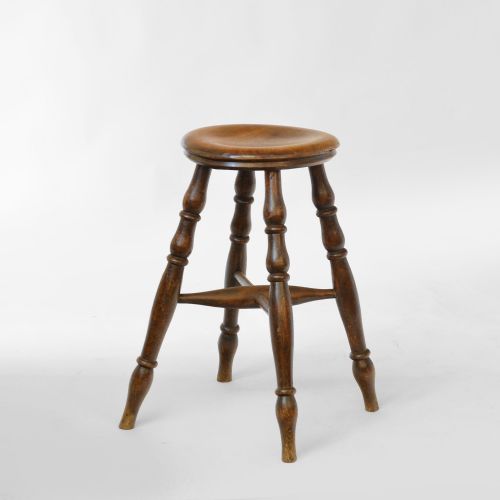
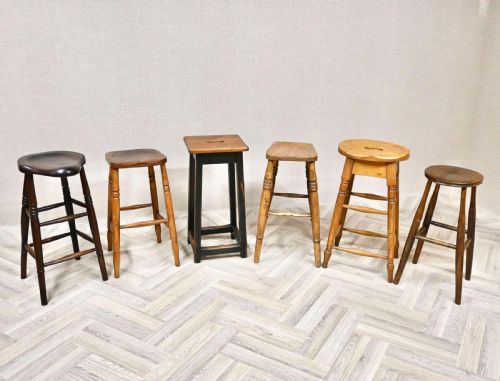
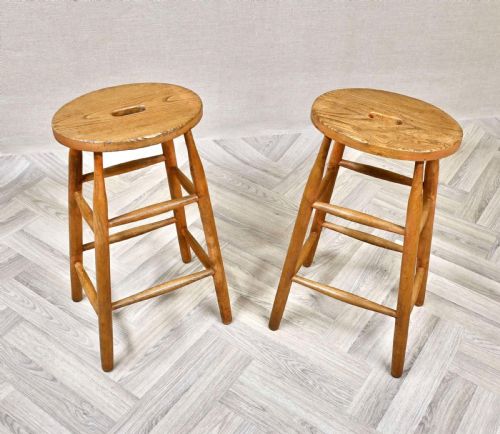
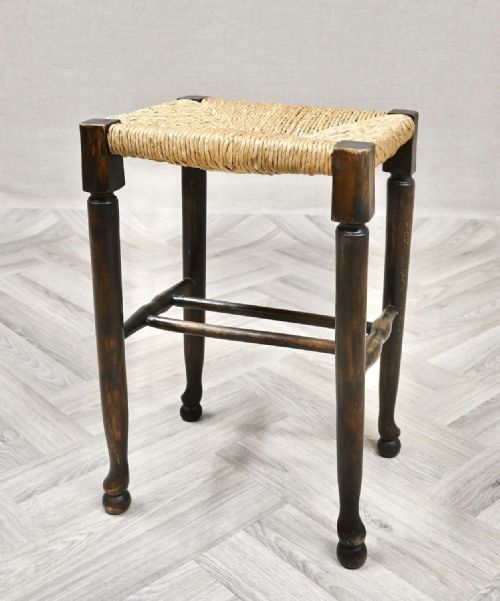
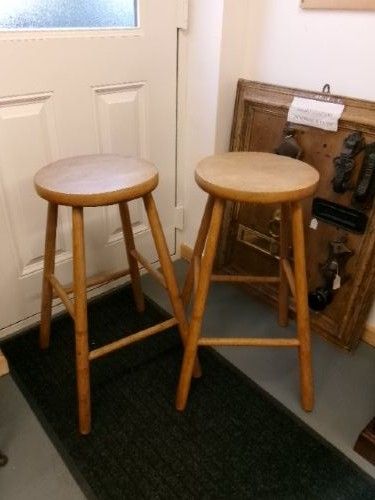
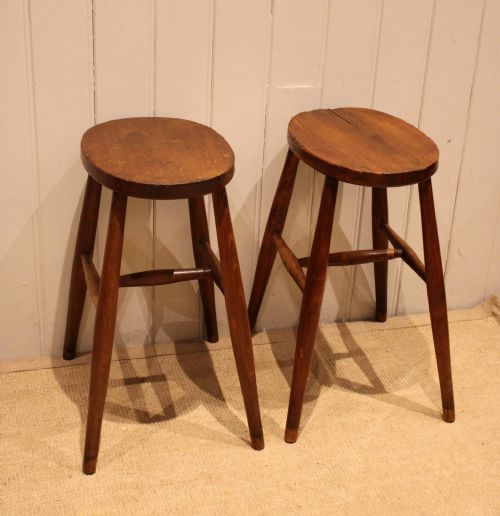


Rustic Wooden High Stool
A rustic wooden high stool brings honest utility and vernacular character to any room, offering robust seating built for working spaces.
Rustic Wooden High Stool
A rustic wooden high stool combines practical elevation with sturdy construction, serving purposes that range from kitchen seating to traditional tavern use. Buyers searching for a rustic wooden high stool will discover pieces originating from the nineteenth century up through the nineteen-forties, spanning domestic, commercial and workshop settings.
The selections on this page encompass various utilitarian forms, including clerk's stools, pub and tavern seating, mill worker's stools and laboratory variants. Most examples emerge from English and French country traditions, displaying straightforward joinery designed purely for utility rather than display.
Makers produced these tall seats to withstand heavy daily wear, resulting in sturdy footrests and time-worn surfaces. The forms remain remarkably functional, fitting neatly beneath modern breakfast bars or serving as standalone architectural accents.
Materials and construction methods
Craftsmen utilised native hardwoods like elm, beech, oak, sycamore and birch to ensure the framework could endure constant heavy use. Seats often feature shaped or dished solid timber, whilst legs are frequently turned on a lathe and secured with sturdy stretchers.
Makers employed traditional wedged tenon joints and pegged construction to keep the tall frames rigid over decades of shifting weight. Rush seating also appears on specific vernacular examples, woven tightly to provide a resilient platform.
Listings span from the nineteenth century through to nineteen-forties workshop pieces, incorporating native timbers like elm, beech and rush.
Understanding quality in vernacular seating
Quality rests primarily in the choice of timber and the integrity of the original joints rather than ornamental decoration. Dense woods like wild elm or sycamore provide superior seat grain and durability compared to simpler utilitarian pine.
The balance between patination and structural survival dictates the standing of a piece. Examples retaining their original turned stretchers and uncompromised footrests demonstrate the enduring skill of the original country carpenter.
The Rustic Wooden High Stool Glossary
- Vernacular
- Everyday objects built by local artisans for specific practical tasks rather than high-style design. These pieces rely on regional traditions and readily available materials.
- Stretcher
- A horizontal support connecting the legs of a stool to provide structural rigidity. On high stools, stretchers frequently double as footrests.
- Rush
- Dried marsh grass woven into cord and used to create flexible, supportive seating platforms. It requires considerable skill to weave tightly across a wooden frame.
- Turned
- Wood shaped on a lathe by rotating it against a cutting tool to create symmetrical legs and spindles. This technique is typical of nineteenth-century seating.
Rustic Wooden High Stool: Frequently Asked Questions
How do I style a high stool at home?
Pair these tall seats with a kitchen island or breakfast bar to introduce immediate warmth and historic texture. Their narrow footprints make them practical for smaller spaces where traditional chairs feel too bulky.
Allow the aged timber and natural surface marks to contrast cleanly against modern kitchen finishes. They also function well as standalone display stands for plants or ceramics when not in use for seating.
Were these stools used in pubs?
Many examples on this page served customers in nineteenth-century taverns, wine bars and public houses. Their elevated height allowed patrons to reach higher counters comfortably.
Commercial environments demanded robust construction, which explains the thick elm tops and heavy beech stretchers. These pieces were built to withstand continuous public use without wobbling.
How do I date a wooden stool?
Examine the tool marks, timber selection and construction methods to establish an approximate age range. Nineteenth-century examples often display hand-turned legs and deep natural patination from decades of handling.
Nineteen-thirties and forties pieces tend to show slightly more standardised turning or simpler workshop assembly. Comparing the wear patterns around the footrests also reveals how long the piece has been in service.
Are rush seats durable?
Rush seating offers surprising resilience when kept away from excessive moisture and damp environments. Woven marsh grass tightens further with use, creating a supportive platform.
Maintenance involves keeping the natural fibres dry and occasionally cleaning them with a soft brush. Historic rush seating carries its own history through gentle softening and smoothing of the strands.