






Rustic Wooden Entry Bench
A rustic wooden entry bench grounds a hallway with honest timber and centuries of utilitarian grace.
Rustic Wooden Entry Bench
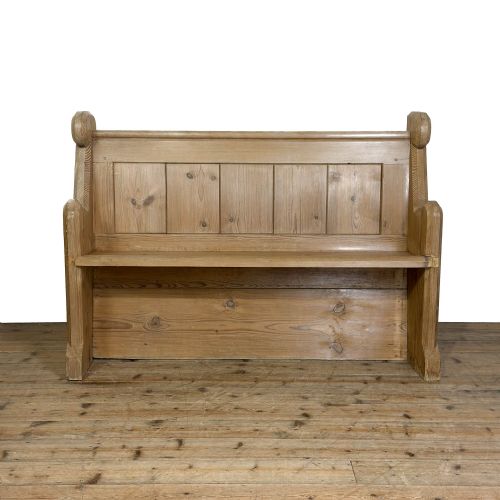
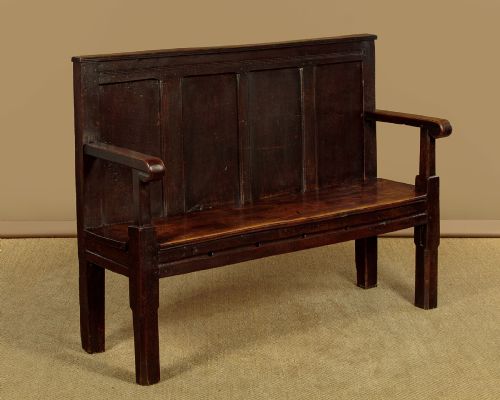
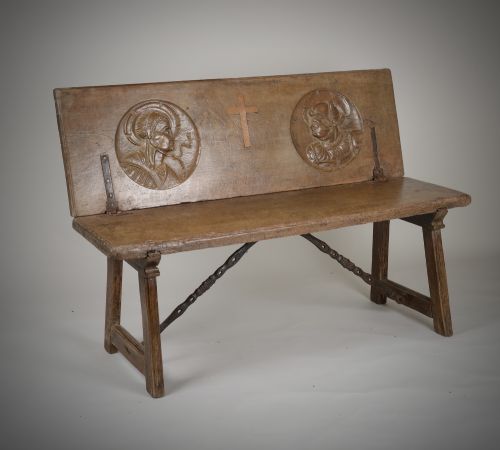
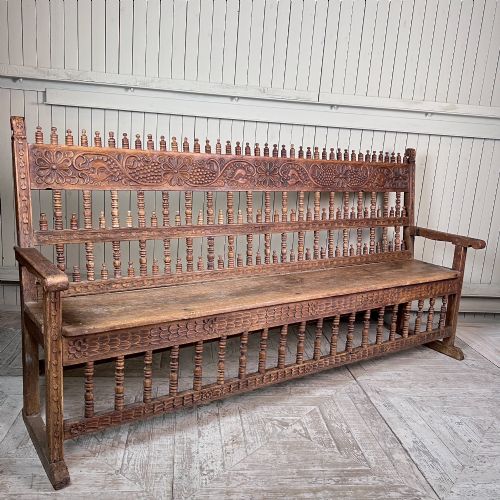
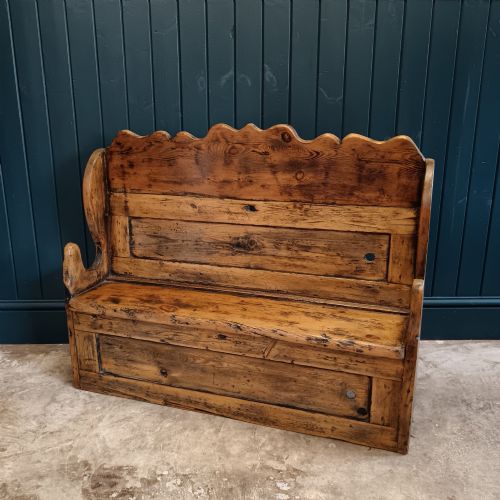
A rustic wooden entry bench serves as both practical seating and architectural presence for a hallway, originating in forms ranging from simple church pews and tavern benches to enclosed box settles. When searching for a rustic wooden entry bench, buyers encounter pieces fashioned for domestic, ecclesiastical, and public spaces across Britain and continental Europe.
The selections span significant periods, including pieces from the sixteenth, eighteenth, nineteenth, and early twentieth centuries, reflecting diverse regional aesthetics such as Welsh, French Provincial, Spanish Colonial, and Austrian vernacular traditions.
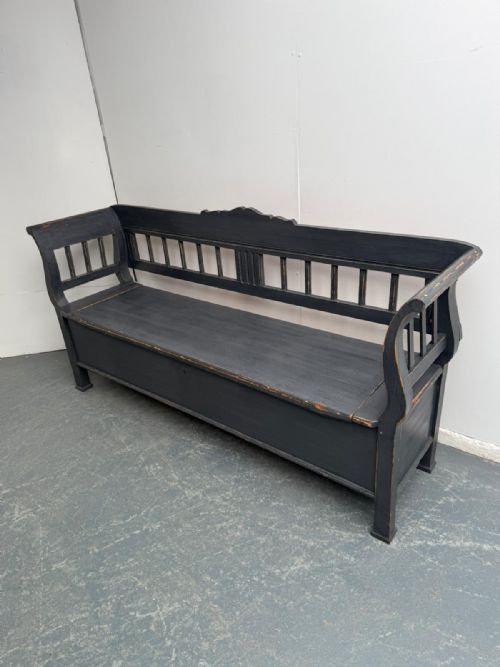
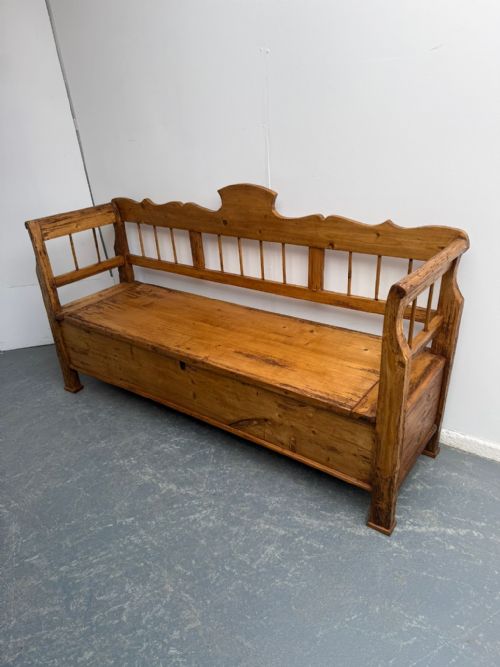
Box settles with integrated storage compartments and open hall seats dominate the forms available, often showing the honest wear of daily use in past centuries.
Materials and construction methods
Craftsmen built these seating forms predominantly from domestic timbers such as pine, oak, elm, cherrywood, and sycamore, often pairing structural hardwoods with more accessible softwoods. Joints were typically pegged or pinned by hand to withstand heavy daily demands in farmhouses, taverns, and churches.
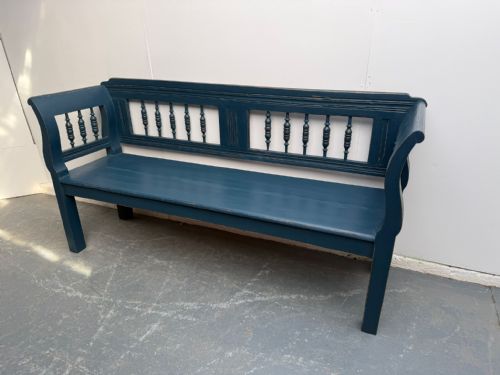
Many examples retain their original painted surfaces, from soft greys and creams to blues and greens, while others exhibit scrubbed, bleached, or waxed finishes that highlight the natural grain of the timber.
Rustic Wooden Entry Bench Retail Price Guide 2026
Typical asking prices for rustic wooden entry bench among the pieces listed under this phrase on Sellingantiques today, from the lower quarter to the upper quarter. They describe what is for sale here now, not the wider market.
Distinctions in quality and character
Quality in these vernacular pieces rests upon the integrity of the original construction and the preservation of authentic surface finishes rather than refined cabinetmaking. Examples retaining their untouched original paint or rich, historic patina command greater interest than those stripped or overly restored.
Proportion and structural balance also separate exceptional regional forms, such as high-backed settles with heart cut-outs or deep box storage, from more utilitarian workshop output.
The Rustic Wooden Entry Bench Glossary
- Settle
- A wooden bench with a high back, solid arms, and frequently a box base used for storage. This form kept drafts away from the sitter in unheated historic rooms.
- Box settle
- A variation featuring a hinged seat lifting to reveal a compartment beneath. It doubled as a linen or general storage chest in modest households.
- Church pew
- A long, fixed wooden bench designed for ecclesiastical seating. They often display simple plank backs and sturdy side panels.
- Tavarn bench
- A long, robust seating form constructed for heavy commercial use in public houses. Their construction prioritises sheer durability over ornamental detail.
- Patina
- The deep surface sheen and coloration developed by wood and paint over decades of handling and waxing. It serves as a visual record of an object's age.
Rustic Wooden Entry Bench: Frequently Asked Questions
What is a box settle?
A box settle is a high-backed wooden bench featuring a concealed storage compartment beneath the lifting seat. This dual-purpose design protected occupants from draughts while offering practical household storage.
Such pieces were common in European farmhouses and halls where space and storage were at a premium.
How do I care for an old pine bench?
Maintain antique pine and fruitwood benches by feeding the dry timber periodically with a traditional beeswax polish. Avoid placing them near direct heat sources or in fluctuating humidity to prevent wood splitting.
Gentle dusting with a soft cloth preserves delicate original painted finishes without abrasion.
Where were these benches originally used?
These seating forms served diverse roles in country houses, farm kitchens, churches, and public taverns. Hallways and entryways utilised them for putting on boots and welcoming visitors out of the elements.
Institutional pieces like church pews fulfilled communal needs before finding their way into domestic settings.
Are painted finishes original?
Many listings preserve original historic paint layers, ranging from muted greys and blues to creamy tones applied generations ago. Close inspection reveals crackle, wear patterns, and pigment layering consistent with age.
Unpainted examples generally display scrubbed, waxed, or bleached surfaces resulting from centuries of scrubbing and use.
How do I date an antique bench?
Dating relies on construction techniques, tool marks, timber selection, and stylistic details typical of specific periods like the Georgian or Victorian eras. Hand-cut joinery, pegged joints, and oxidized timber surfaces point to genuine antiquity.
Regional vernacular traits further help narrow down the geographic origin and era of manufacture.