



Rustic Wooden Dining Carver
A rustic wooden dining carver brings tactile country character and substantial seating to the table, anchored by solid timber construction and traditional regional design.
Rustic Wooden Dining Carver
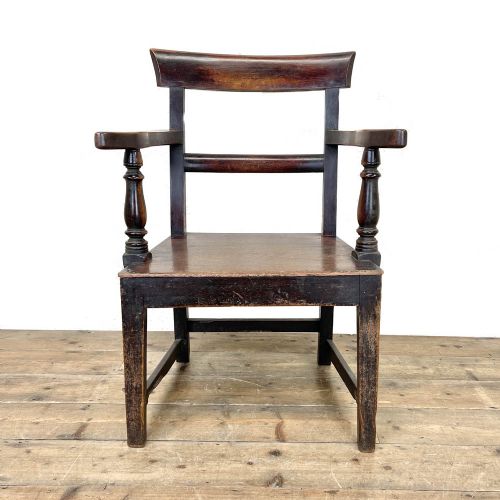
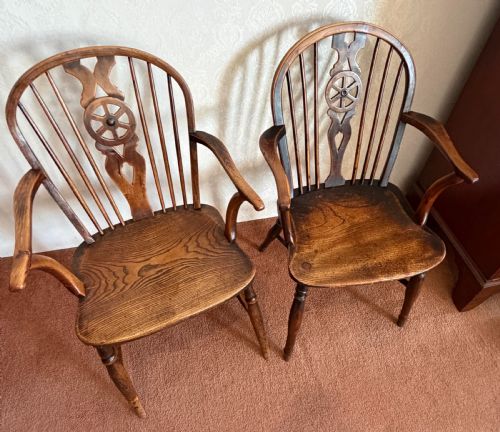
A rustic wooden dining carver is an armchair designed for the head of the table, incorporating vernacular forms from the eighteenth, nineteenth, and early twentieth centuries. These chairs originate primarily from English and French regional workshops rather than metropolitan cabinet-makers.
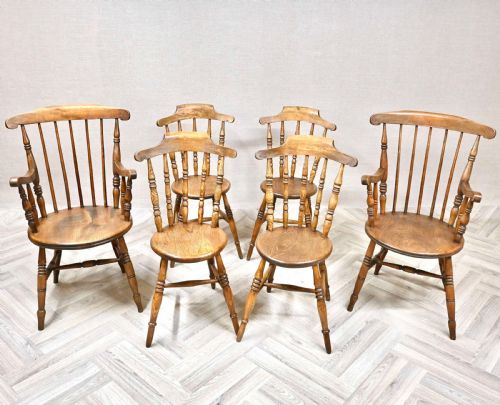
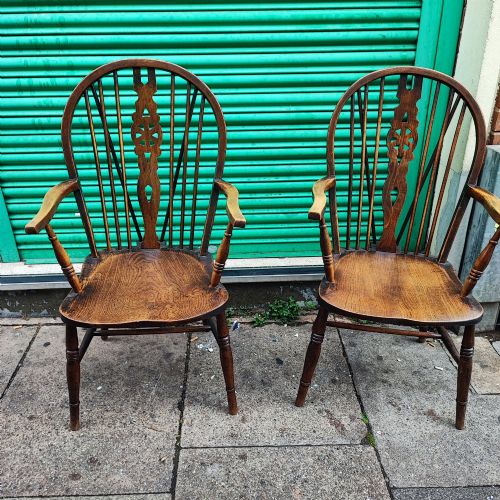
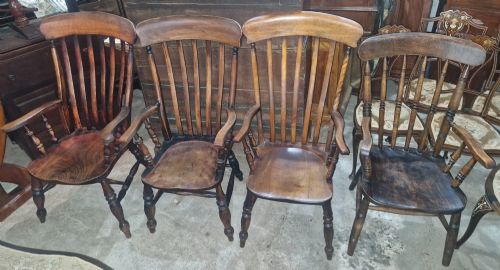
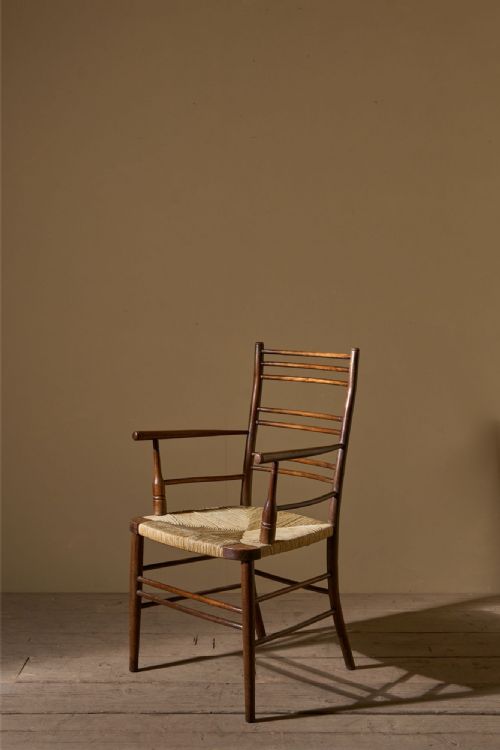
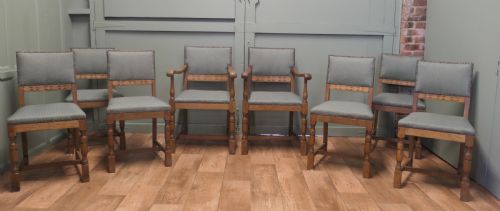
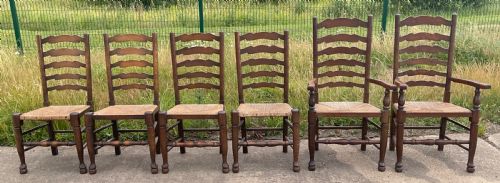
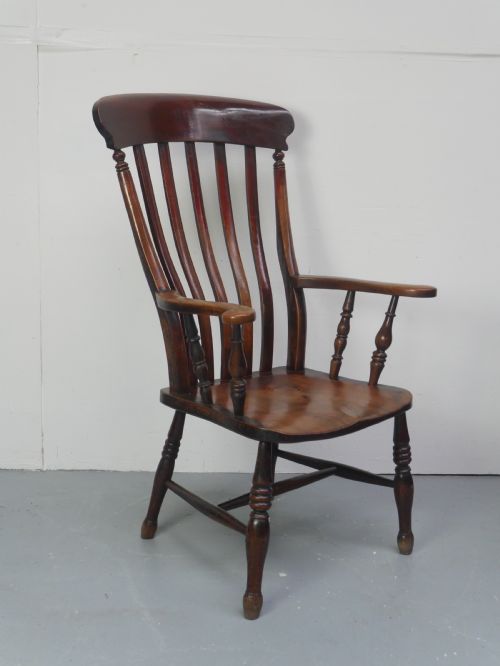
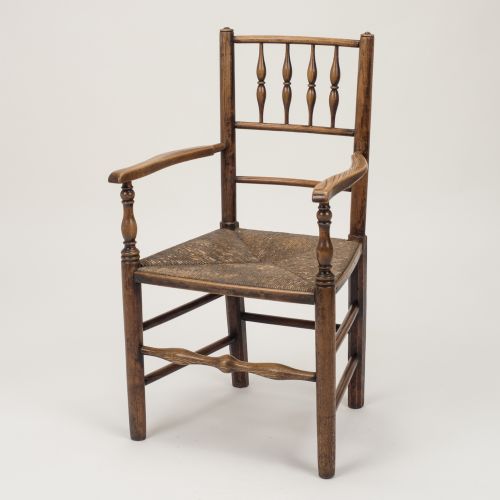
The most common examples on this page are Windsor chairs and ladderback carvers, often discovered individually or in sets. They appear in styles ranging from Georgian country and Victorian farmhouse to Arts and Crafts.
Makers utilised local hardwoods to build sturdy armchairs intended for daily utility in farmhouses, cottages, and country houses. Their forms reflect centuries of regional woodworking traditions passed down through generations.
Materials and construction methods
Construction relies heavily on a combination of native timbers, predominantly elm seats paired with ash, oak, beech, or fruitwood for the spindles, legs, and bentwood bows. Elm provided a tough, interlocking grain that resisted splitting when the saddle seat was hollowed out.
Makers employed traditional joinery techniques including stick-back, spindle-back, and Windsor construction, where legs and spindles are wedged directly into bored seats. Rush or fabric pads were frequently added to seats for extra comfort.
Rustic Wooden Dining Carver Retail Price Guide 2026
Typical asking prices for rustic wooden dining carver among the pieces listed under this phrase on Sellingantiques today, from the lower quarter to the upper quarter. They describe what is for sale here now, not the wider market.
Listings feature regional timbers including elm, ash, oak, beech, fruitwood, and yew across eighteenth, nineteenth, and early twentieth-century periods.
Distinctions in quality and execution
Quality separates chairs with well-proportioned Windsor bows and deeply sculpted saddle seats from simpler, heavier productions. The harmonious matching of timbers, such as contrasting yew and elm, indicates superior regional craftsmanship.
The integrity of the structural joints and the retention of original surface patination distinguish the finest pieces. Chairs that preserve their early timber tones and honest wear demonstrate the enduring value of country craftsmanship.
The Rustic Wooden Dining Carver Glossary
- Carver chair
- An armchair designed to match a set of dining chairs, typically placed at the head of the table. These seats provide wider arm rests and sturdier frames than standard dining chairs.
- Windsor chair
- A wooden chair constructed with a solid sculpted seat into which the legs and back spindles are tenoned directly. The back often incorporates a bentwood bow or a high spindle-supported crest.
- Ladderback
- A chair style featuring horizontal slats or bars set between the rear upright posts. These slats are frequently curved to fit the contours of the sitter's back.
- Rush seat
- A seating surface woven from dried marsh rushes twisted into cords. This traditional method creates a durable, textured matting across the seat frame.
- Vernacular furniture
- Domestic pieces made by local regional craftsmen using traditional methods and native materials. These items prioritise functional utility and local style over metropolitan fashions.
Rustic Wooden Dining Carver: Frequently Asked Questions
What is a rustic wooden dining carver?
A rustic wooden dining carver is an armchair designed for the end of a dining table, built from regional timbers using traditional country joinery.
These pieces encompass forms such as Windsor armchairs, ladderbacks, and spindle-backs dating from the eighteenth to the early twentieth centuries.
How were country carver chairs used?
Country carver chairs served as the primary seating for the head of the household at farmhouse and cottage dining tables.
Their sturdy armrests and supportive backs made them versatile for daily tasks beyond dining, including working near the hearth or sewing.
How do I live with antique wooden armchairs?
Living with antique wooden armchairs involves placing them around a dining table or using them as standalone accent seats in a living space.
Keep them away from direct heat sources and sudden temperature shifts to protect the historic timber and traditional joinery from drying out.
How do I identify different periods of country chairs?
Identifying periods relies on observing the evolution of turned legs, arm shapes, and overall structural proportions from Georgian styles through to Victorian farmhouse iterations.
Earlier pieces often display softer tool marks and native fruitwood or elm patination, while later Arts and Crafts examples emphasise unadorned structural honesty.