
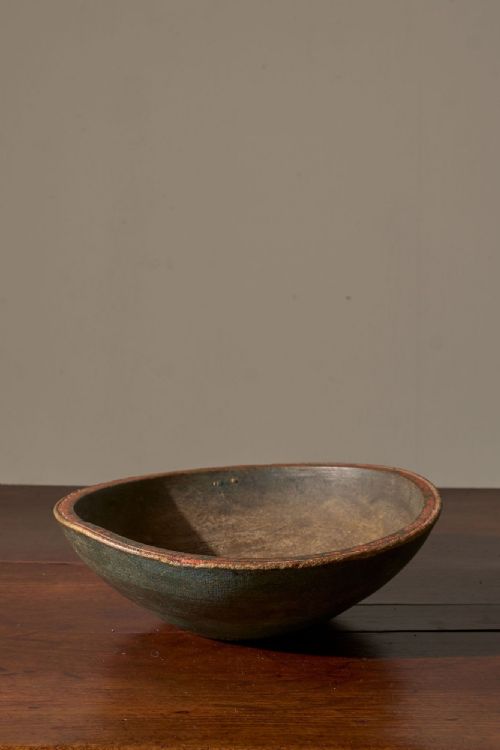


Rustic Wood Dough Bowl
These rustic wood dough bowl examples are working vessels that bring genuine texture and warmth to modern interiors.
Rustic Wood Dough Bowl
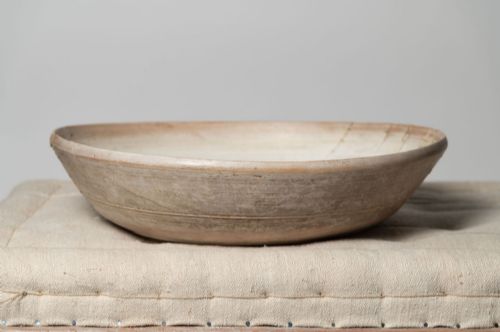
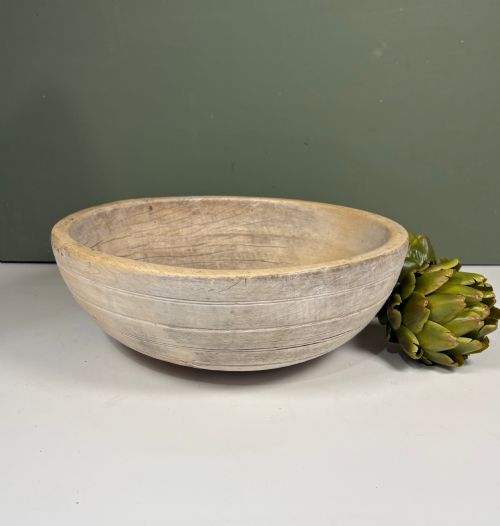
A rustic wood dough bowl is a utilitarian trough historically used for mixing flour and kneading bread in domestic kitchens. You are looking at deep, rounded vessels designed for heavy everyday labour rather than display. On this page, you will most frequently encounter nineteenth-century examples alongside early twentieth-century pieces.
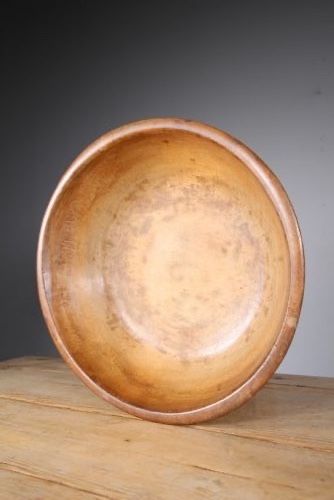
The inventory spans several regional traditions, including French farmhouse kneading bowls, Swedish dairy vessels, and English sycamore bowls. Alongside these European pieces, Indian Shisham wood platters and continental treen appear within the selection. Each form retains the deep, open profile shaped by its original domestic function.
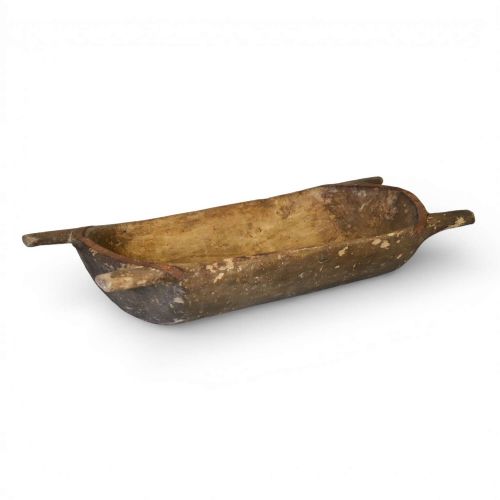
These items emerge from various periods reaching back to the eighteenth century, with nineteenth-century items forming the bulk of the offering. Forms range from heavy dairy bowls to large carved wooden platters and dug-out vessels. Their survival relies on decades of heavy daily use in farmhouses and dairies.
How they were made
The construction relies on solid timber, with makers selecting native hardwoods such as sycamore, pine, birch, and Shisham wood. Logs were typically halved and hollowed out using hand tools to create the characteristic dug-out basin. This subtractive woodworking method produced thick walls capable of withstanding the pressure of kneading dough.
Surface finishes vary from bare, hand-polished timber to surviving traces of early paintwork. Centuries of handling and contact with flour, milk, or food oils developed a rich, warm patina across the wood. Tool marks left by the original adze or gouge remain visible on the exterior and interior surfaces of many pieces.
Many bowls still bear the faint, powdery ghost of flour from their final working decades in European farmhouses.
What varies in quality
Quality rests in the depth of the carving and the integrity of the original timber block. A superior bowl exhibits harmonious proportions and wall thicknesses that taper evenly from rim to base. The character of the surface wear dictates much of the appeal, where deep patination speaks of honest utility.
The choice of wood species influences both weight and grain pattern, with dense sycamore and figured timbers commanding particular attention. Surviving original paint finishes or untouched tool marks elevate an individual piece above plain utility. Structural stability despite historical shrinkage marks the distinction between ordinary vessels and enduring examples.
The Rustic Wood Dough Bowl Glossary
- Treen
- Small handmade wooden domestic objects and utensils used in the household. This category covers everything from dairy bowls to spoons and platters.
- Patina
- The surface sheen and colour developed over decades of handling, exposure to light, and natural oils. It forms the primary visual indicator of age in wooden objects.
- Dug-out
- A construction method where an entire vessel is carved from a single solid block of wood rather than assembled from multiple staves. This technique provides structural strength for heavy kitchen work.
- Dairy bowl
- A shallow or deep wooden basin utilised for setting milk, skimming cream, or churning butter. These vessels often feature wide rims for easy lifting.
Rustic Wood Dough Bowl: Frequently Asked Questions
What is a rustic wood dough bowl used for today?
These bowls serve primarily as decorative centrepieces on dining tables, sideboards, or kitchen islands. Their deep wells make them suitable for holding fruit, pinecones, or seasonal displays.
Historically, they held bread dough during the rising process or processed milk in farm dairies. Modern owners repurpose them to add organic texture and warmth to contemporary living spaces.
How do I care for an antique wooden bowl?
Keep wooden vessels away from direct heat sources, radiators, and strong sunlight to prevent the timber from drying out and splitting. Dust the surface regularly with a dry cloth.
Avoid washing them in water or placing them in dishwashers. Occasional application of food-safe mineral oil or beeswax helps nourish the dry wood and preserve the patina.
How can I tell the age of a dough bowl?
Age is determined by observing the tool marks left on the exterior, which indicate whether hand adzes, gouges, or mechanical lathes were utilised. The depth and character of the surface patina provide further clues about long-term usage.
Species of wood and construction traits also point toward specific periods. Eighteenth and nineteenth-century pieces typically display irregular hand-carved contours and heavy wear patterns.
Are these bowls waterproof?
Most antique dough bowls are not reliably waterproof due to shrinkage, minor drying cracks, and the absence of modern sealants. Timber naturally expands and contracts as ambient humidity changes over the decades.
If you plan to use one for fresh flowers or plants, place a waterproof liner inside the basin. This protects the historic wood from moisture damage while allowing you to use the bowl.