



Rustic Dough Bowl
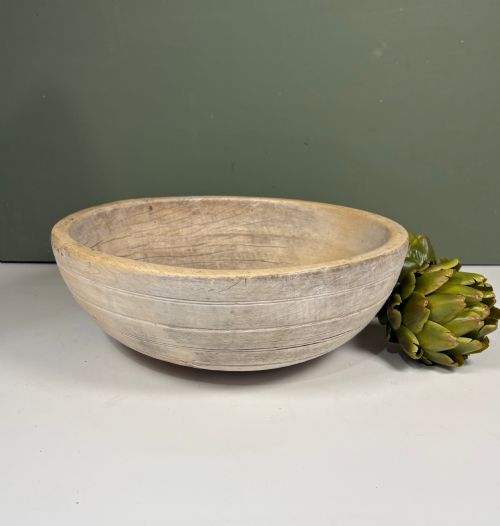
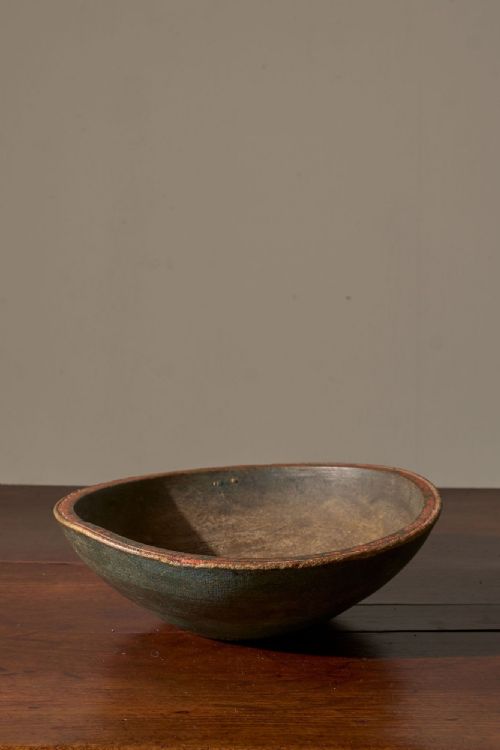
A rustic dough bowl brings practical agrarian history indoors, offering deep, tactile timber vessels shaped for kneading bread and holding country supplies.
Rustic Dough Bowl
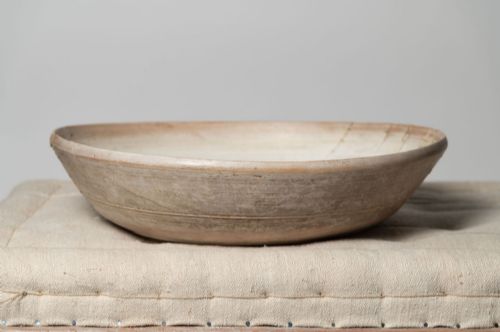
A rustic dough bowl embodies the honest utility of domestic life across past centuries, originating as an essential vessel for food preparation in farmhouse kitchens. When searching for a rustic dough bowl, buyers encounter forms that range from deep kneading troughs to wide dairy vessels and hand-carved wooden platters.
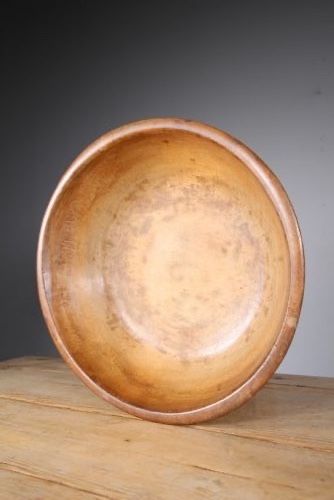
The selections span various regional traditions, notably French, English, and Swedish country workshops, alongside early twentieth-century carved examples. These pieces frequently appear in timber species such as sycamore, pine, and birch, reflecting the local resources utilised by rural makers.
Beyond standard kitchen utility, these wooden basins serve multiple decorative and functional purposes in contemporary interiors. The survival of these domestic objects demonstrates the enduring appeal of simple agrarian craftsmanship.
Materials and construction
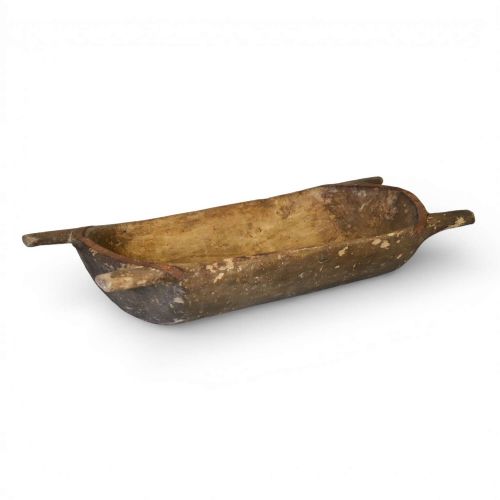
Makers shaped a rustic dough bowl using solid hardwoods and softwoods, frequently selecting sycamore for its dense grain and resistance to splitting during heavy kitchen tasks. Craftsmen dug out solid blocks of timber or joined planks together to form the deep cavities necessary for kneading yeast dough and mixing ingredients.
Surfaces bear the physical evidence of traditional hand tools, including adzes and gouges, which leave subtle facets across the interior and exterior walls. Over generations of use and cleaning, the bare timber develops a rich, tactile patina that highlights the natural grain of the wood.
Regional variations documented here include English, French, and Swedish country traditions alongside Indian shisham wood platters.
Assessing quality and character
Quality in a rustic dough bowl rests in the integrity of the original timber and the depth of the patination accumulated through decades of domestic service. Examples retaining their honest tool marks and original painted surfaces stand apart from heavily restored or sanded pieces.
Proportion and scale also dictate desirability, with larger kneading troughs and wide dairy bowls commanding attention for their strong sculptural presence. The balance between practical wear and structural preservation determines the character of each individual vessel.
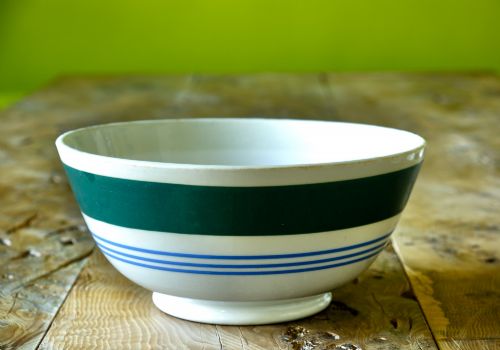
T G Green Pottery
The Rustic Dough Bowl Glossary
- Treen
- Small handmade wooden domestic objects and utensils produced before the widespread adoption of mass manufacturing. These items include bowls, platters, and spoons carved from local timbers.
- Patina
- The deep, lustrous surface sheen developed on wood through years of handling, polishing, and natural oxidation. It serves as a visual indicator of age and frequent use.
- Dairy bowl
- A wide, shallow wooden or earthenware vessel utilised in traditional farmhouses for setting milk to allow the cream to rise to the surface. They possess heavy turned or carved rims.
- Dug out bowl
- A vessel formed by excavating a single solid block of timber rather than joining multiple pieces together. This construction method provides exceptional structural stability.
- Shisham wood
- A dense hardwood native to the Indian subcontinent, known for its rich grain patterns and durability. It appears in utilitarian platters and vessels.
Rustic Dough Bowl: Frequently Asked Questions
What is a rustic dough bowl used for?
Historically, these deep wooden vessels served farm households for kneading bread dough, mixing ingredients, and setting dairy produce. Their generous proportions made them central to daily domestic food preparation.
Today, homeowners utilise them as decorative centrepieces on tables, for holding household items, or simply displayed empty to showcase the historic grain and carved texture.
How do I clean a wooden dough bowl?
Maintain antique wooden surfaces by wiping them gently with a damp cloth and drying them immediately. Avoid soaking timber vessels in water or running them through modern dishwashing appliances.
Applying a light coat of food-safe mineral oil periodically helps nourish the dry wood and preserves the depth of the historic patina without sealing the pores permanently.
How can I tell the age of a wooden bowl?
Dating relies heavily on observing the tool marks left by the maker, the species of timber used, and the overall wear patterns across the rim and base. Hand-dug surfaces and early adze marks point to traditional rural production methods.
Additionally, the presence of original painted decoration or regional stylistic traits provides strong clues to the period and geographic origin of the piece.
Are these bowls food safe?
Many older wooden vessels have absorbed oils, flour, and natural residues over centuries of active kitchen use. While some owners use them for dry foodstuffs, others prefer to keep them purely for display.
Evaluating the interior surface condition helps determine whether a particular bowl is suitable for holding unwrapped food items in a modern setting.