




Rustic Walnut Side Table
These rustic walnut side table examples bring warmth and character, offering practical surfaces shaped by centuries of use across European provinces.
Rustic Walnut Side Table
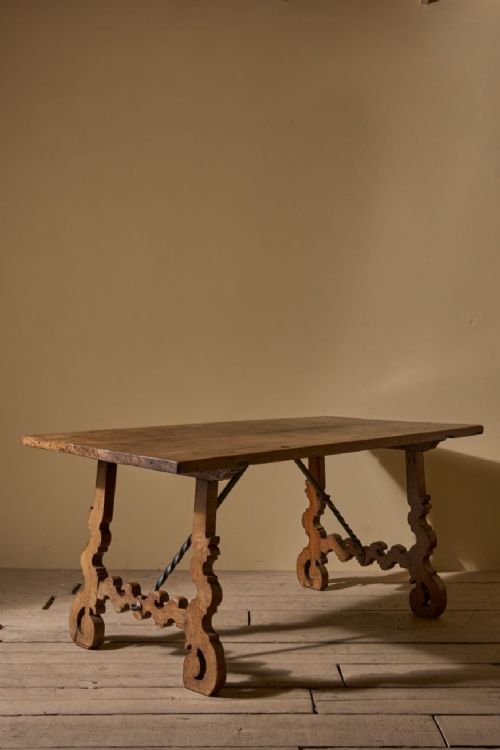
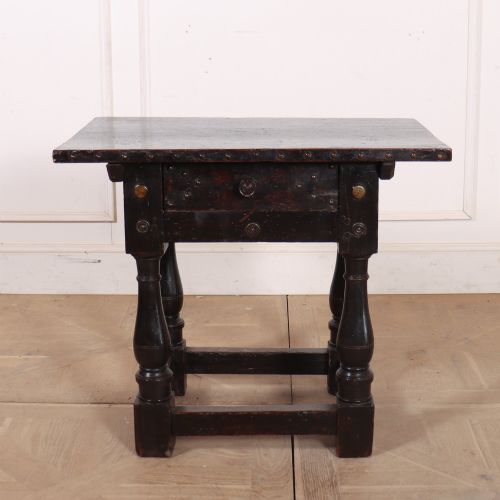
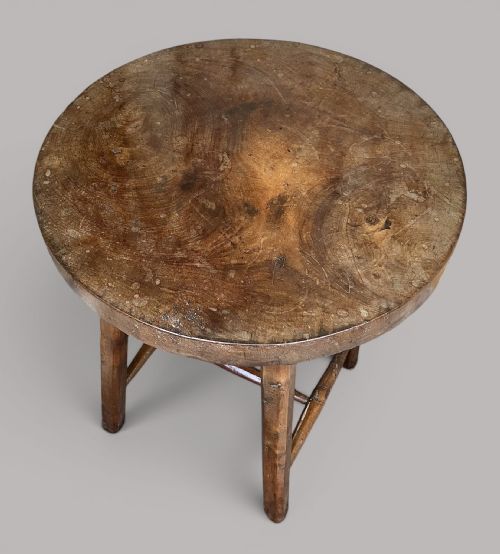
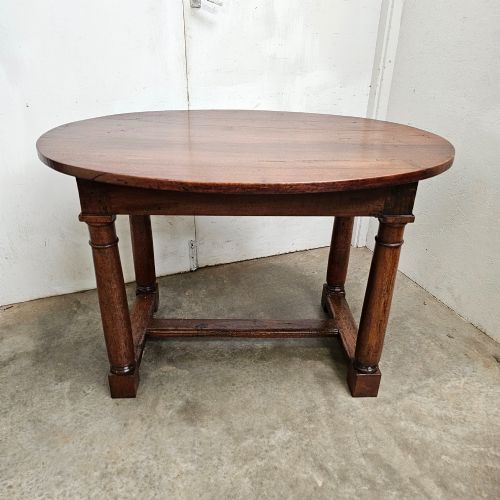
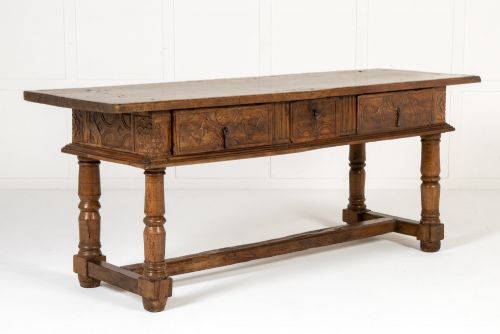
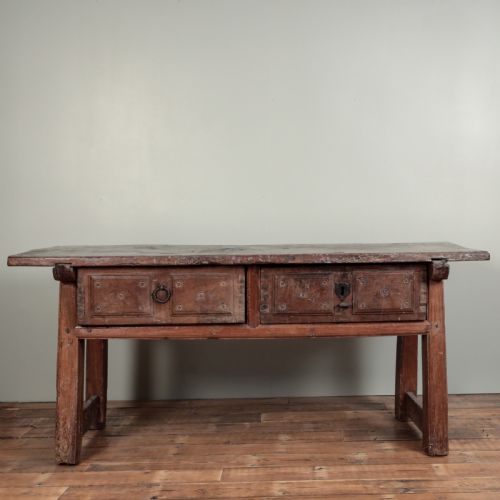
A rustic walnut side table brings together regional European craftsmanship and rich timber, spanning the seventeenth, eighteenth, and nineteenth centuries. Buyers searching for a rustic walnut side table encounter various forms, including console tables, serving tables, and circular tables from Spanish, French, and Italian origins.
The inventory leans heavily towards provincial pieces, showing influences from Spanish Baroque, French Provincial, and Georgian Vernacular styles. Simplicity of line and honest construction define these items, making them versatile additions to modern and traditional interiors alike.
Materials and Construction
Makers utilised solid walnut, often paired with secondary woods like fruitwood and oak, building frames designed for daily utility. Joinery relies on traditional methods suited to regional workshops rather than mass production.
Metal elements such as iron, wrought iron, and brass appear as structural braces, stretchers, or drawer pulls. These supplemental materials provided necessary strength to tables subjected to heavy domestic use.
Rustic Walnut Side Table Retail Price Guide 2026
Typical asking prices for rustic walnut side table among the pieces listed under this phrase on Sellingantiques today, from the lower quarter to the upper quarter. They describe what is for sale here now, not the wider market.
Listings span the 17th, 18th, and 19th centuries, featuring walnut alongside iron, fruitwood, and oak.
Judging Quality
Quality rests in the depth of the timber grain, the honesty of the patination accumulated over generations, and the integrity of the original structure. Superior examples maintain their primary surfaces without excessive intervention, showing the natural figure of the walnut.
Proportion and regional character distinguish finer pieces from simpler utilitarian items. The balance between the top, whether rectangular, oval, or demi-lune, and the supporting legs dictates the visual weight of the furniture.
The Rustic Walnut Side Table Glossary
- Provincial
- Describing furniture made in the regions rather than metropolitan centres, often displaying local adaptations of grander academic styles.
- Demi-lune
- A half-moon shape characteristic of console tables designed to sit flush against a wall.
- Baroque
- A flamboyant style prevalent in seventeenth and eighteenth-century Europe, visible in the dramatic lines of certain continental pieces.
- Fruitwood
- Dense, pale timber often used alongside walnut in provincial cabinetmaking for secondary parts or contrasting details.
- Patina
- The surface sheen and colour developed by wood over years of handling, polishing, and exposure to light.
Rustic Walnut Side Table: Frequently Asked Questions
Where did these tables originate?
The pieces originate primarily from European regions including Spain, France, and Italy, reflecting local domestic traditions.
Workshop production varied by country, incorporating regional woods and stylistic traits typical of the seventeenth and eighteenth centuries.
How do I style a rustic walnut side table?
These tables fit easily into hallways, living rooms, or bedrooms as functional surface areas for lamps or decorative objects.
Their restrained proportions allow them to sit comfortably alongside contemporary furniture without dominating a room.
What woods are used besides walnut?
While solid walnut forms the primary visual element, makers frequently incorporated oak and fruitwood into the underlying structure.
Metal components like wrought iron and brass also appear in structural stretchers and hardware.
How can I tell the period?
Dating relies on construction methods, timber selection, and stylistic cues associated with provincial European cabinetmaking.
Earlier examples from the seventeenth century often show heavier timber scantlings and simpler, robust joinery compared to later pieces.