

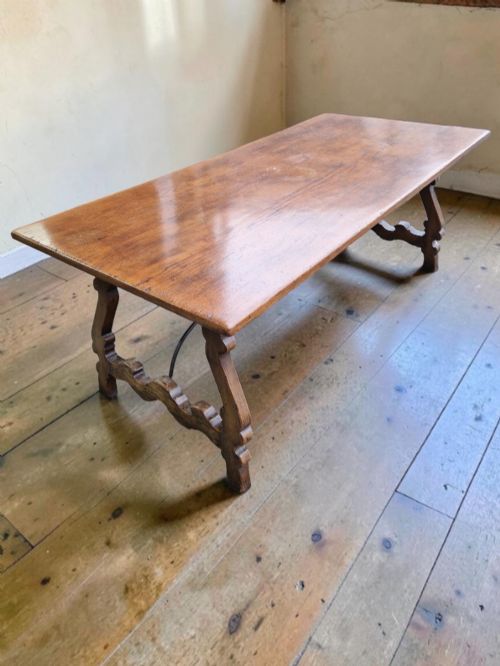
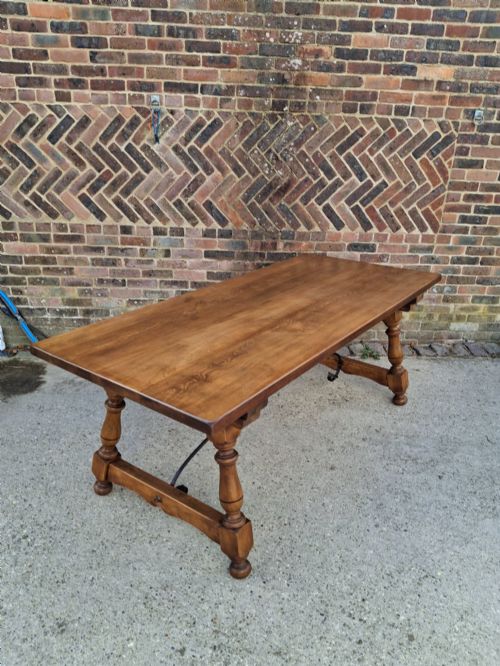
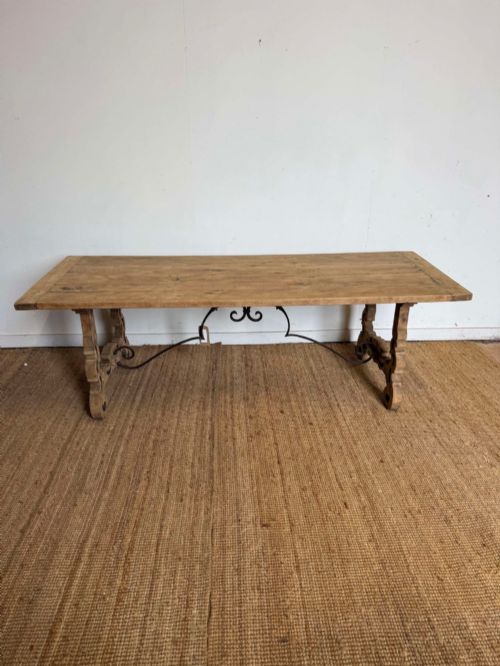
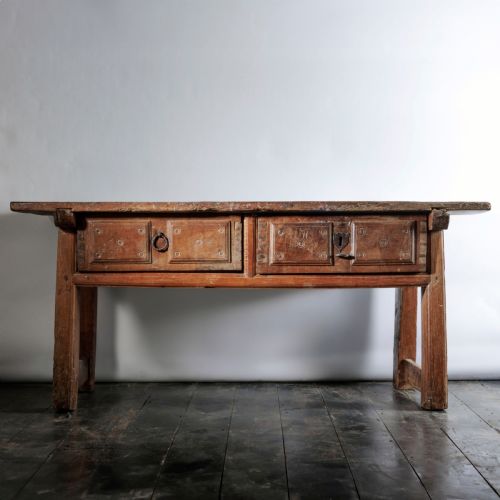





Rustic Spanish Trestle Table
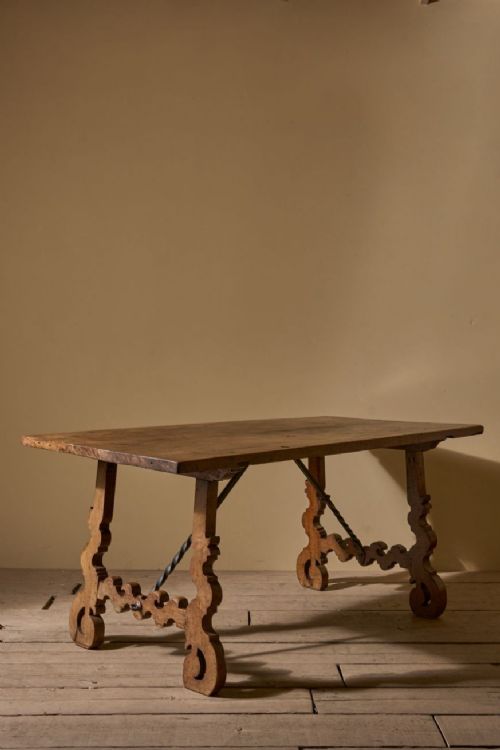
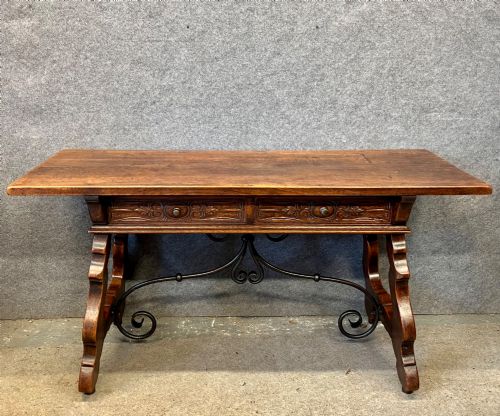
A rustic spanish trestle table brings heavy timber, forged iron and centuries of unpretentious function straight into a modern room.
Rustic Spanish Trestle Table
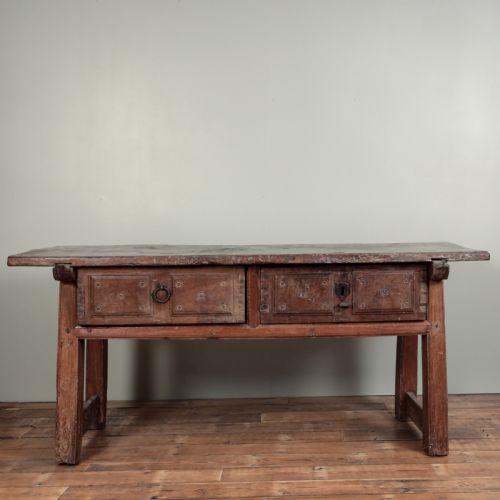
A rustic spanish trestle table draws on forms from the seventeenth, eighteenth and nineteenth centuries, alongside later revival pieces produced around nineteen ten and nineteen twenty. These pieces take the shape of dining tables, refectories, console tables, coffee tables, centre tables, desks and side tables.
The most common version met on this page is the walnut dining table, often spanning several feet and reflecting traditional Spanish provincial and baroque styles. They serve heavy domestic and social use, shaped by centuries of daily dining, writing and preparing food.
Construction relies heavily on solid timber joined to iron supports, creating a silhouette that is instantly recognisable in country house and farmhouse interiors. The forms range from grand refectory formats down to low coffee tables and compact side pieces.
Materials and construction
Timbers like walnut, oak, chestnut and fruitwood form the primary structure of these tables, worked into solid planks for tops and thick supporting frames. Carpenters selected these hardwoods for their density and resistance to warping under heavy daily use.
Wrought iron and forged iron appear in stretchers and braces, tying the wooden members together beneath the surface. This combination of timber and metal gives the trestles their characteristic rigidity and enduring weight.
Rustic Spanish Trestle Table Retail Price Guide 2026
Typical asking prices for rustic spanish trestle table among the pieces listed under this phrase on Sellingantiques today, from the lower quarter to the upper quarter. They describe what is for sale here now, not the wider market.
Listings span seventeenth, eighteenth and nineteenth centuries, alongside early twentieth-century revivals, utilising walnut, oak, chestnut, fruitwood and wrought iron.
Assessing quality
Quality rests in the selection of the timber and the honesty of the construction, where solid walnut or scrubbed oak shows deep grain and natural surface wear rather than applied veneers. The weight of the timber and the thickness of the top dictate the substance of the piece.
The integration of the ironwork marks the difference between standard production and superior craftsmanship, with hand-forged stretchers showing individual hammer marks and precise structural fit. Proportion and balance in the trestle base separate simple utility furniture from pieces of greater regional ambition.
The Rustic Spanish Trestle Table Glossary
- Trestle table
- A table consisting of two or more supports connected by a horizontal beam or stretcher that carries a solid top. This design allows for maximum legroom along the length of the table.
- Refectory table
- A long, narrow dining table traditionally used in monastic or large communal dining halls. The form translates directly into domestic rustic settings.
- Stretcher
- A horizontal member connecting the legs or feet of a table to increase stability. In these pieces, stretchers are frequently fashioned from forged or wrought iron.
- Scrubbed oak
- Oak timber that has been repeatedly washed and scrubbed to create a pale, clean, matte surface texture. It appears on farmhouse tops exposed to heavy daily cleaning.
- Fruitwood
- A dense timber taken from fruit-bearing trees such as pear, apple or cherry, used by country cabinetmakers for smaller tables and secondary elements.
Rustic Spanish Trestle Table: Frequently Asked Questions
How do I clean a walnut table?
Dust regularly with a dry cloth and clean occasionally with a slightly damp cloth using mild soap. Avoid harsh chemical polishes that can damage the aged timber surface.
Dry the wood thoroughly after wiping and treat periodically with natural wax to preserve the moisture and finish of the old grain.
Can I use these tables outside?
These tables are built for indoor domestic environments and exposure to damp or direct weather will damage the antique timber and iron. Keep them within temperature-controlled rooms to prevent splitting and warping.
Protect the surface from hot dishes and moisture rings using placemats to maintain the condition of the wood.
How do I tell an older table apart?
Earlier pieces from the seventeenth and eighteenth centuries show hand-cut joinery, adze marks on the timber underside, and heavy patination built up over generations of use. Revival pieces from the early twentieth century often display more uniform machine sawing and cleaner assembly.
Examine the fasteners and ironwork underneath, as hand-forged components differ noticeably from later industrial manufacturing.
Where should I place a trestle table?
Dining versions suit large kitchens, open-plan dining rooms or libraries where their substantial length can be appreciated from all sides. Smaller console and coffee table formats fit easily into hallways and sitting rooms.
Ensure there is adequate clearance around the trestle ends for seating and movement through the room.