
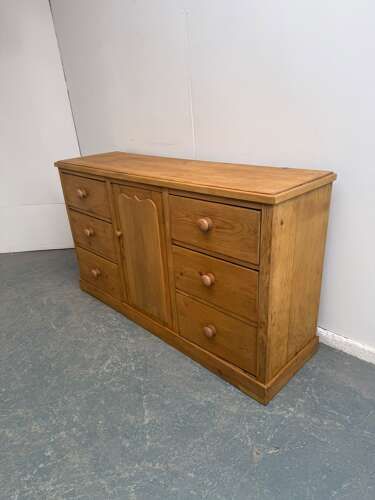
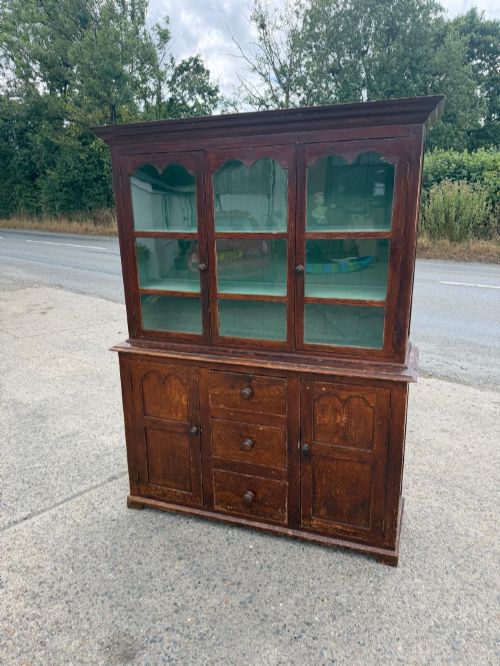
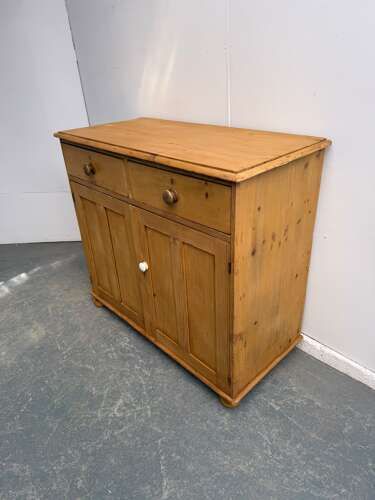
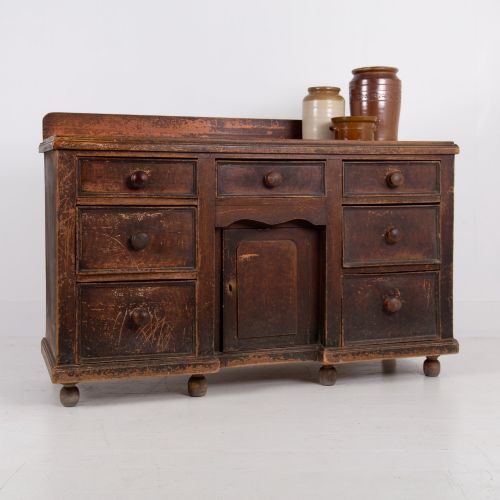

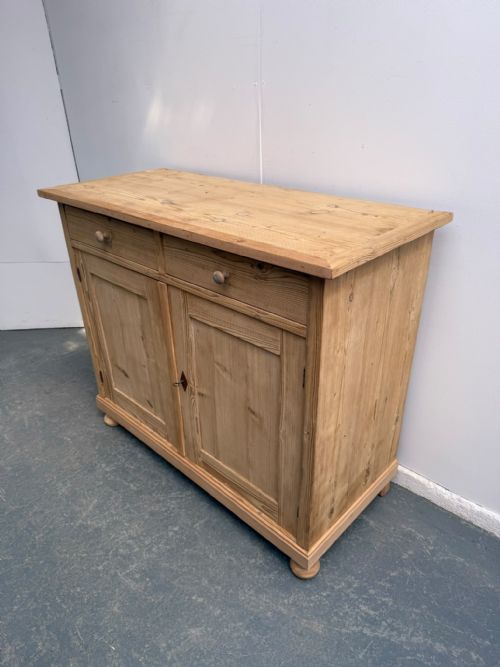
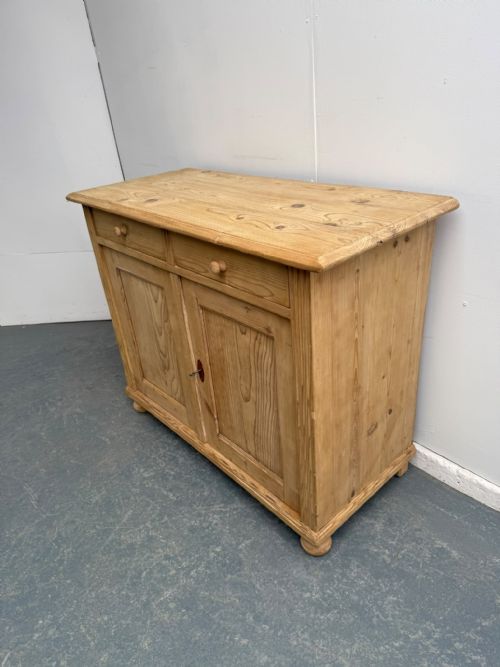
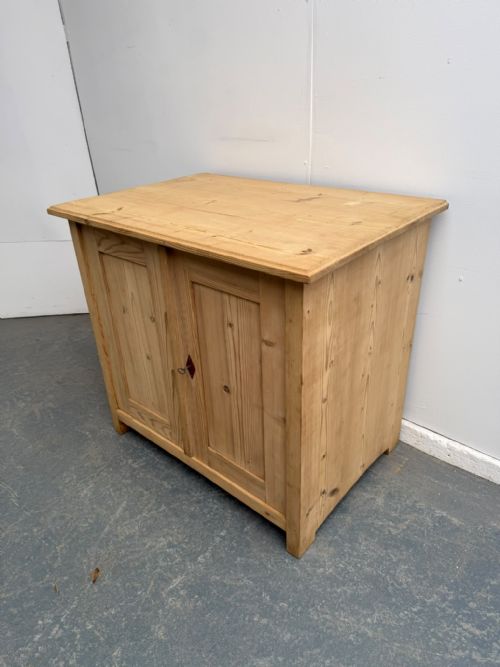
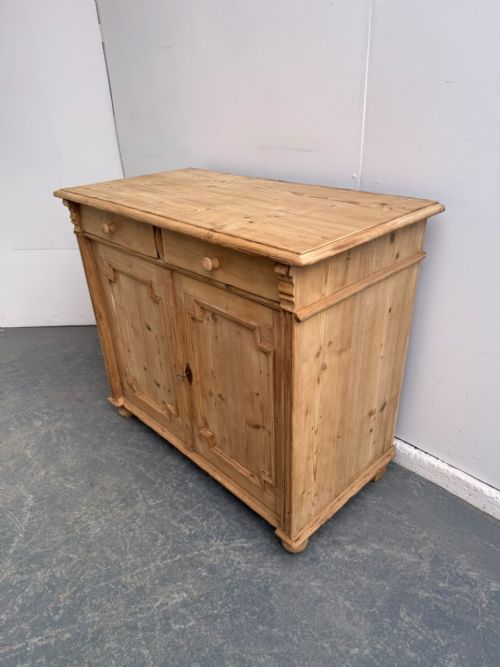
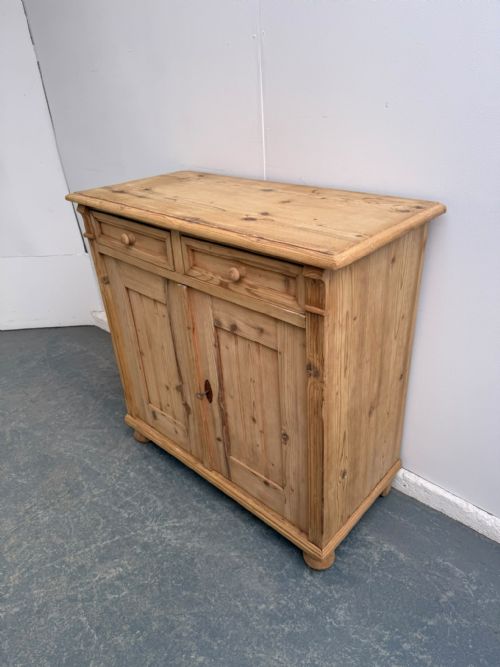
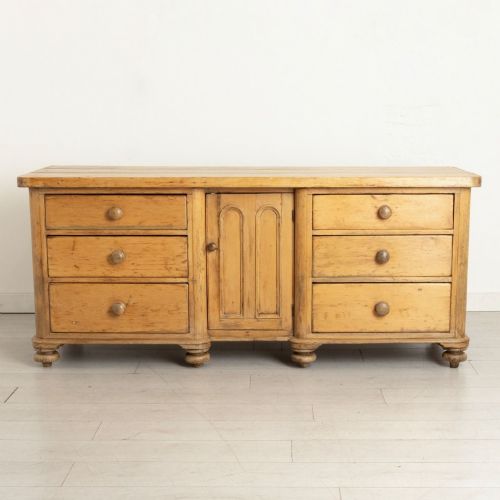
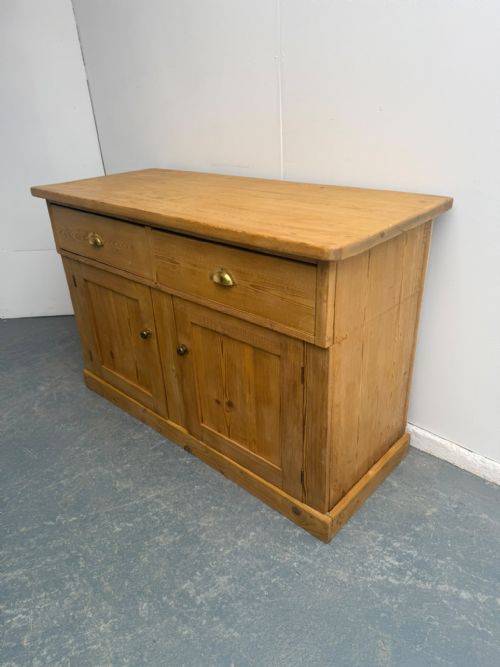
Rustic Pine Buffet
These rustic pine buffet examples bring honest utility and timeworn timber into daily life.
Rustic Pine Buffet
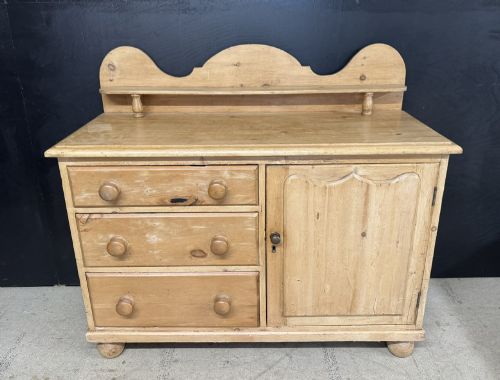
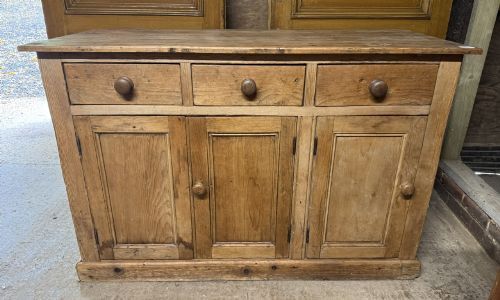
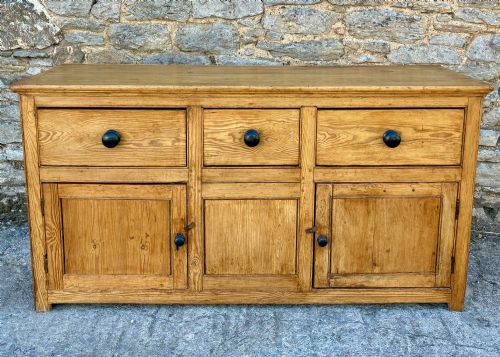
When you search for a rustic pine buffet, you are looking at practical storage furniture originating from rural homes, farmhouses, and country estates. These pieces span the Georgian and Victorian periods, often taking the form of dresser bases, sideboards, or kitchen cupboards.
The versions you are most likely to meet on this page are nineteenth-century English, Welsh, Scottish, and Scandinavian examples. They serve as hardworking kitchen and dining room storage, featuring cupboards, drawers, and occasionally open pot boards or glazed tops.
Makers constructed these sturdy items for everyday utility rather than formal display. Consequently, their forms remain robust, straightforward, and deeply tied to regional domestic traditions across Britain and continental Europe.
Materials and construction methods
Craftsmen built these items primarily from solid pine and pitch pine, sometimes pairing them with secondary hardwoods or incorporating iron and brass hardware such as drawer pulls and hinges.
Surfaces frequently show either a waxed finish or traces of original paint, scraped paint, and polychrome decoration. Construction relies on traditional joinery techniques suited to sturdy domestic use, yielding resilient frames designed to endure heavy daily service.
Assessing quality and character
Quality in these pieces rests upon the integrity of the timber, the preservation of original surfaces, and regional stylistic flourishes. Examples retain greater distinction when they display untouched original paint or rich, patinated waxed pine rather than stripped surfaces.
The Rustic Pine Buffet Glossary
- Dresser base
- A lower sideboard or cabinet section without the upper shelving superstructure. These pieces typically combine drawers and lower cupboards for dining room or kitchen storage.
- Pot board
- An open lower shelf fitted between the legs of a dresser base. Historically, households used this platform to store heavy pots and kitchen utensils.
- Pitch pine
- A dense, resinous softwood variety favoured for its durability and prominent grain pattern. Nineteenth-century makers utilised this material for hard-wearing furniture.
- Bread slide
- A pull-out wooden board integrated into the cabinetry. Bakers and cooks used this surface to cool bread or prepare food within the kitchen.
- Scraped paint
- A conservation or decorative finish where layers of historic paint are selectively revealed. This technique highlights the age and chromatic history of country furniture.
Rustic Pine Buffet: Frequently Asked Questions
What is a rustic pine buffet?
A rustic pine buffet is a functional nineteenth-century or earlier storage piece originating from country houses and farmhouses. These items typically combine cupboards and drawers for domestic use.
They reflect regional woodworking traditions across Britain and Scandinavia, built from solid pine and finished with wax or original paint.
How were these buffets used historically?
Households utilised these substantial pieces in kitchens, dining rooms, and halls to store crockery, linens, and provisions. Pot boards and drawers kept everyday utensils close to hand.
In agricultural settings, they functioned as heavy-duty work surfaces for food preparation and daily domestic labour.
How do I care for a waxed pine buffet?
Maintain waxed pine surfaces by dusting regularly with a dry cloth and applying natural beeswax periodically to nourish the timber. Avoid placing the furniture near direct heat sources.
Protect the wood from excess moisture by using coasters and mats during daily use.
How can I tell the period of a pine buffet?
Examine the construction methods, fastener types, and timber characteristics to estimate age. Georgian examples often show different proportions and joinery compared to later Victorian pieces.
Surface treatments such as original scraped paint or accumulated wax patination also offer clear indicators of nineteenth-century origin.