


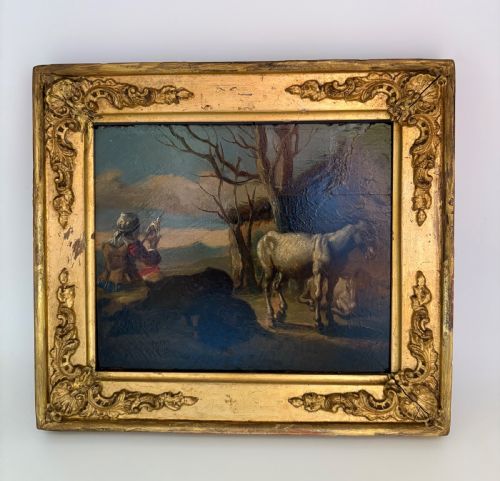


Rustic Pastoral Wall Art
Rustic pastoral wall art brings the quiet of the countryside indoors through rural scenes painted across the eighteenth, nineteenth, and twentieth centuries.
Rustic Pastoral Wall Art
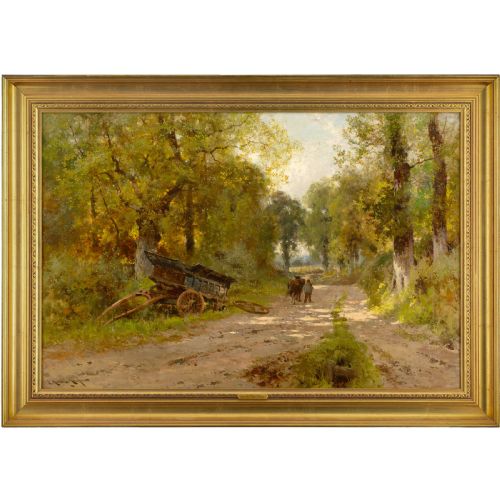
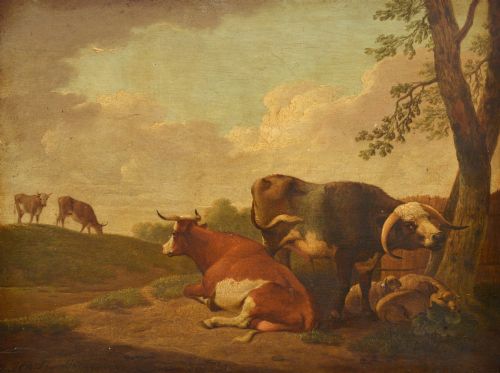
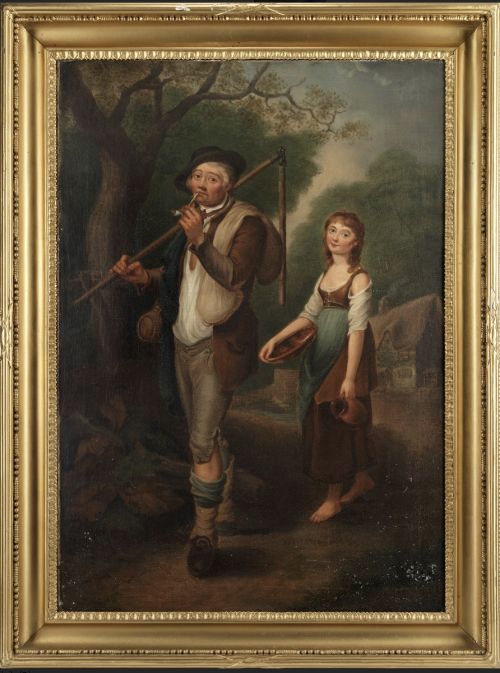
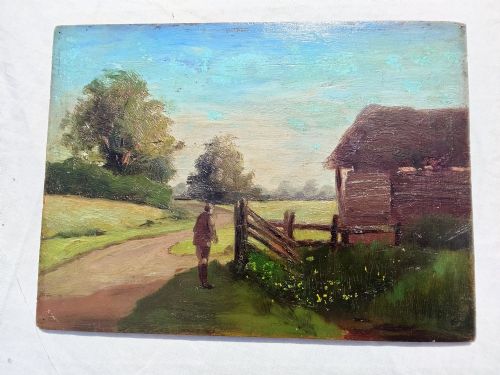
Rustic pastoral wall art depicts traditional rural life, featuring cottages, farmyards, shepherds, and livestock across various historical periods. The selection on this page relies heavily on original oil paintings and watercolours from British and European artists working in the eighteenth, nineteenth, and twentieth centuries.
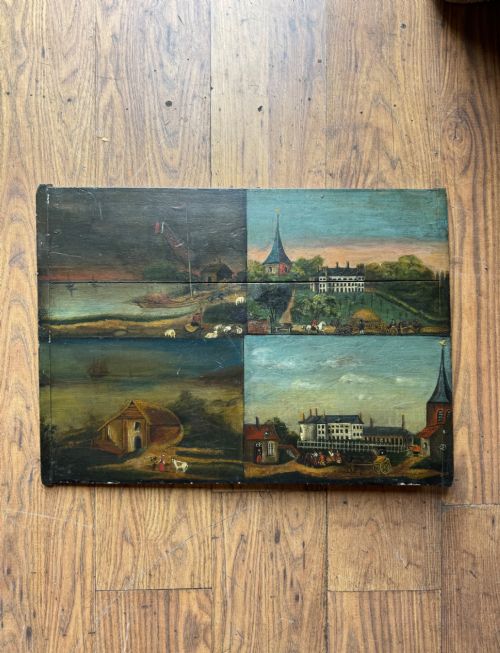
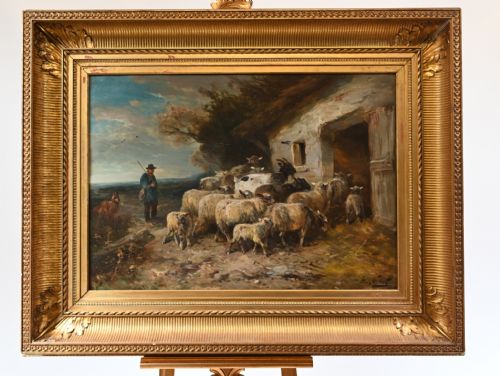
Buyers will encounter framed canvas works, wooden panel paintings, and gouache or lithograph prints reflecting regional styles such as the English School and the 19th Century Flemish School. Common subjects include cattle, sheep flocks, farm workers, and quiet village tracks captured by named painters and provincial naive hands alike.
The assortment spans formal academic works alongside simpler folk art pieces, giving a broad view of how artists interpreted the countryside. These framed works suit period homes and contemporary spaces that lean towards traditional rural subjects.
Materials and techniques
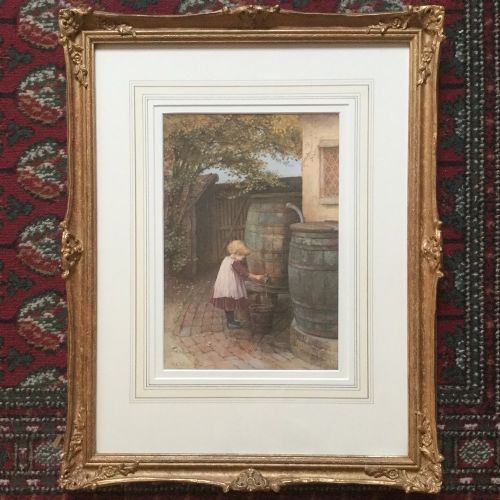
Painters used oil paint on various supports, applying pigments to stretched canvas, oak panels, and wooden boards to build up detailed country scenes. Watercolours on paper appear frequently, often protected beneath glass within period frames.
Artists also utilised gouache and produced print variations such as lithographs and coloured mezzotints after original paintings. Frames frequently incorporate gold leaf or burr wood to complement the rural subjects within.
Several sheep manage to gaze directly out of the canvas, seemingly judging the viewer's taste in interior decor.
Evaluating the range
Quality separates through the artist's handling of light, atmosphere, and anatomical proportion in figures and animals. Finer works display confident brushwork and subtle tonal shifts in landscape settings, whereas naive or provincial pieces prioritise charm and straightforward composition over academic precision.
The condition of the original surface and the integrity of the period frame contribute significantly to a piece's standing. Intact oil layers without heavy restoration and original gilt or burr wood surrounds elevate the visual weight of the artwork.
W Klombeck·John Horace Hooper·Hendrik Willem Schweickhardt·Thomas Barker of Bath·Henry Schouten·Charles Edward Wilson·Owen Bowen·Thomas Sidney Cooper·John Inigo Richards·Kershaw Schofield·Thomas Spinks·John R K Duff·W E Millner·Thomas Nicholson Tyndale·Jack R Mould·Georgina Lara·George Morland·Arthur Walker Redgate·William Greaves·G R Vaughan·Wycliffe Egginton·Joseph Paul
The Rustic Pastoral Wall Art Glossary
- Oil on canvas
- Pigments bound in drying oil applied to a woven fabric support stretched over a wooden frame. This technique allowed artists to create rich textures and deep colour blending.
- Watercolour
- A painting method where fine pigment is suspended in a water-soluble vehicle, typically worked on paper. It yields translucent washes of colour suited to lighter pastoral scenes.
- Gouache
- An opaque water-based paint that includes a white pigment filler, producing a heavier and more solid matte surface than traditional watercolour.
- Mezzotint
- A printmaking process of the intaglio family where the plate is roughened to achieve rich dark tones and subtle tonal graduations. It was frequently used to reproduce popular pastoral oil paintings.
- Oak panel
- A rigid wooden board prepared as a painting surface, commonly utilised by earlier European and British schools before canvas became dominant.
Rustic Pastoral Wall Art: Frequently Asked Questions
What subjects appear most often in these pastoral scenes?
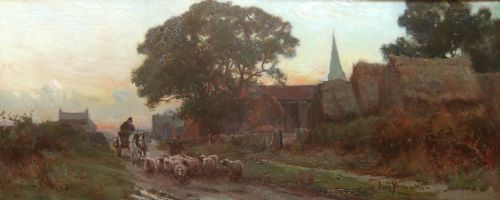
These artworks predominantly feature rural life, including shepherds tending sheep flocks, cattle drinking at rivers, and farmyard workers with horses. Cottages, village roads, and quiet country landscapes form the standard backdrop for these everyday agricultural tasks.
Artists frequently focused on the changing light of eventide or midday sun over fields and pastures. The presence of animals remains a central theme across both oil paintings and watercolours.
How do I date a nineteenth-century rural oil painting?
Dating relies on a combination of the artist's recorded working years, the style of the clothing and agricultural equipment depicted, and the physical construction of the canvas or stretcher. Written inscriptions on the reverse or framing labels often provide specific dates or locations.
Examining the type of canvas weave, nails, and framing materials also helps establish the era. Signed works allow comparison against established exhibition records from the period.
Are watercolours on this page framed behind glass?
Yes, works on paper such as watercolours and gouaches require glass protection to shield the delicate pigments from dust and moisture. They are typically mounted within period gilt or wooden frames suited to the age of the piece.
When hanging these pieces, it is best to avoid direct sunlight to prevent the water-based colours from fading over time.
What is the difference between academic and naive pastoral art?
Academic paintings follow formal rules of perspective, anatomy, and tonal blending taught in art academies, resulting in highly realistic depictions of people and animals. These works often show deliberate mastery over light and shadow.
Naive art, by contrast, is produced by self-taught or provincial painters who prioritize direct expression and storytelling over strict perspective. These pieces have a charming, simplified quality that differs from formal studio painting.