



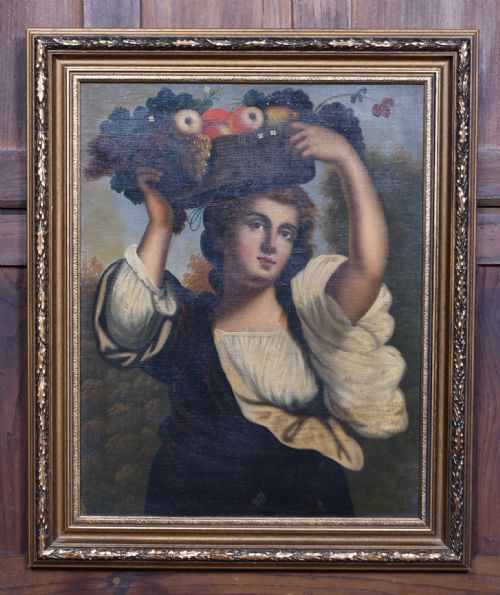


Continental School Oil Painting
These continental school oil painting works capture centuries of European portraiture, landscape and still life.
Continental School Oil Painting
A continental school oil painting represents European fine art created outside British traditions, spanning centuries of portraiture, landscape and still life subjects. When exploring a continental school oil painting, buyers encounter works executed on canvas, oak panel, board and framed in giltwood, ebonised wood or ornate mouldings.
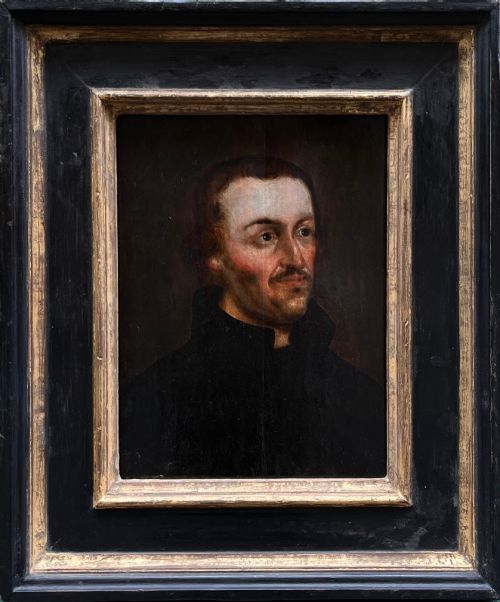
The selections on this page feature 18th century European school portraits, 17th and 18th century follower pieces, and 19th century continental school examples. These works include depictions of figures such as Philip Melanchthon and Dominican monks, alongside pastoral scenes and architectural interiors.
Materials and methods
Artists painted using oil paint applied to canvas, oak panels or wooden boards. These supports provide the rigid or flexible foundation necessary for building up rich layers of pigment and detail.
Frames form an integral part of these pieces, constructed from materials such as giltwood, gilt wood, ebonised wood and oak. Ornate frames complement the fine art canvases and panels, housing the works securely.
Listings feature periods from the 18th century and 1870, utilising oil paint on canvas, oak, board and giltwood frames.
What separates the finest examples
Quality rests in the handling of oil paint and the fidelity of the composition, whether rendering a still life with flowers or a detailed portrait. Finer pieces demonstrate confident brushwork and depth within the subject matter.
Philipp Peter Roos·J Haupt
The Continental School Oil Painting Glossary
- Oil on Canvas
- Pigment mixed with drying oil applied to a stretched woven fabric support. This combination allows for rich blending and textured application.
- Oak Panel
- A rigid wooden support made from oak timber providing a stable surface for early paintings. Panels require careful seasoning to prevent warping over centuries.
- Giltwood
- Timber carved and coated with a thin layer of gold leaf or metallic gilt powder. This finish adds reflective brilliance to antique picture frames.
- Ebonised Wood
- Timber treated to imitate the dark, dense appearance of ebony. This technique creates a striking contrast against gilded elements or colourful oil paints.
- Still Life
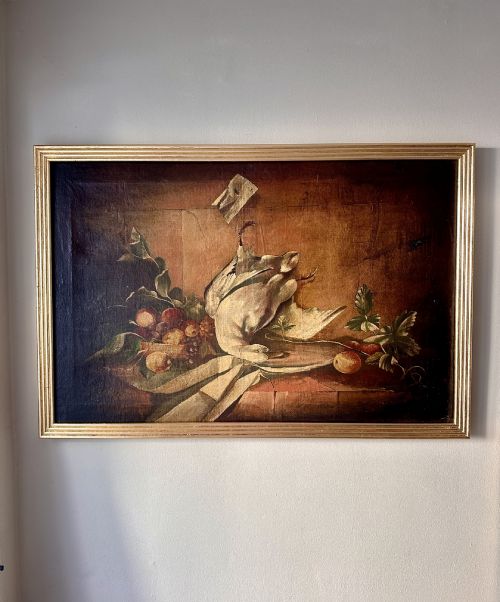
- An artwork depicting inanimate subject matter, typically commonplace objects such as flowers or fruit. These compositions allow artists to showcase mastery of light and texture.
Continental School Oil Painting: Frequently Asked Questions
What is a continental school oil painting?
A continental school oil painting refers to artwork produced by European artists outside of Britain, encompassing various national traditions and historical periods.
These pieces range from early portraits on oak panels to 19th century landscapes on canvas.
How are these paintings framed?
Many works are housed in period frames made from giltwood, ebonised wood or oak. Ornate mouldings frequently accompany these fine art pieces.
The framing often reflects the period in which the painting or panel was created.
What subjects do these paintings feature?
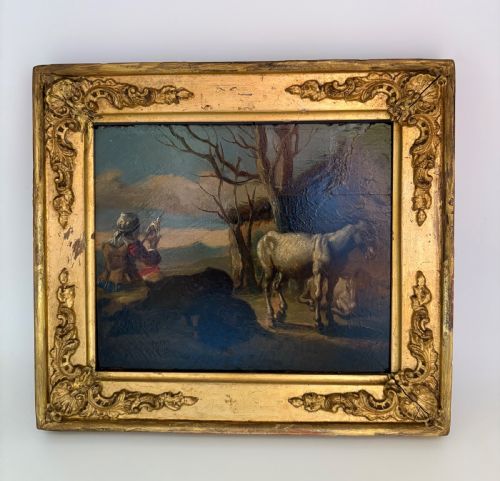
Subjects include portraits of historical figures and monks, pastoral landscapes with animals, architectural church interiors, and still life compositions with flowers or fruit.
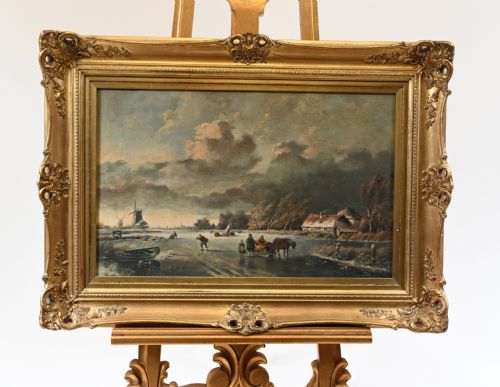
Artists also depicted everyday scenes such as windmills, farmhouses and Venice waterways.
Which materials support the paint?
Artists used oil paint applied to stretched canvas, solid oak panels or wooden boards. Each support type influences the texture and preservation of the artwork.
Rigid panels often indicate earlier periods of execution compared to flexible canvas supports.
How do I identify the age?
Dating relies on stylistic conventions, costume details in portraits, and the physical materials such as oak panels or ebonised wood frames.
Documentation or signatures on the canvas or board also assist in determining the era.