

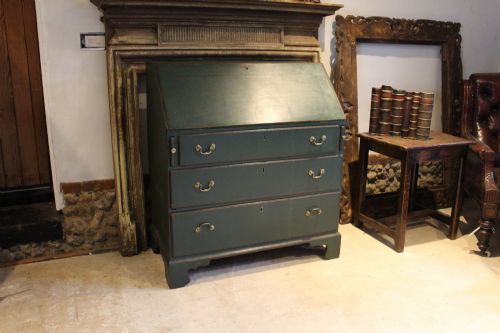
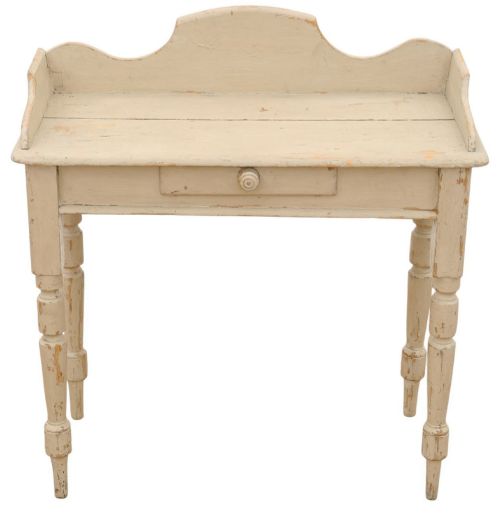
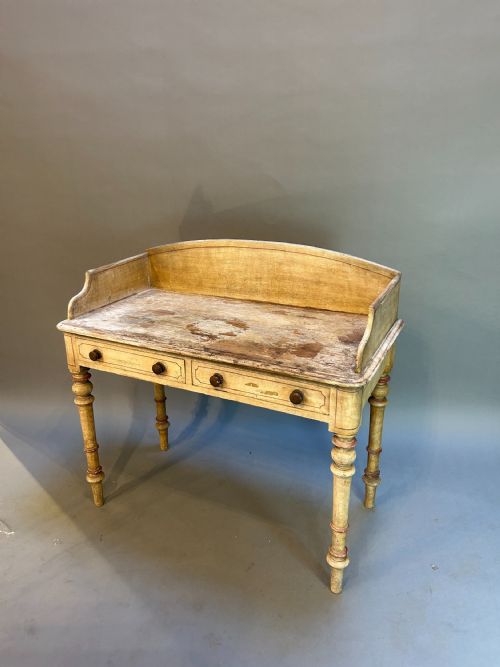
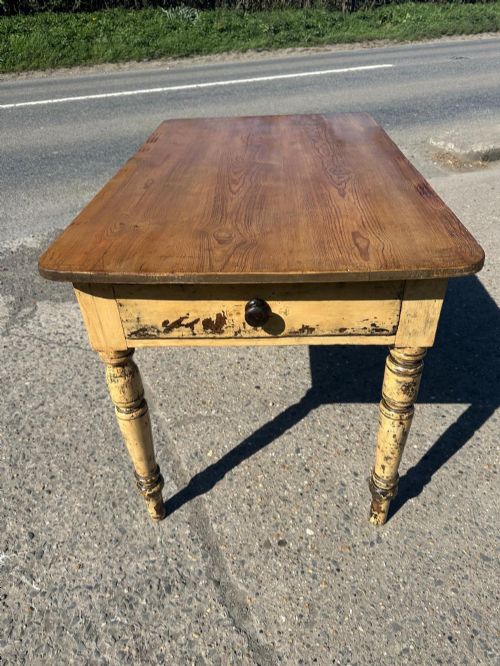
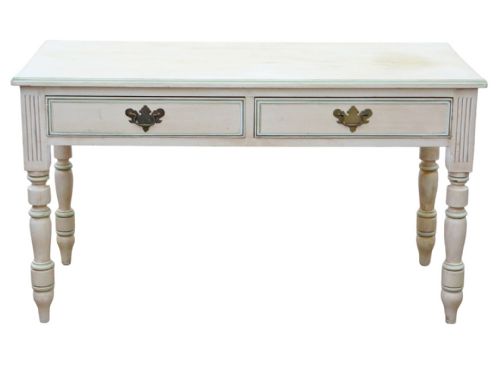
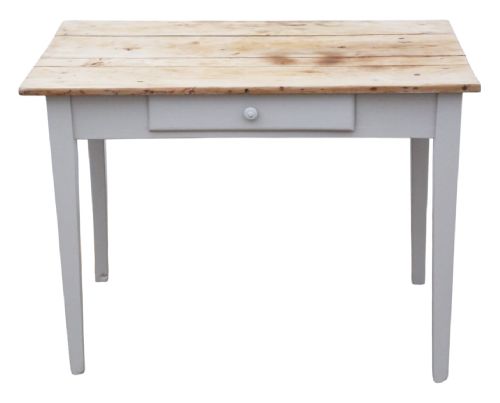


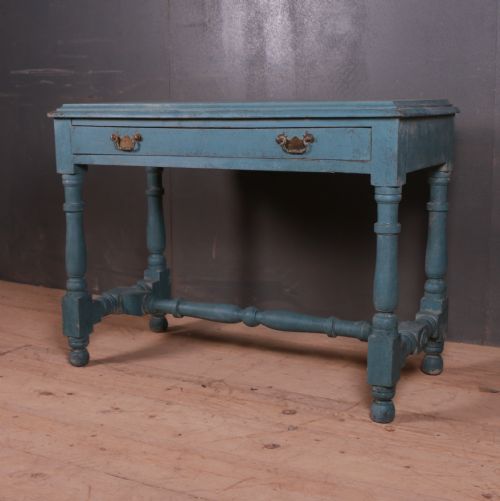


Rustic Painted Writing Desk
A rustic painted writing desk brings genuine rural character to a study, offering a working surface shaped by decades of country use.
Rustic Painted Writing Desk
When you search for a rustic painted writing desk, you are looking for utilitarian furniture that has acquired a softer, decorative character through layers of historic surface colour. These pieces range from compact bureau forms to simpler tables adapted for correspondence, originating across English and continental traditions.
The versions you are most likely to meet on this page date primarily from the nineteenth century, alongside examples from the eighteenth and early twentieth centuries. They frequently employ pine or oak as a primary timber, paired with painted finishes that vary from scrubbed country surfaces to more formal Swedish and French country styles.
While formal desks rely on polished mahogany and intricate veneers, these rural counterparts prioritise sturdy construction and practical drawers. Their charm lies in the visible history of their timber and the subtle patination of their painted coats.
Materials and construction
Makers constructed these desks predominantly using accessible regional timbers such as pine and oak, joined with straightforward carpentry methods suited to provincial workshops. Drawer linings and internal partitions often reveal hand-planed boards and traditional dovetail joints.
The painted finishes were applied using traditional mediums over timber, sometimes incorporating brass handles or iron fittings for operational hardware. Over generations, these surfaces have worn down through use, leaving characteristic textures that machine-distressed reproductions fail to replicate.
Rustic Painted Writing Desk Retail Price Guide 2026
Typical asking prices for rustic painted writing desk among the pieces listed under this phrase on Sellingantiques today, from the lower quarter to the upper quarter. They describe what is for sale here now, not the wider market.
Many a nineteenth-century clerk likely cursed the uneven drawer runners on a Monday morning.
Assessing quality and character
The distinction between ordinary and exceptional pieces rests upon the integrity of the timber and the depth of the surface finish. Desks retaining untouched original paint layers hold greater interest than those subjected to repeated modern repainting.
Structural proportion and the retention of original fittings, such as brass pulls or iron locks, further elevate a piece. The best examples balance utilitarian strength with balanced proportions that suit domestic interiors.
The Rustic Painted Writing Desk Glossary
- Scrub-top
- A wooden table or desk top left unpolished and cleaned by vigorous scrubbing, showing a pale, weathered grain.
- Bureau
- A sloping desk lid that opens to reveal internal pigeonholes and small drawers, often raised on legs or a chest base.
- Patina
- The surface sheen and softening of colour developed on wood and paint over decades of handling and exposure.
- Gustavian
- A Swedish neoclassical style characterised by restrained classical ornament and pale, muted paint colours.
Rustic Painted Writing Desk: Frequently Asked Questions
What defines a rustic painted writing desk?
These pieces are practical writing surfaces made from accessible timbers like pine and oak, finished with historic paint layers. They originate mainly from English and continental country workshops.
Their appeal stems from honest construction and the unique character imparted by generations of domestic use.
How do I care for the painted surface?
Protect the antique finish by dusting gently with a dry, soft cloth and avoiding chemical cleaners or excessive moisture. Maintaining stable room humidity prevents the underlying timber from shifting.
Allow the surface to age naturally rather than attempting to restore or seal the worn paint.
Where were these desks made?
They were produced in provincial workshops across England, France, and Sweden to serve practical domestic and clerical needs. Regional carpentry traditions dictated the choice of timber and the construction methods.
Swedish examples often display lighter neoclassical palettes, while English versions favour straightforward pine and oak.
Are the paint finishes original?
Surfaces vary significantly, with some pieces retaining their first coat of historic paint while others show multiple layers applied over time. Close inspection reveals how the paint has worn around handles and edges.
Both untouched original finishes and honest later coats contribute to the visual depth of the furniture.