



Green Slant Front Desk
A green slant front desk brings rich colour and traditional craftsmanship into a study, offering a concealed writing surface with practical storage below.
Green Slant Front Desk
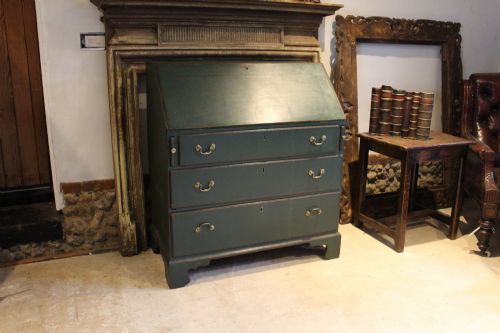
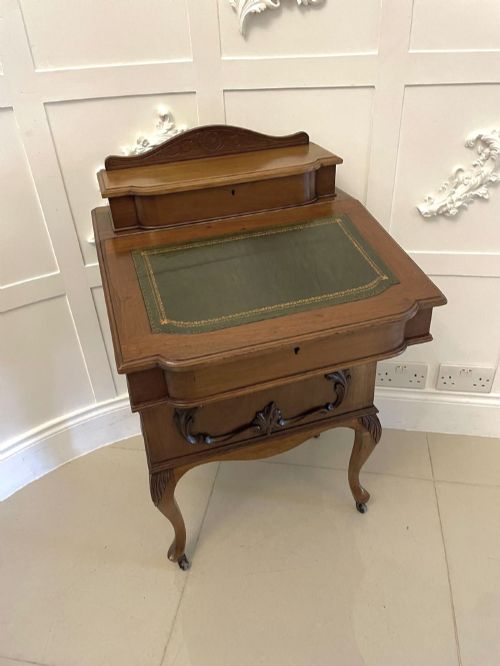
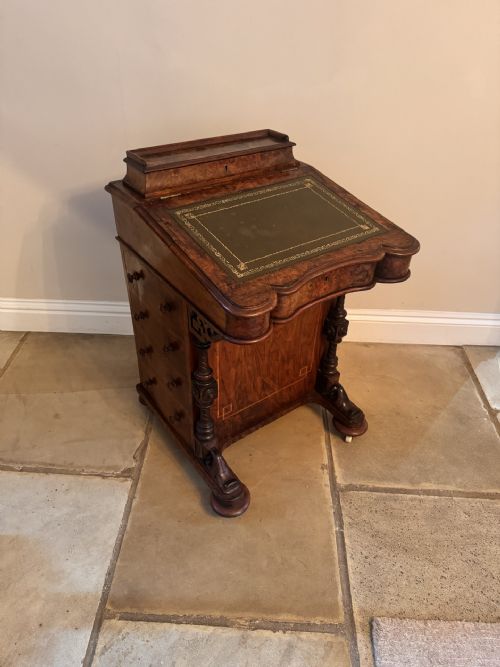
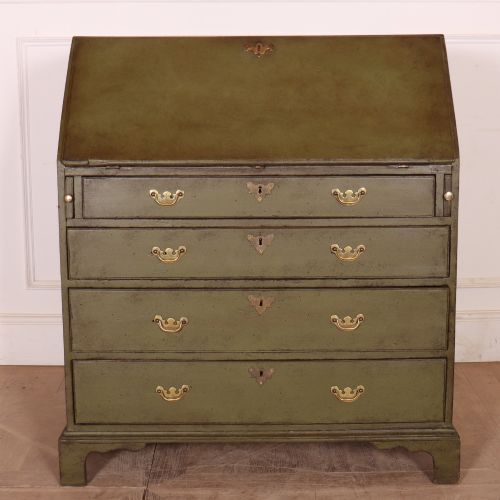
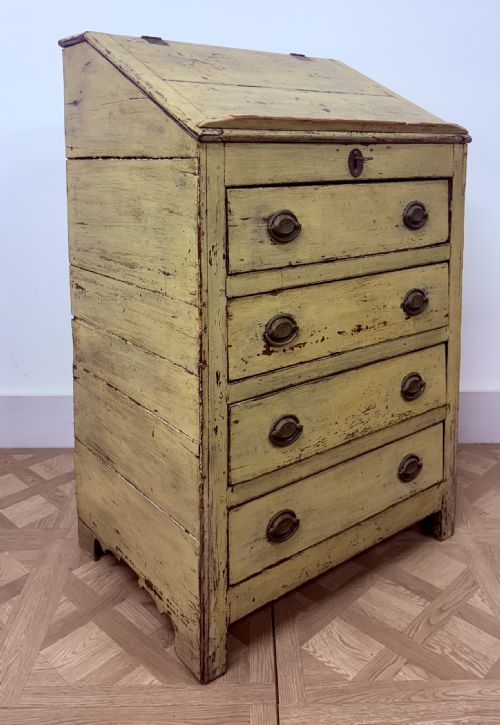
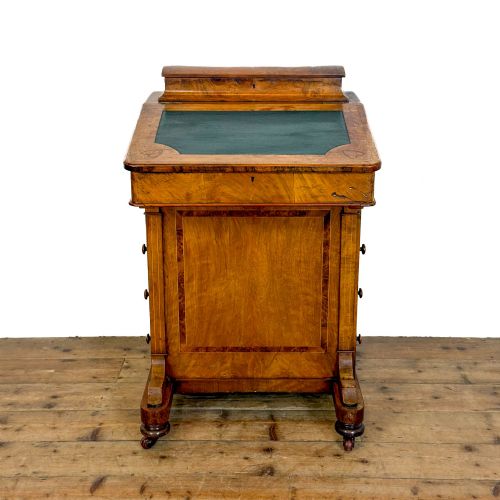
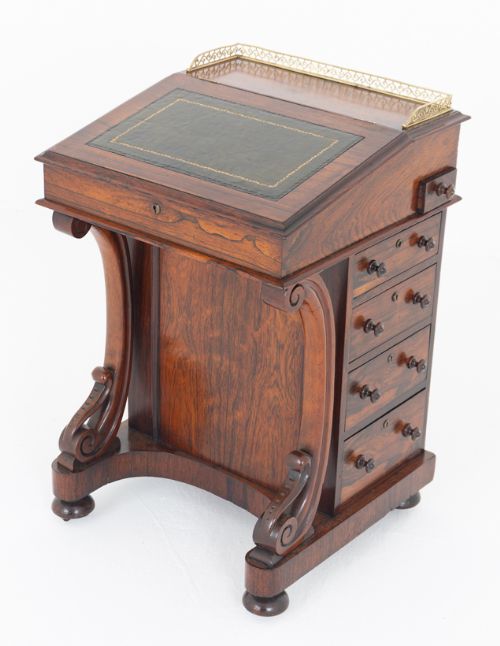
The most common versions encountered here are compact Victorian davenports and 18th-century painted English or Venetian bureaux. They combine a sloping writing lid with internal fitted drawers and pigeonholes for correspondence.
Originating across Georgian, Victorian, and Regency periods, these desks reflect diverse regional aesthetics from English country workshops to Venetian studios. Their forms prioritise practical workspace alongside decorative character.
Materials and construction methods
Cabinet makers utilised dense hardwoods such as oak, mahogany, rosewood, and walnut for structural integrity and refined surfaces. Burr walnut veneer provided striking figured grain patterns across writing flaps and drawer fronts.
Surfaces were frequently finished with hand-applied paint or incorporated inlaid details alongside leather writing inserts. Brass hardware, including pulls and locks, secured compartments and added functional contrast to the timber.
Green Slant Front Desk Retail Price Guide 2026
Typical asking prices for green slant front desk among the pieces listed under this phrase on Sellingantiques today, from the lower quarter to the upper quarter. They describe what is for sale here now, not the wider market.
Materials documented across the inventory include brass, leather, walnut, burr walnut, paint, rosewood, oak, and mahogany.
Distinguishing quality and finish
Superior examples display finely figured timber veneers and intricate internal joinery within the fitted writing compartments. Cabinet makers demonstrated skill through precise dovetailing in the drawers and seamless integration of writing slopes.
Painted finishes vary from simple provincial decoration to elaborate classical schemes executed on Venetian travelling pieces. Maker attribution, such as work originating from Gillows, elevates the standing of individual desks.
Gillows
The Green Slant Front Desk Glossary
- Bureau
- A sloping desk used for writing, typically featuring a hinged lid that drops down to form a writing surface over a bank of drawers.
- Davenport
- A compact form of small desk featuring a sloping top and drawers opening to the side, popular during the Victorian era.
- Slant front
- A hinged desk lid angled towards the user, designed to conceal internal pigeonholes and small drawers when closed.
- Bonheur du jour
- A light ladies writing desk originating in the eighteenth century, often fitted with small shelves, drawers, and a writing surface.
- Burr walnut
- Wood taken from a walnut tree growth, prized by cabinet makers for its swirling and highly decorative grain patterns.
Green Slant Front Desk: Frequently Asked Questions
What is a davenport desk?
A davenport is a compact writing desk featuring a sloping lid on top and a pedestal of drawers opening to the side. They were widely produced during the Victorian period.
These pieces were designed to occupy minimal floor space while providing a functional writing surface and secure storage for stationery.
How do I date an old bureau?
Dating relies on examining construction methods, timber choices, and hardware styles. Georgian pieces often show hand-cut dovetails and solid oak linings, whereas later Victorian examples utilise machine-sawn components.
Stylistic flourishes like Chippendale-inspired interiors or specific veneer selections further narrow down the decade of manufacture.
Where should I place a sloping desk?
These desks suit studies, living rooms, or bedrooms due to their compact footprints and finished backs on freestanding models. Placing them away from direct sunlight protects vulnerable timber veneers and leather surfaces.
Freestanding variants work well positioned in the centre of a room rather than pushed exclusively against a wall.
What timber was used for these desks?
Cabinet makers employed a variety of hardwoods including mahogany, walnut, burr walnut, rosewood, and oak. Painted finishes were also applied to oak and softwood carcasses.
Exotic timbers like rosewood and figured walnut were selected for high-status furniture to showcase grain patterns.