
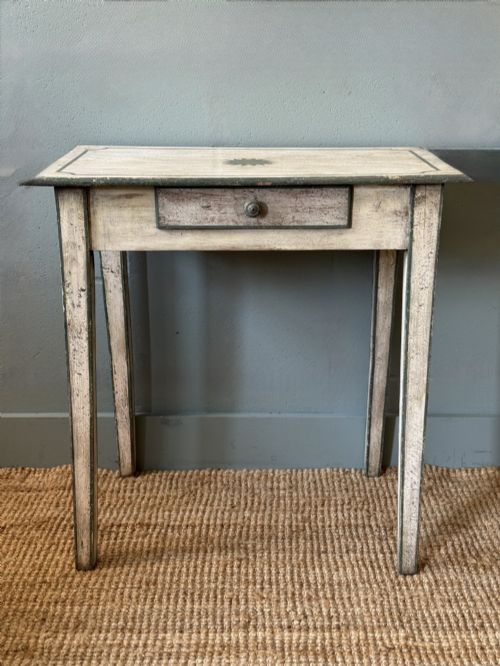
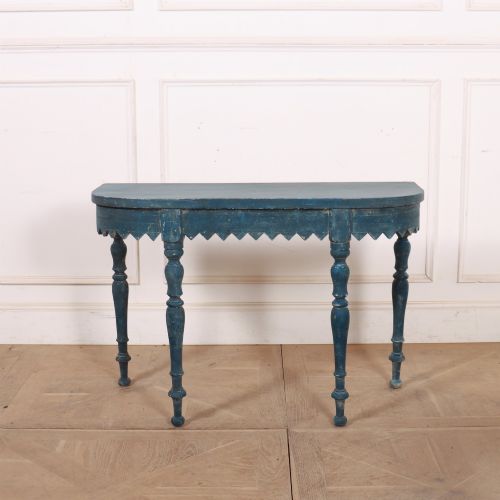

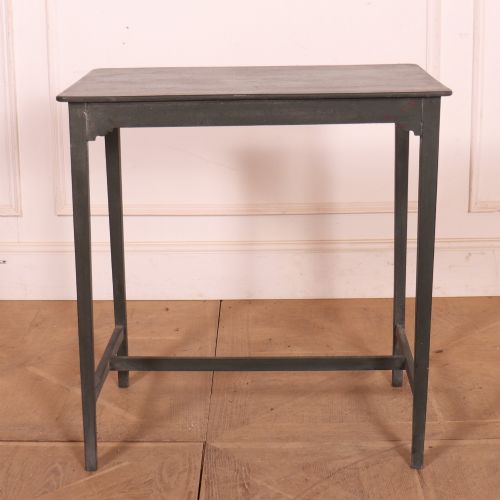

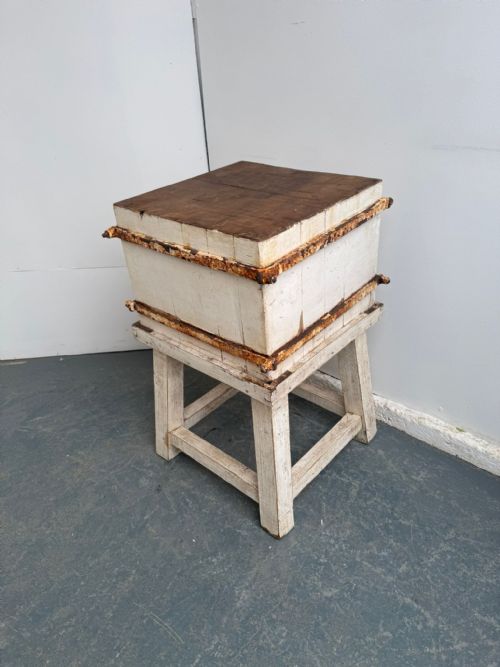
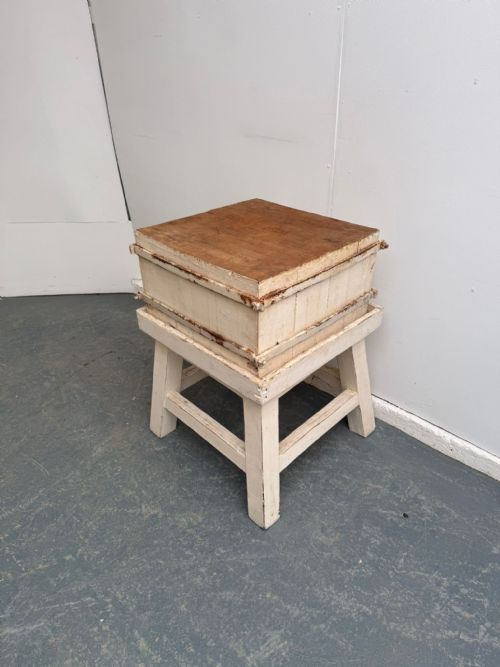


Rustic Painted End Table
A rustic painted end table brings practical surface space and weathered charm into a room, offering functional utility paired with historic character.
Rustic Painted End Table
A rustic painted end table encompasses a variety of smaller utilitarian forms such as lamp tables, occasional tables, side tables, and console tables. These pieces serve functional roles beside seating or against walls, bridging the gap between everyday utility and decorative surface display.
The selection ranges from eighteenth century English and Georgian examples to nineteenth century Scandinavian country pieces and later vintage designs. Buyers encounter forms including cricket tables with tripod legs, tavern tables with cleated ends, and small bow end console tables.
Origins span English country workshops, Scandinavian farmhouses, and French provincial settings, resulting in diverse regional interpretations of everyday furniture. Pine and oak provide the primary timber foundations, finished with historical layers of paint that reflect domestic use over generations.
Materials and construction methods
Makers utilised available regional timbers, predominantly solid pine and oak, alongside beech and fruitwood for specific components. Planks form tops with cleated ends to manage timber movement, while joined or turned legs provide stable support for daily household tasks.
Surfaces received applications of paint, often accumulating multiple layers or patinated finishes through decades of domestic service. Hardware components incorporate brass and iron for functional elements such as stretchers, braces, or occasional drawer fittings.
Listings feature pieces spanning the eighteenth century, the Georgian period, the Victorian era, and mid-century twentieth design.
Factors determining quality and distinction
Quality rests upon the integrity of the original timber construction and the survival of authentic surface finishes. Pieces retaining undisturbed historic paint layers without modern chemical stripping present greater tactile and visual depth.
Structural proportion and joinery execution separate basic utilitarian items from finer regional cabinetwork. Well-balanced turnings, stable leg assemblies, and proportional scale determine how successfully a table integrates into contemporary interiors.
The Rustic Painted End Table Glossary
- Cricket table
- A small three-legged round table originating in country vernacular contexts, historically used beside firesides for holding drinks or small utensils.
- Cleated ends
- Wooden battens fixed across the grain at the ends of a plank top to prevent warping and maintain structural stability over time.
- Lamp table
- A compact occasional table designed specifically to support lighting apparatus, functioning equally well as a bedside or sofa-side surface.
- Refectory
- A long narrow table style adapted into various vernacular forms, featuring strong linear stretchers and robust timber framing.
- Occasional table
- A generic designation for a movable, light table intended for intermittent use within a living space or bedroom.
Rustic Painted End Table: Frequently Asked Questions
Where should I place these tables?
These tables function effectively beside armchairs, sofas, or beds, providing a convenient surface for lamps, books, and daily items.
Their modest scale also allows them to sit quietly in hallways, landings, or unused corners where a touch of historic character is beneficial.
How do I clean painted wood?
Maintenance requires only a soft, dry cloth to remove dust from the painted and wooden surfaces.
Harsh chemical cleaners and excessive moisture should be avoided to protect the historic integrity of the painted finish.
Are these pieces structurally sturdy?
Construction relies on solid timbers like pine and oak, built to withstand generations of practical domestic use in country settings.
Most items remain fully serviceable for holding lamps and small decorative objects in modern homes.
How do I identify the period?
Dating relies on observing construction techniques, timber preparation methods, and the natural ageing patterns of the paint and wood.
Eighteenth century examples often display simpler joinery and deeper patination compared to nineteenth century Victorian or Scandinavian equivalents.