

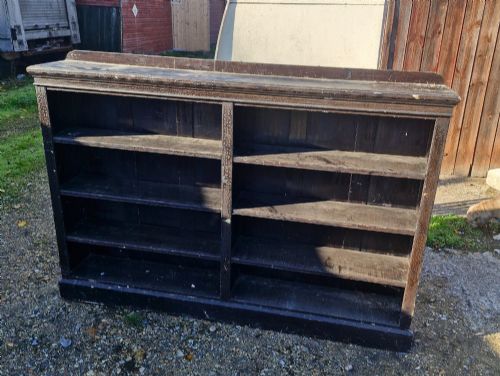
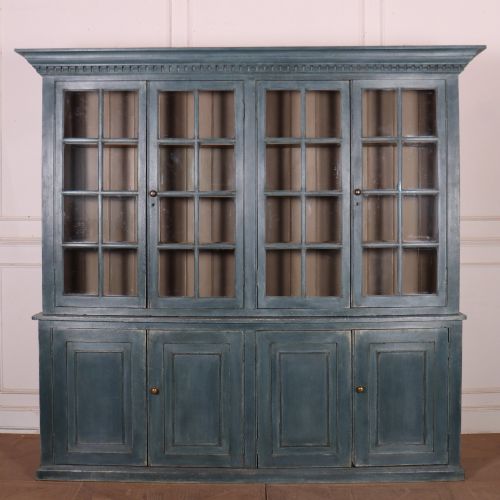
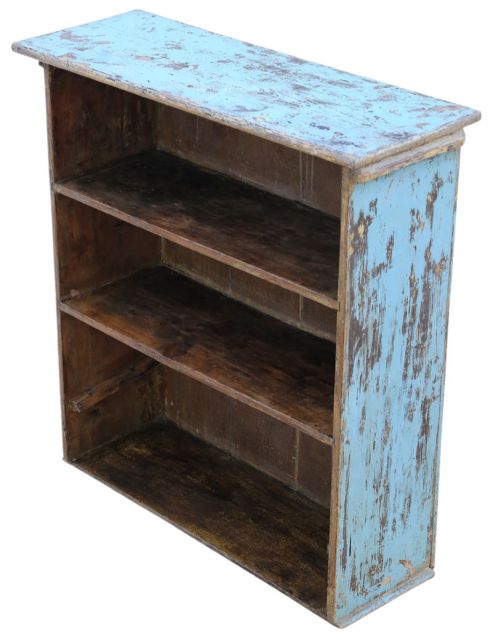
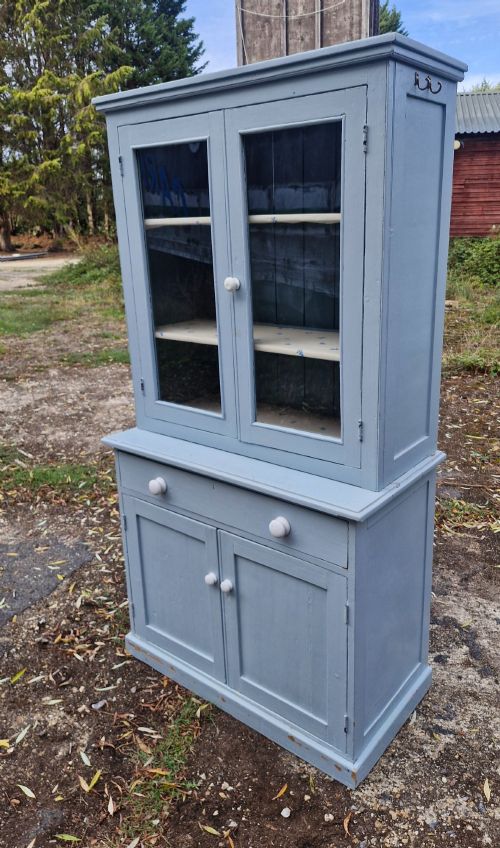
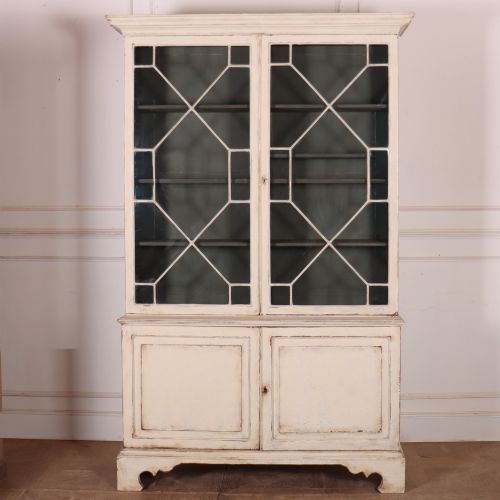
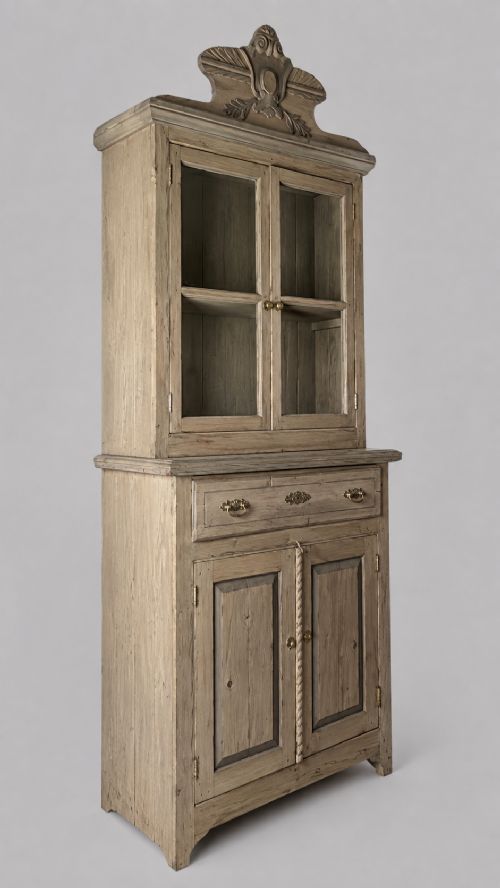
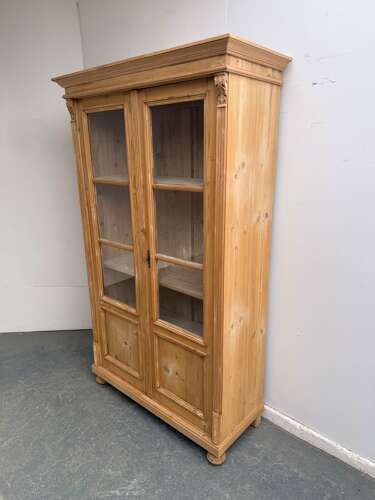
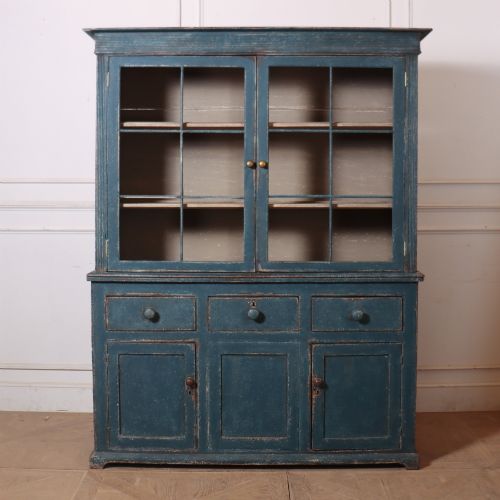

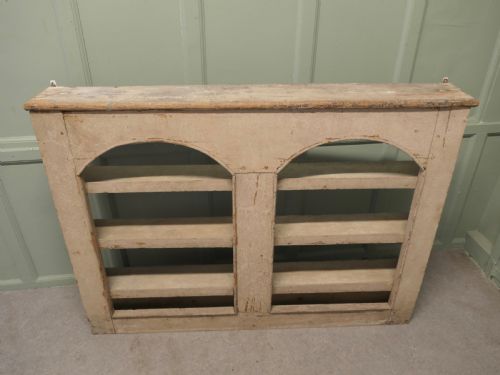
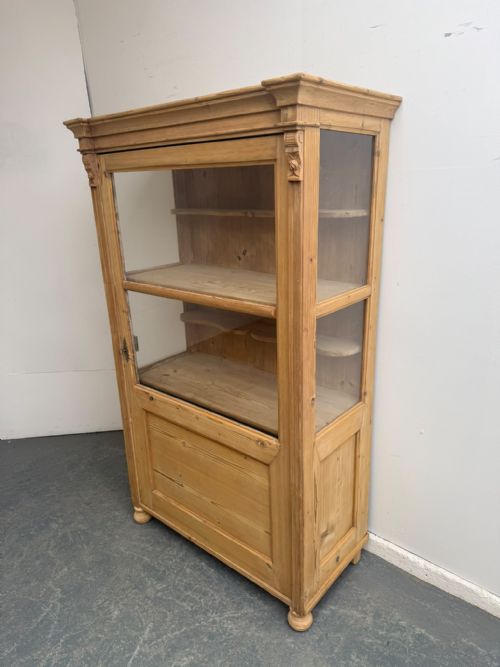
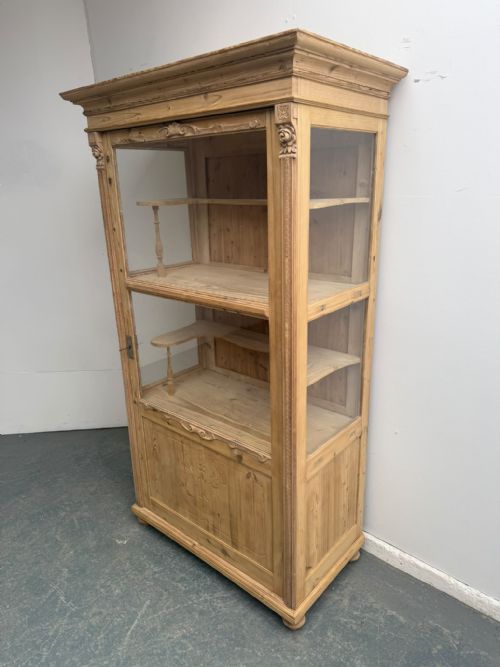


Rustic Painted Bookcase
These rustic painted bookcase pieces combine practical utility with weathered country charm, offering durable storage and character for any room.
Rustic Painted Bookcase
A rustic painted bookcase provides practical shelving within a traditional domestic form, usually emerging from country houses and provincial workshops. Buyers searching for a rustic painted bookcase will find pieces primarily from the eighteenth and nineteenth centuries, including Victorian and Georgian examples.
Most items you encounter combine open display shelving or glazed cupboards with painted wooden surfaces. The forms range from two-part kitchen cupboards and dresser bases to open bookcases and larder units originating from English and French provincial traditions.
How they were made
Carpenters typically constructed these items using solid pine and timber, applying layers of distemper paint or traditional oil-based finishes. Glass panels appear in doors where display was desired, whilst brass hardware occasionally secures cabinet closures.
Construction methods rely on straightforward joinery suited to regional workshops rather than metropolitan cabinet-makers. Surfaces show the marks of hand-planing and utilitarian assembly beneath successive generations of paint.
Rustic Painted Bookcase Retail Price Guide 2026
Typical asking prices for rustic painted bookcase among the pieces listed under this phrase on Sellingantiques today, from the lower quarter to the upper quarter. They describe what is for sale here now, not the wider market.
The recorded styles include English Country, Rustic Farmhouse, French Provincial, and Folk Art.
What varies in quality
The distinction between tiers rests upon the integrity of the timber frame and the history of the surface finish. Original paint layers that have aged naturally without heavy modern intervention elevate a piece above later repaintings.
Proportion and scale also dictate worth, as well-balanced proportions in larger kitchen dressers or glazed cupboards reflect deliberate regional design. Pieces retaining their original brass fittings and structurally sound pine boards demonstrate superior craftsmanship.
The Rustic Painted Bookcase Glossary
- Distemper paint
- A traditional water-based medium utilising chalk or pigment mixed with a binder such as glue size. It yields a matte finish that chalks slightly with age.
- Glazed cupboard
- A storage piece featuring glass-paned doors designed to protect books or crockery while keeping them visible. These typically use timber framing to secure individual glass panes.
- Kitchen dresser
- A dual-purpose furniture form combining lower cupboards or drawers with upper shelving for storage and display. They are foundational pieces in country house interiors.
- Pine
- A softwood commonly used in vernacular furniture due to its availability and workability. It accepts paint readily and forms the structural core of most country pieces.
Rustic Painted Bookcase: Frequently Asked Questions
How do I date a painted bookcase?
Dating relies upon examining construction marks, timber shrinkage, and the composition of the paint layers.
Earlier pieces from the eighteenth century show hand- forged nails and pegged joints, whilst nineteenth-century examples often employ machine-sawn timber and simpler fixings.
Are these bookcases suitable for everyday use?
These pieces were built for functional domestic storage in kitchens, pantries, and living spaces.
Solid pine construction and sturdy shelving make them well-suited for holding books, crockery, and modern household items.
How do I care for historic painted surfaces?
Historic paint finishes require gentle maintenance using dry dusting or a soft, lint-free cloth.
Avoid chemical cleaning agents and excessive moisture, which can lift distemper or early oil paints from the underlying wood.
What is the difference between English and French provincial pieces?
English country furniture typically emphasises straightforward utility with robust pine construction and darker or utilitarian paint tones.
French provincial examples often display softer decorative curves, lighter proportions, and distinctive regional mouldings.