
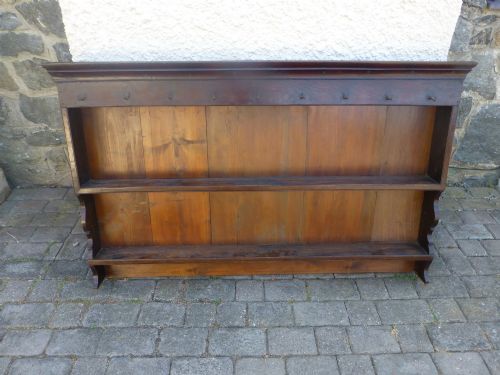
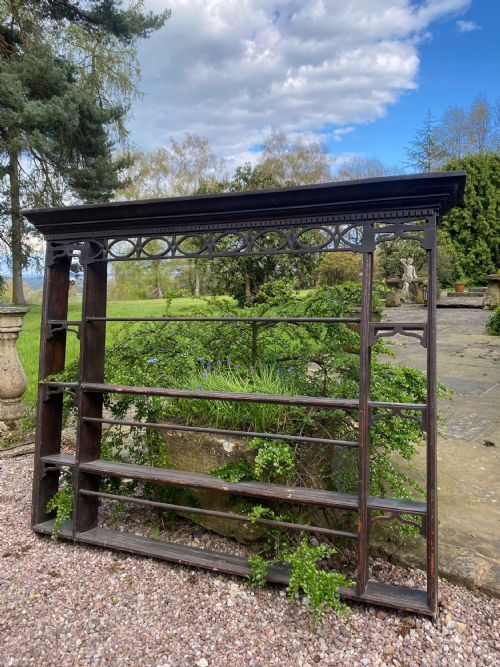
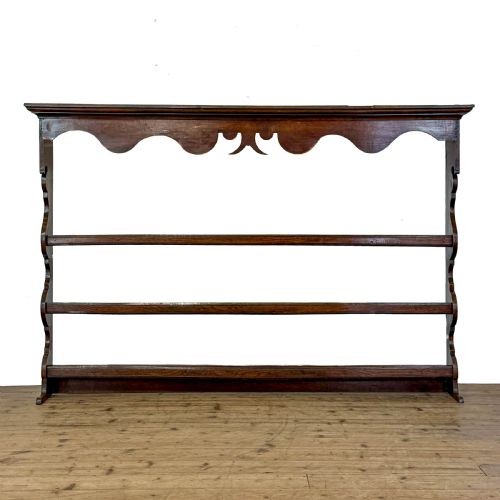


Rustic Oak Plate Shelf
A rustic oak plate shelf brings honest country character to a kitchen, holding ceramics safely while showing the rich grain of old timber.
Rustic Oak Plate Shelf
A rustic oak plate shelf is a practical wall-mounted or dresser-top fixture designed to display earthenware and plates. These pieces belong to the domestic vernacular of country houses and cottages, shaped by generations of practical kitchen use.
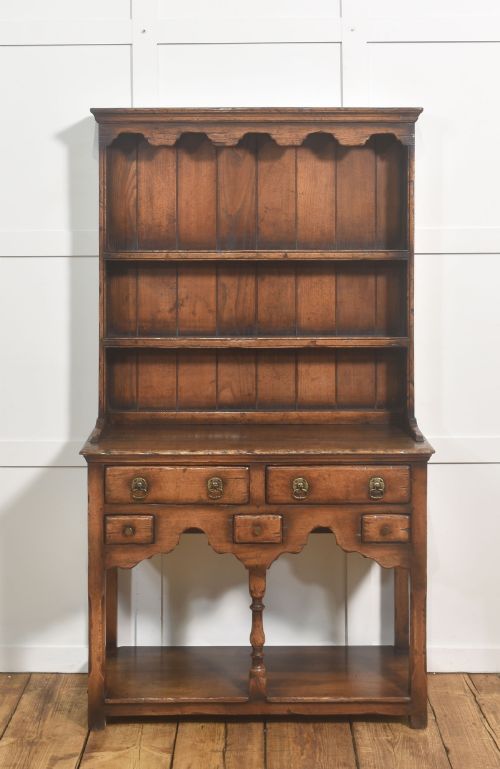
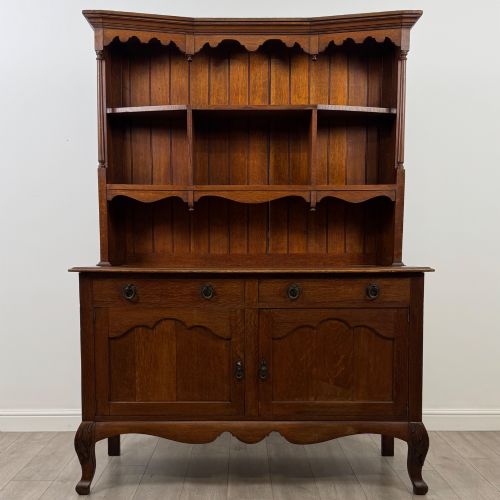
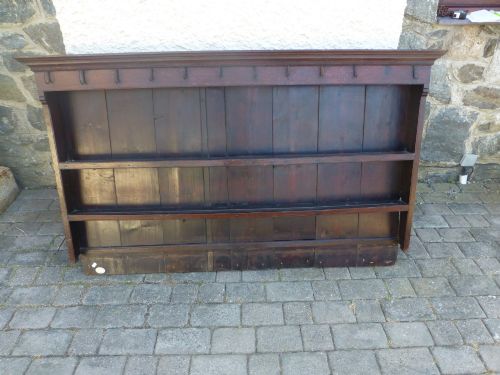
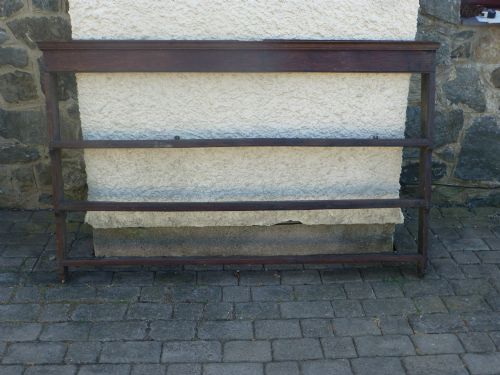
Most examples found here date from the eighteenth century through to the Edwardian period, often tied to Welsh and English country traditions. They range from simple wall-hanging racks to the upper sections of two-part dressers.
The form typically combines vertical timber backboards with horizontal plate shelves and protective retaining rails. Buyers frequently encounter smaller wall-hung units alongside larger dresser racks removed from their bases.
How they were made
Makers relied primarily on solid oak, chosen for its strength and ability to bear the weight of heavy ceramics. Secondary structural elements sometimes incorporate iron or brass fixings and hinges.
Joinery methods reflect traditional cabinetmaking, utilising pegged mortise and tenon joints for structural stability. Backboards are typically constructed from planked timber secured with hand-cut nails.
Surfaces finished naturally through decades of use rather than heavy factory polish, occasionally showing traces of old stain or wax.
The listings span multiple centuries, uniting eighteenth-century oak pieces with later Edwardian and Arts and Crafts interpretations.
What varies in quality
Quality rests in the proportion and timber selection, where dense grain and well-figured oak elevate a utilitarian object into fine vernacular art. Heavier framing timbers and untouched original surfaces separate superior examples from standard utility pieces.
Construction details reveal the maker's hand, from the subtle shaping of friezes to the tapering of plate guards. Retaining structural integrity without excessive timber replacement distinguishes better-preserved survivals.
The balance between depth and height affects daily utility, as better-designed racks hold plates securely without protruding awkwardly into the room.
The Rustic Oak Plate Shelf Glossary
- Delft rack
- A wall-mounted or dresser-top shelf specifically designed for displaying delftware and ceramic plates. These units feature narrow shelves with protective front lips.
- Welsh dresser
- A large kitchen storage piece combining base cupboards or drawers with an open plate rack top. Many examples separate into two distinct sections.
- George III
- The stylistic period spanning the mid to late eighteenth century, known for balanced proportions and sturdy construction. Pieces from this era often show restrained country interpretation of urban furniture styles.
- Arts and Crafts
- A design movement valuing hand-craftsmanship and simple vernacular forms over mass production. Pieces from this period exhibit honest construction and understated utility.
Rustic Oak Plate Shelf: Frequently Asked Questions
Can I use these shelves for modern dinnerware?
Most antique plate shelves accommodate standard dinner plates, though very thick modern stoneware may exceed older depth tolerances. Measure the lip clearance of the shelf before placing heavy pottery.
Smaller side plates and shallow bowls fit securely into traditional vertical slots. Ensure the front retaining rail sits high enough to prevent modern items from slipping forward.
How do I date an oak plate rack?
Examine the construction marks, nail types, and timber patination to estimate the period of manufacture. Hand-sawn boards and pegged joinery typically indicate eighteenth-century origin.
Later Edwardian and 1910 pieces often display machine-sawn backing boards and lighter framing timbers. Tool marks left by pit saws or adzes provide clear evidence of earlier hand-working methods.
Should I wax or oil an antique oak shelf?
Apply a traditional beeswax sparingly to nourish dry timber and maintain a soft natural lustre. Avoid modern varnishes or synthetic sealers that trap moisture and alter the historic surface.
Buff the wood gently with a clean cloth after waxing to remove excess residue. Regular dusting with a dry cloth is usually sufficient for routine maintenance.