
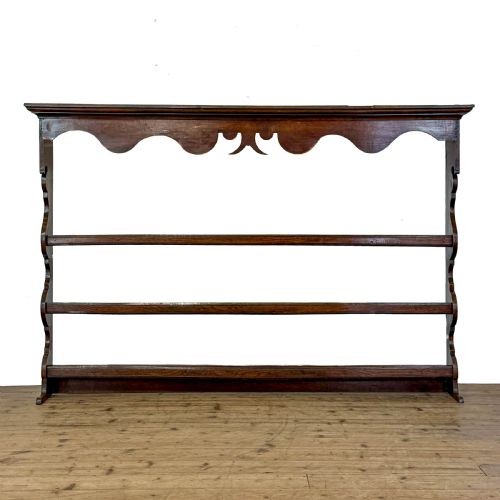


Georgian Oak Delft Rack
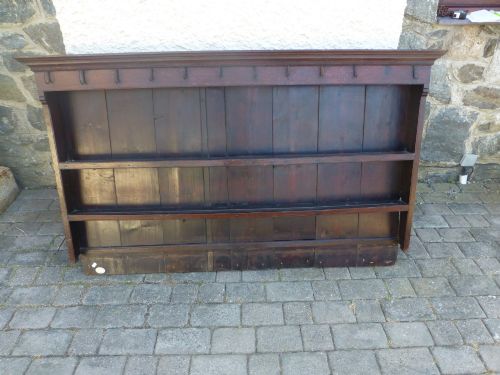
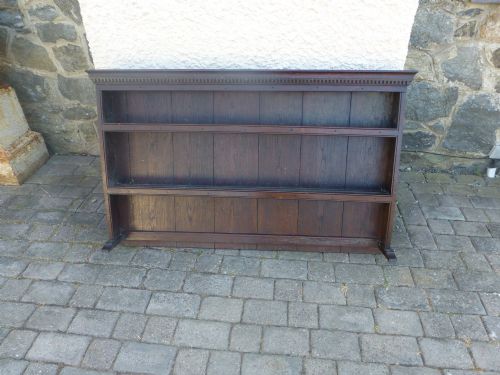
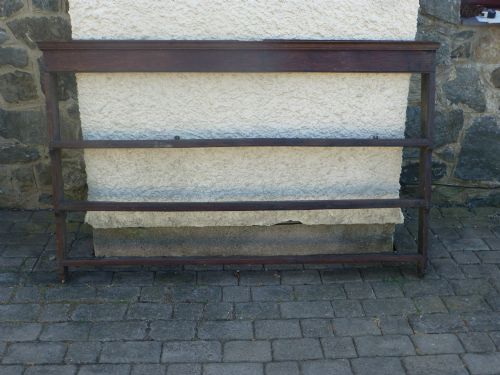
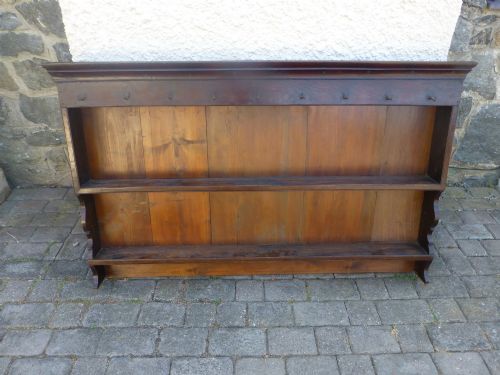
A Georgian oak delft rack organises household pottery with straightforward wooden shelving meant to hang directly on the wall.
Georgian Oak Delft Rack
A georgian oak delft rack is a wall-mounted display fixture designed to hold plates and dishes upright in domestic interiors. Most examples on this page date from the eighteenth century, showing the straightforward timber construction typical of English country furniture. These pieces served practical storage needs in kitchens and dining rooms before open display became purely decorative.
The form appears either as an independent hanging wall rack or as the upper shelf section belonging to a larger dresser. Surviving pieces span from the early eighteenth century into the nineteenth century, with occasional later interpretations from around nineteen hundred. They provide open shelving formats that place domestic ceramics directly on view.
How They Were Made
Joiners built these racks primarily using solid oak boards for the main structure, often supplementing them with secondary timbers like pine for backboards or internal elements. Iron or brass fixings occasionally secure the hanging points and structural joints. These materials reflected the heavy utility required for holding rows of dense ceramic plates safely against a wall.
Construction relied on traditional joinery techniques suited to provincial workshops producing country furniture. Certain finer examples incorporate architectural details such as Corinthian columns or carved mouldings alongside standard pegged joints. The surfaces developed deep patinas over centuries of domestic use and cleaning.
Listings span the eighteenth century and the early twentieth century, utilising oak, pine, iron, and brass.
What Varies in Quality
Quality rests on the selection of timber and the ambition of the joinery rather than mere age. Simple provincial boards meet more formal design elements such as decorative carving or classical columns. The presence of original secondary timbers and untouched surfaces distinguishes superior examples from heavily restored ones.
Proportions and structural integrity dictate the overall appeal of a hanging rack. Pieces retain more character when the timber displays natural ageing and the original hanging points remain intact. Finer workshops invested greater care in moulded cornices and balanced shelf spacing.
The Georgian Oak Delft Rack Glossary
- Delft rack
- A wall-mounted wooden shelving unit specifically designed for displaying ceramic plates and platters. These racks feature grooved plate rails to hold dishes at an angle.
- Dresser rack
- The upper shelf section of a kitchen dresser that can also function independently as a hanging wall shelf. They provide multiple tiers for plate storage.
- Country oak
- Solid oak timber worked by provincial joiners to produce sturdy domestic furniture without courtly embellishments. It forms the primary material for the majority of these pieces.
- Corinthian columns
- Classical architectural columns featuring ornate acanthus leaf capitals occasionally applied to finer provincial furniture. Their appearance elevates a standard utility rack into a more formal decorative object.
Georgian Oak Delft Rack: Frequently Asked Questions
What is a delft rack?
A delft rack is a wooden wall shelf built with grooves along the shelves to display ceramic plates upright.
These functional fixtures hung in kitchens to store daily tableware within easy reach.
Were these racks hung on walls?
Most examples function as hanging wall shelves designed to be secured directly through the backboards or side stiles.
Others formed the upper component of a larger oak dresser before becoming separated over time.
How do I date an oak rack?
Dating relies on timber characteristics, construction methods, and hardware rather than strict maker marks.
Eighteenth-century examples show hand-riven boards, pegged joints, and surface wear consistent with age.
What pottery fits these shelves?
The sloped grooves and shelf depths accommodate standard ceramic plates, bowls, and platters of various diameters.
They were originally made to hold tin-glazed earthenware and stoneware common in period households.