
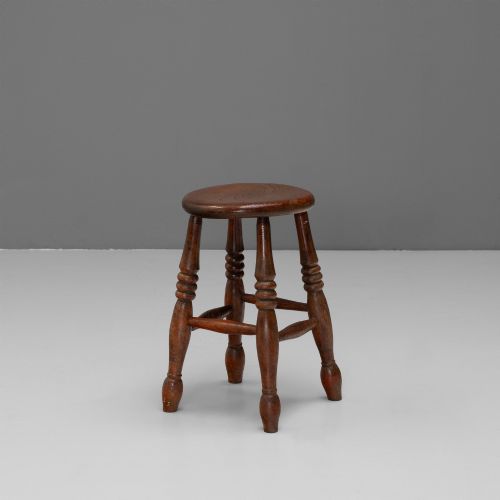
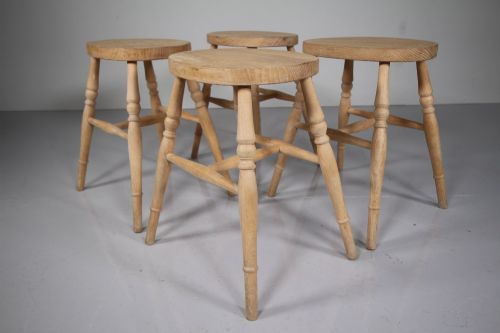
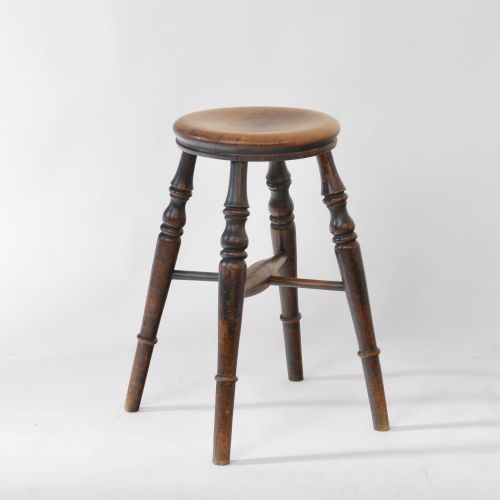
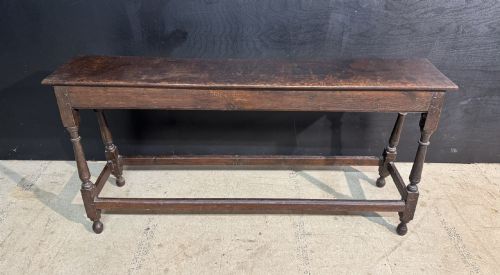
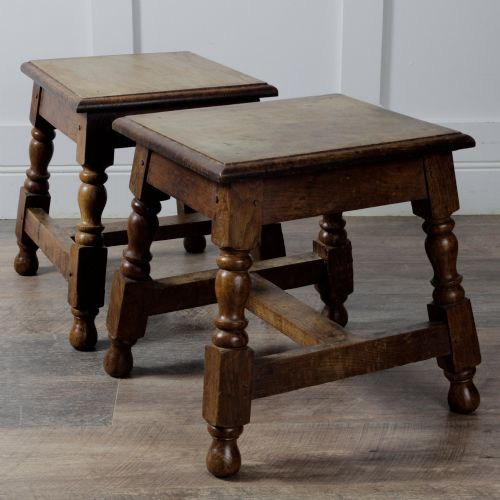
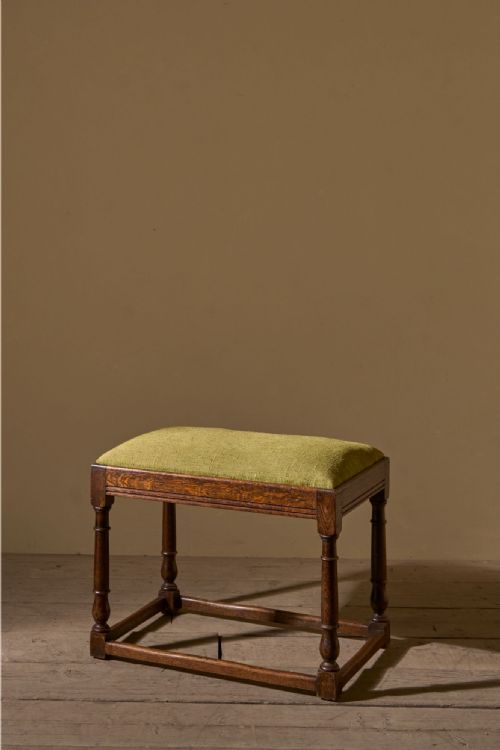
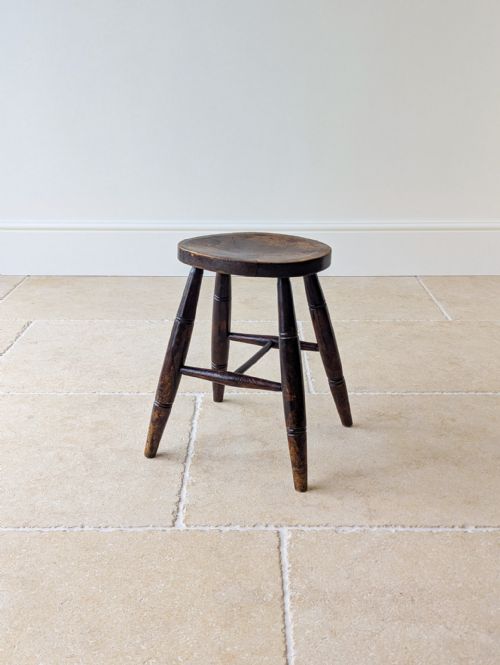
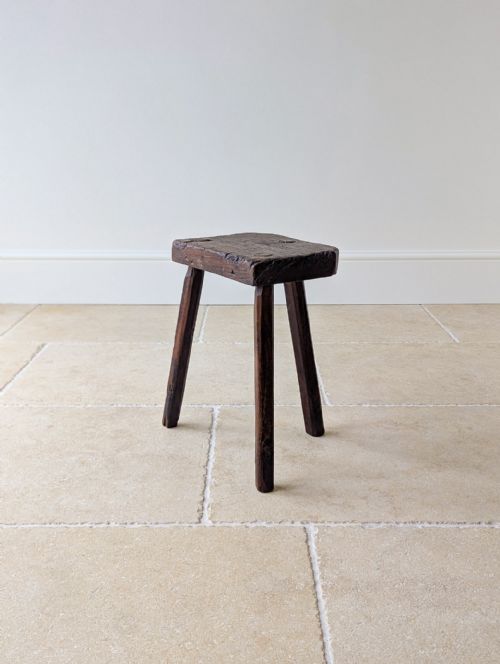

Rustic Oak Low Stool
A rustic oak low stool brings solid, functional history into a room, offering honest craft shaped by decades of everyday use.
Rustic Oak Low Stool
When you search for a rustic oak low stool, you encounter low timber seating forged from practical domestic and rural life across centuries. The pieces available span periods from the seventeenth century through the Victorian era and into the early twentieth century.
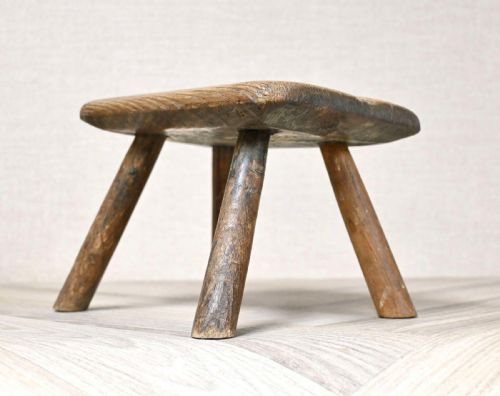
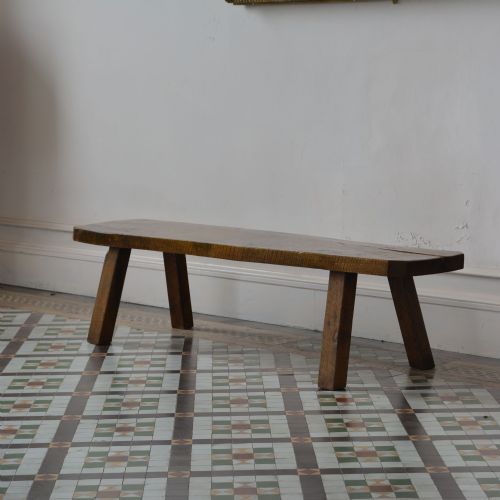
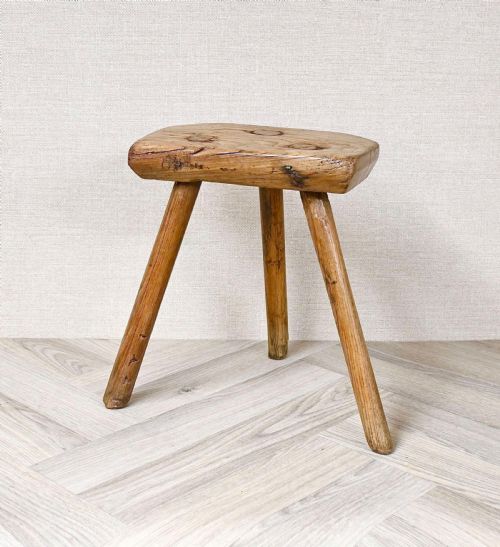
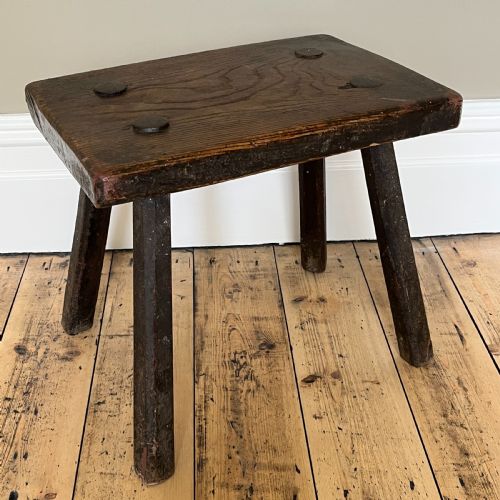
Most examples you meet here are utilitarian country pieces, including joint stools, milking stools, pub seats, and small hearth or footstools. These functional objects served specific roles in farmhouses, taverns, and workshops before finding a place in modern interiors.
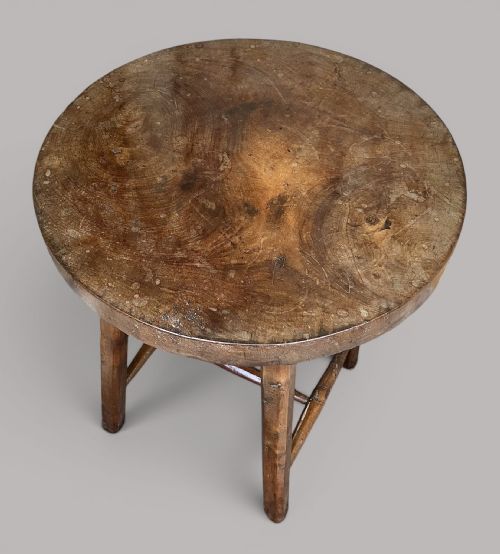
Alongside standard oak forms, the selection incorporates mixed timber variants featuring elm, ash, sycamore, and beech seats or legs. These diverse types share a robust, low-slung profile designed for stability and daily endurance.
Materials and construction
Maker construction relies heavily on solid native hardwoods, pairing durable oak frames with shaped seats carved from elm, ash, or sycamore. Timber selection was dictated by local availability and the specific demands placed on the seat, such as the resilience needed for a heavy milking or tavern stool.
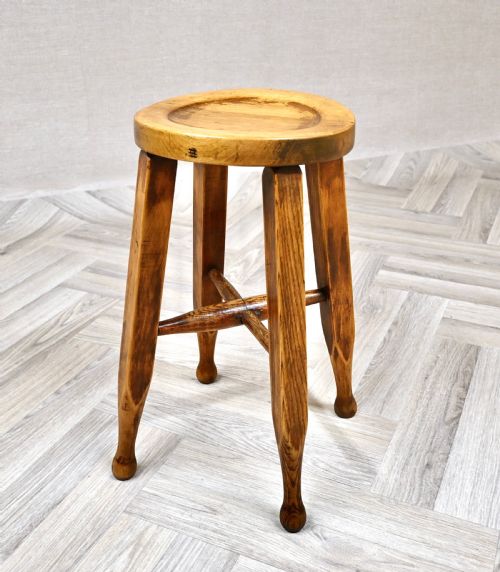
Joining techniques define the structural integrity of these pieces, utilising traditional pegged mortise and tenon joints or robust turned legs wedged directly into bored seats. Surface finishes are minimal, often developing a rich natural patina through decades of friction, wax, and handling.
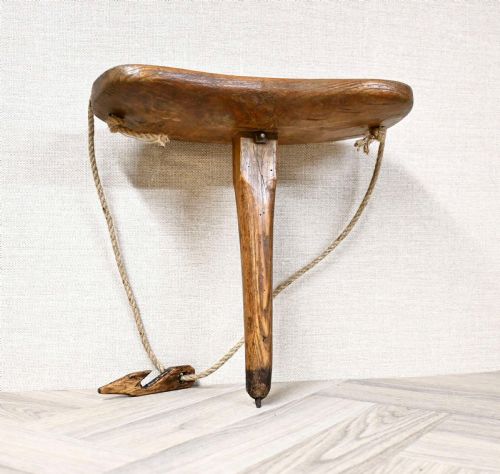
One-legged milking stools exist for dairy workers who strapped the seat directly to themselves while moving between cows.
Assessing quality and character
Quality in a rustic oak low stool rests on the integrity of the original construction and the depth of surface wear rather than smooth perfection. A superior example retains its original pegged joints and timber thickness without excessive structural replacement or unsympathetic modern intervention.
Proportion and stance separate ordinary utility items from more satisfying decorative pieces. The best specimens exhibit harmonious balance in their turned or splayed legs and a tactile, weathered timber grain that reflects genuine age.
Jack Grimble
The Rustic Oak Low Stool Glossary
- Joint stool
- A sturdy wooden seat constructed with mortise and tenon joints pegged together rather than glued. These pieces date back to the seventeenth and eighteenth centuries and often served multiple household purposes.
- Milking stool
- A small, typically three-legged seat designed for use while milking livestock. Their splayed leg design ensured stability on uneven earthen floors.
- Jointed
- A method of framing furniture using closely fitted interlocking wooden joints secured with wooden pegs. This technique provides immense rigidity without modern metal fasteners.
- Patina
- The deep, lustrous surface sheen developed on timber over decades of handling, cleaning, and exposure to light. It acts as a visual indicator of genuine age and continuous use.
- Trestle form
- A structural arrangement where a top board is supported by upright side assemblies rather than four independent legs. This architectural style appears on early boarded and Gothic-influenced seating.
Rustic Oak Low Stool: Frequently Asked Questions
What is a joint stool?
A joint stool is an early form of wooden seating constructed using tight mortise and tenon joints secured with wooden pegs. They were sturdy enough to stand on or use as small tables in early homes.
Unlike chairs, which were once reserved for heads of household, joint stools were common, portable, and built to withstand heavy daily labour.
How were milking stools used?
Milking stools were designed with three splayed legs to provide absolute stability on uneven farm floors or muddy yards. Dairy workers strapped or carried them while tending to livestock.
Today, their compact footprint and sculptural forms make them popular as small side tables or plant stands in domestic spaces.
How do I date an oak stool?
Dating relies on examining tool marks, joint construction, timber shrinkage, and the nature of the surface wear. Hand-sawn boards and pegged joinery usually point toward earlier periods.
Secondary woods, finish types, and stylistic revivals like Jacobean or Arts and Crafts elements help narrow down nineteenth and twentieth-century pieces.
Can I use an antique stool daily?
Most of these pieces spent generations performing heavy utilitarian tasks, making them inherently robust for modern use. Solid oak and elm construction handles regular sitting or serving as a small side table easily.
Checking the stability of the legs and joints ensures the stool remains safe for everyday placement in a hallway or living room.