

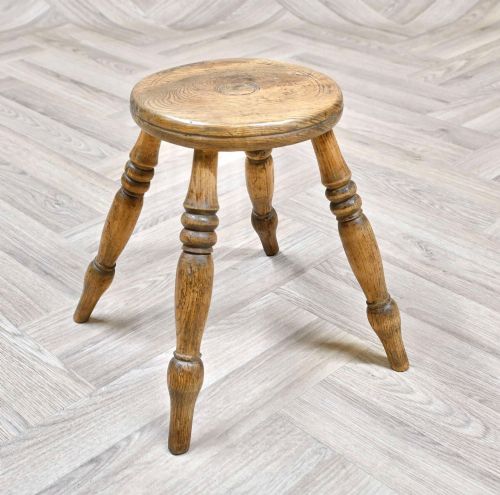
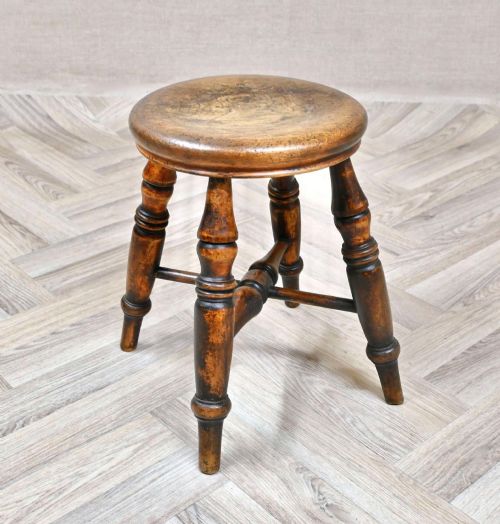
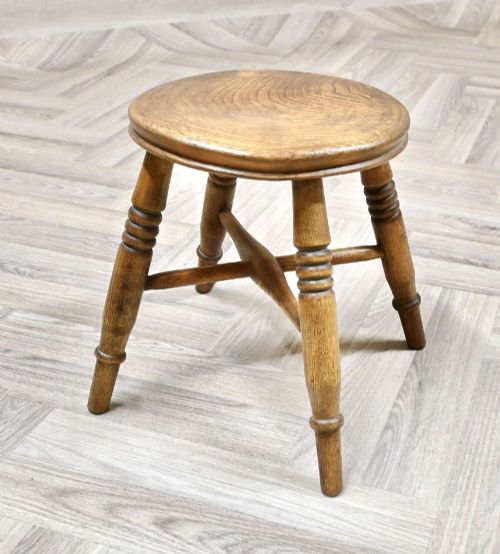
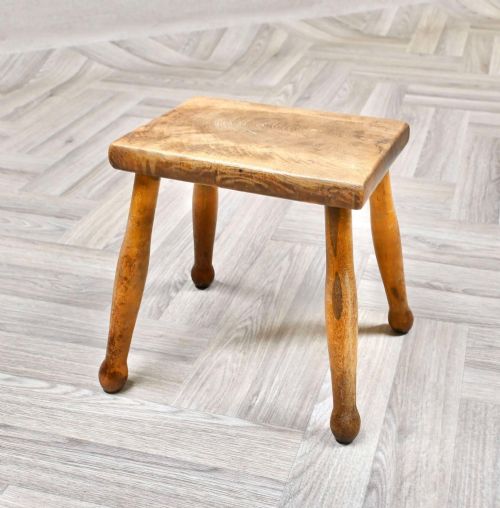



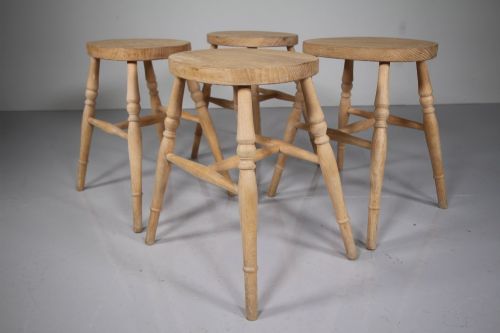
Country Oak Wooden Stool
A country oak wooden stool brings honest timber and simple utility straight to an interior, built for heavy farm and tavern work.
Country Oak Wooden Stool
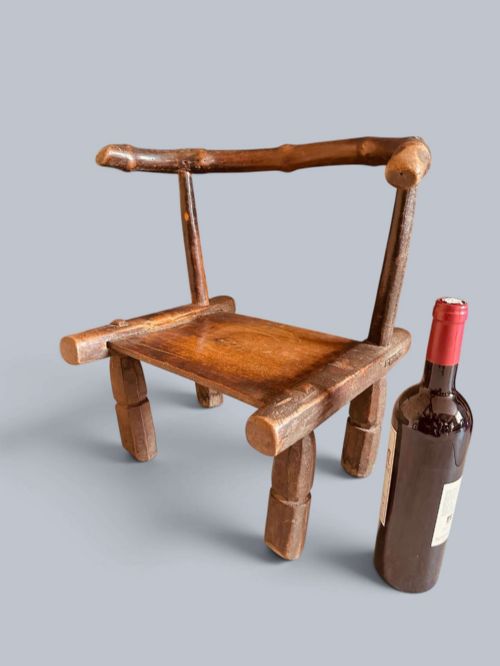
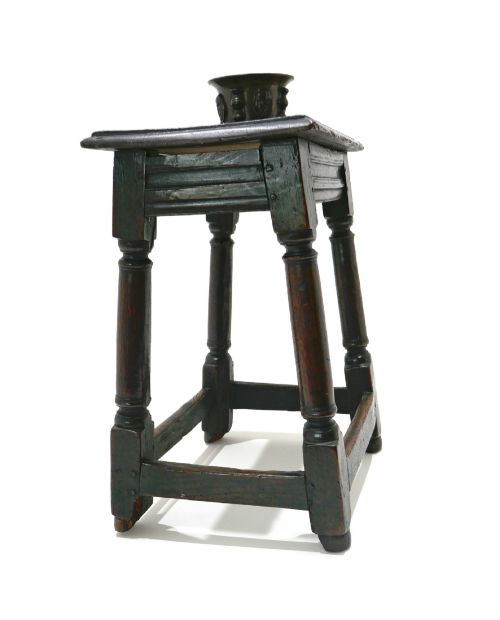
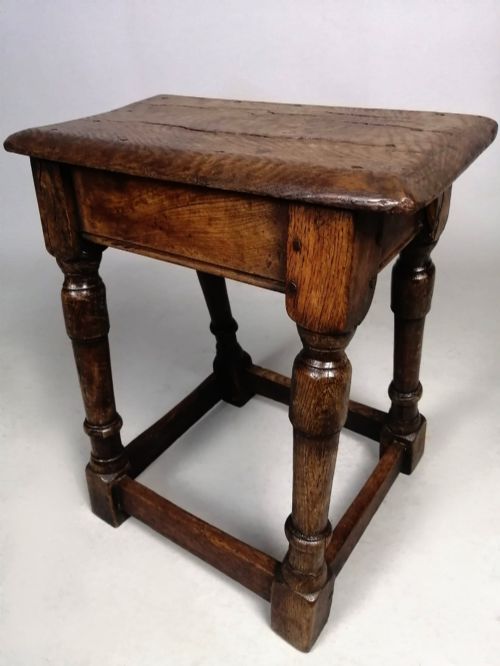
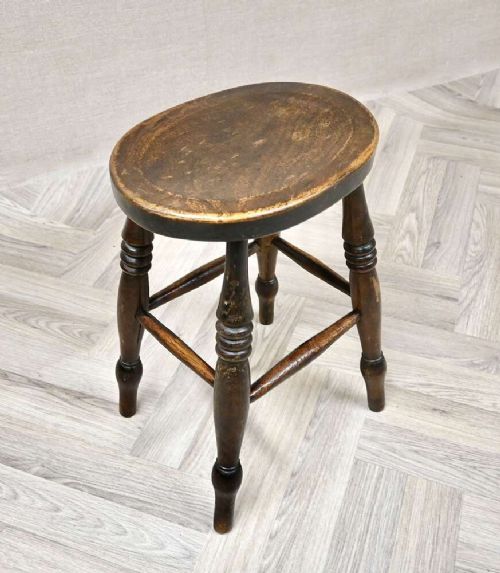
When searching for a country oak wooden stool, buyers encounter utilitarian forms rooted in daily domestic and agricultural life. The selections range from sturdy joint stools of the seventeenth and eighteenth centuries to nineteenth-century dairy, milking, and bar variants.
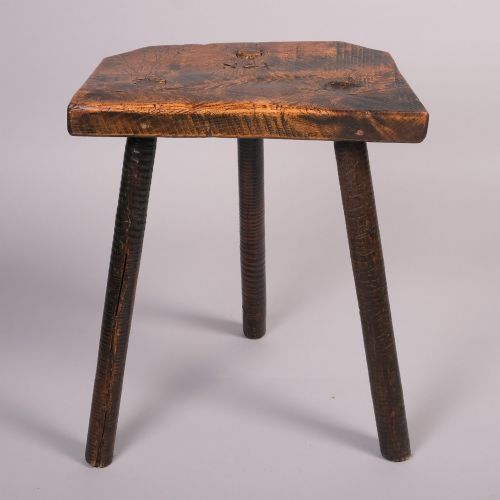
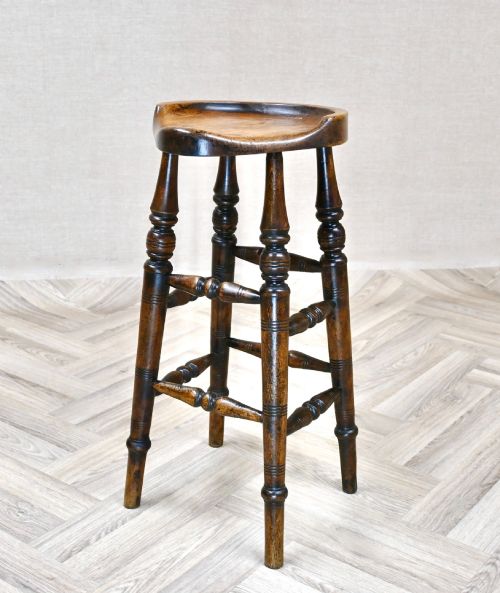
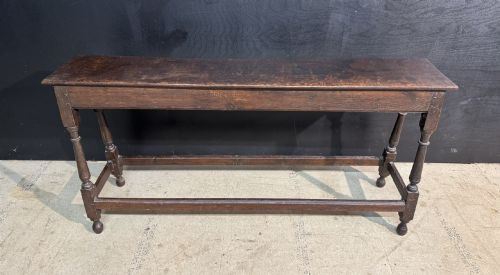
The most common pieces on this page are nineteenth-century country stools, alongside earlier oak and elm joint stools from the Georgian and seventeenth-century periods. These include provincial plank-top designs, tall tavern seats, and three-legged ash and elm milking examples.
Makers produced these objects for practical service rather than display, utilising durable local hardwoods. They span eras from the 17th century through the Edwardian period and into the 1930s, reflecting changing rural needs.
How they were made
Craftsmen built these items using native timbers such as oak, elm, ash, beech, and pine, often combining woods within a single piece. Joinery relied on traditional pegged construction and mortise and tenon joints to withstand heavy daily use.
Surfaces were frequently shaped by hand, employing adzes or lathes to create dished tops on milking and tavern stools. Secondary materials like rush appeared in seating areas, while finishes developed rich patinas through age and wear.
Country Oak Wooden Stool Retail Price Guide 2026
Typical asking prices for country oak wooden stool among the pieces listed under this phrase on Sellingantiques today, from the lower quarter to the upper quarter. They describe what is for sale here now, not the wider market.
One curious offering includes a scratch-built nineteenth-century stool carrying a direct historical connection to Winchester.
What varies in quality
Quality rests in the integrity of the original construction and the survival of an honest, unmanipulated surface. Examples retaining their early pegged joints and deep timber patinas stand apart from later restorations or heavily sanded pieces.
Proportion and regional character also define the tier of a piece, with well-balanced architectural lines in joint stools or clever ergonomic shaping in three-legged milking stools commanding greater appreciation.
The Country Oak Wooden Stool Glossary
- Joint stool
- A solid wooden stool constructed with pegged mortise and tenon joinery rather than turned legs alone. These sturdy pieces often served dual purposes as seating or small side tables in early households.
- Apotropaic mark
- A carved symbol intended to ward off evil spirits and witches. These protective markings occasionally appear on early domestic woodwork and hearth furniture.
- Plank top
- A seat formed from a single broad board or several parallel planks of timber. This construction is typical of robust provincial tables and benches.
- Dished top
- A seat surface hollowed out into a shallow concave bowl shape for comfort. This technique is frequently found on milking and tavern stools.
- Rush seat
- A seating surface woven from dried marsh rushes. It provides a resilient and slightly flexible platform on traditional chairs and stools.
Country Oak Wooden Stool: Frequently Asked Questions
How were country stools used?
These stools served practical daily functions around the farmhouse, dairy, and tavern. People used them for milking cows, sitting by the hearth, or reaching high shelves.
Their robust construction allowed them to double as small work tables or sturdy steps when needed.
Where should I place a wooden stool?
A small country stool fits easily beside a fireplace, as a bedside surface, or tucked beneath a desk. Their compact footprint makes them useful in hallways and bathrooms.
Combining different heights and top shapes creates practical display points for plants or lamps.
How do I date an old stool?
Dating relies on observing tool marks, timber selection, and construction methods like pegged joints. Seventeenth-century examples display heavier rectilinear frames, while nineteenth-century pieces often feature turned legs or shaped seats.
Patina and wear patterns provide further clues to age and continuous use.
Are these stools comfortable to sit on?
Many country stools feature ergonomically dished wooden tops or woven rush seats designed for extended sitting. While lacking upholstery, their shapes support the body naturally.
Variants like bar stools and milking stools offer different heights suited to specific postures.