


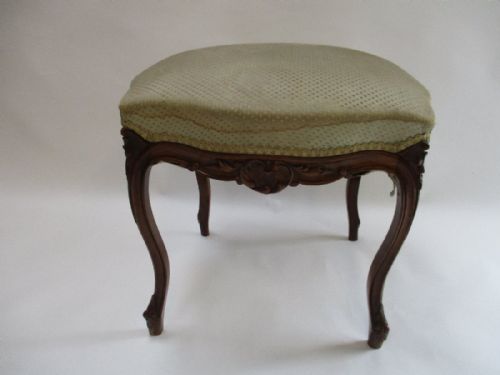
Hand Carved Footstool
A hand carved footstool brings tactile timber grain and vernacular craft into a room, offering both a low seat and an organic focal point.
Hand Carved Footstool
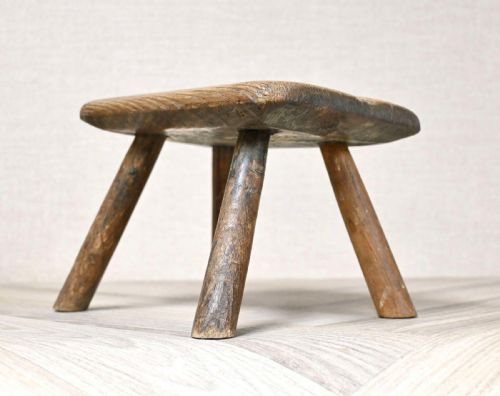
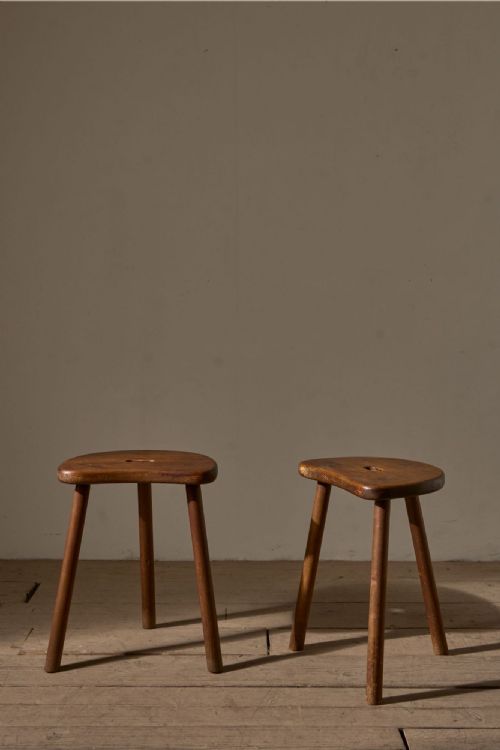
A hand carved footstool encompasses a broad range of low seating and support forms shaped by regional makers across different centuries. When exploring a hand carved footstool, expect to encounter sturdy domestic oak, rich walnut, and expressive carved timber originating from varied cultural traditions.
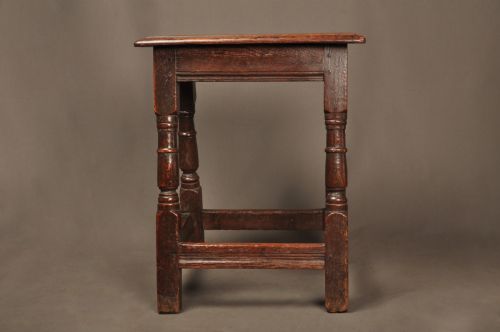
The selection ranges from early oak joint stools and hearth pieces to ornate French gilt examples and regional folk art from Asia and Africa. Domestic vernacular items sit alongside highly decorative Anglo-Indian and tribal works, each showing distinct regional carving habits.
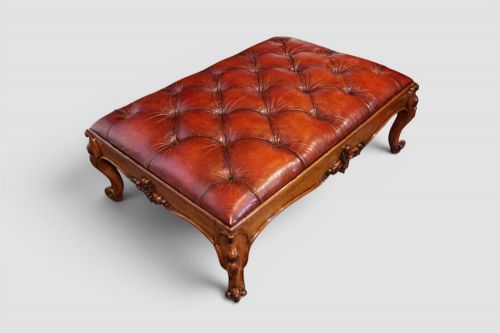
Victorian and Arts & Crafts interpretations also feature prominently, offering heavy turned legs, buttoned leather upholstery, and simpler vernacular joinery. Each piece reflects the functional needs of its period, whether used beside a hearth or as a low decorative seat.
How they were made
Construction relies primarily on solid hardwoods such as oak, walnut, pine, and teak, shaped with hand tools before assembly. Pegged mortise and tenon joints secure the heavier framework, while intricate surface decoration is worked directly into the timber body.
Upholstered variants incorporate traditional stuffing methods finished with leather or woven fabric fixed with brass tacks. Unupholstered pieces rely on the natural warmth and grain of the wood, sometimes enhanced with gold leaf or hand-dyed finishes.
Materials recorded across the inventory include solid oak, walnut, pine, teak, leather, fabric, and gold leaf.
What varies in quality
Quality rests in the integrity of the timber selection and the depth and crispness of the hand carving. Early joint stools demonstrate precision in pegged joinery and structural timber thickness, whereas decorative examples rely on the fluidity of sculptural relief work.
Surface preservation significantly influences the character of a piece, distinguishing honest patination from later alterations. The handling of the wood - whether left with a dry historic surface or gilded - defines the visual weight of the item.
David Oakleafman Langstaff
The Hand Carved Footstool Glossary
- Joint stool
- An early form of wooden stool assembled with pegged mortise and tenon joints rather than turned legs alone. These sturdy pieces served multiple domestic purposes in early households.
- Vernacular
- Objects made by local craftsmen for everyday use, following regional traditions rather than high-style academic design. This style often employs accessible local timbers like pine or oak.
- Patina
- The surface texture, sheen, and colour developed over decades of handling, exposure, and use. A desirable patina signals age and honest domestic interaction.
- Anglo-Indian
- Furniture made in India during the British period, combining traditional local carving skills with European furniture forms. These pieces often feature dense teak and intricate botanical motifs.
- Gilt
- A thin layer of gold leaf applied to the surface of wood to provide a decorative metallic finish. This technique appears more frequently on continental decorative seating.
Hand Carved Footstool: Frequently Asked Questions
What is a joint stool?
A joint stool is an early wooden seat constructed with pegged joinery rather than simple turning. These sturdy pieces were built to withstand heavy daily use in early households.
Their robust timber frames often double as small side tables or stands in contemporary settings.
How do I style a low stool?
Low stools fit easily beside firesides, beneath low tables, or used simply as decorative display stands. Their compact proportions allow them to move between rooms without dominating the floor plan.
Pairing a carved timber or leather-topped piece with contrasting modern upholstery creates an effective visual balance.
How do I date a wooden stool?
Dating relies on observing tool marks, timber species, structural joinery methods, and the style of any surface carving. Early oak examples display pegged joints and hand-planed boards characteristic of pre-industrial carpentry.
Later Victorian and Arts & Crafts pieces introduce machine-sawn elements alongside traditional hand finishing.
Are these stools comfortable to sit on?
Comfort varies depending on whether the top is solid carved timber or padded with leather and stuffing. Upholstered Victorian examples offer cushioned support, while primitive and tribal stools provide firm seating.
Most are designed as low auxiliary seats or footrests rather than primary lounging chairs.