
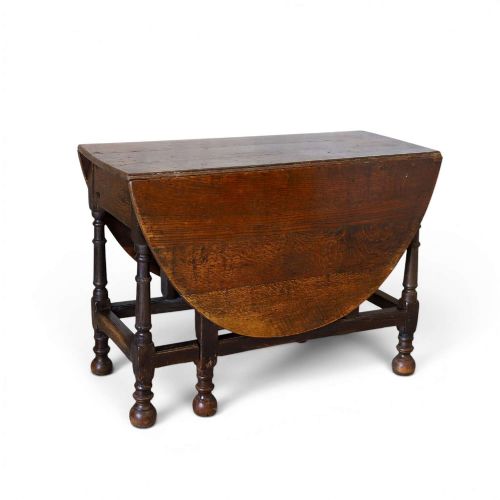


Rustic Oak Flap Table
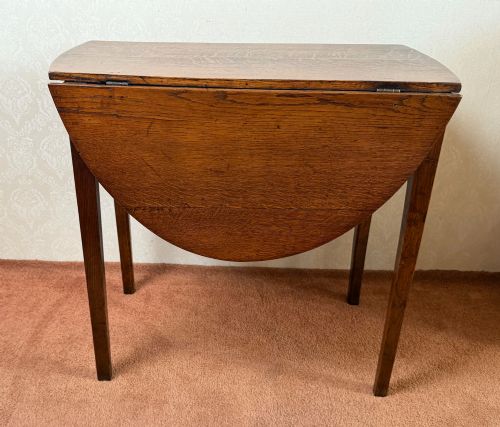
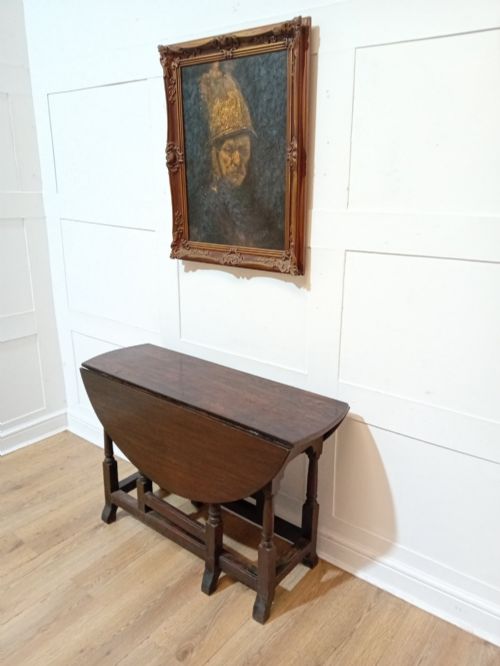
A rustic oak flap table is a sturdy timber folding piece built for practical living.
Rustic Oak Flap Table
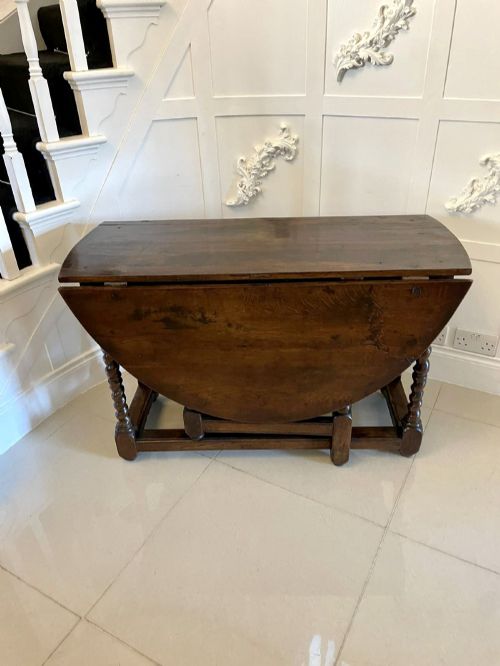
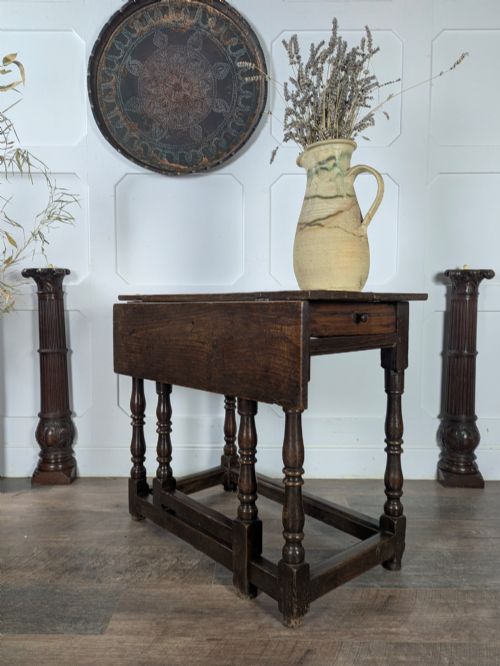
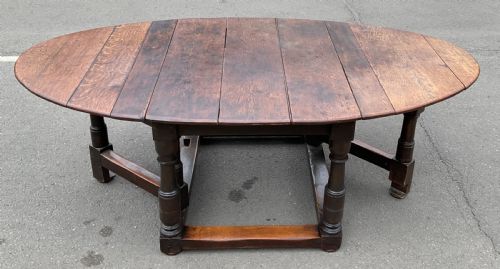
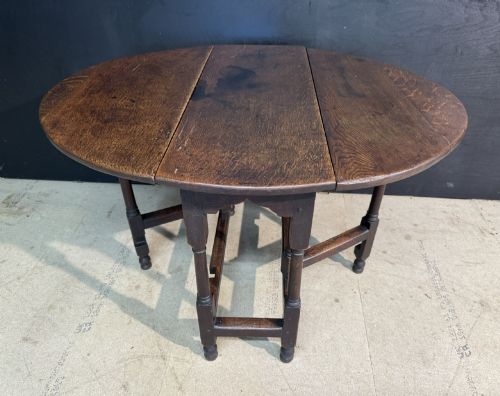
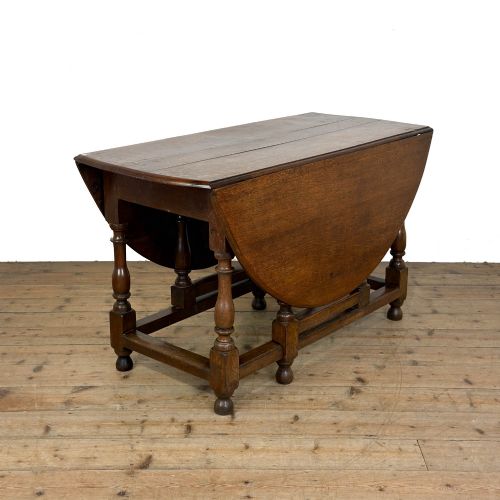
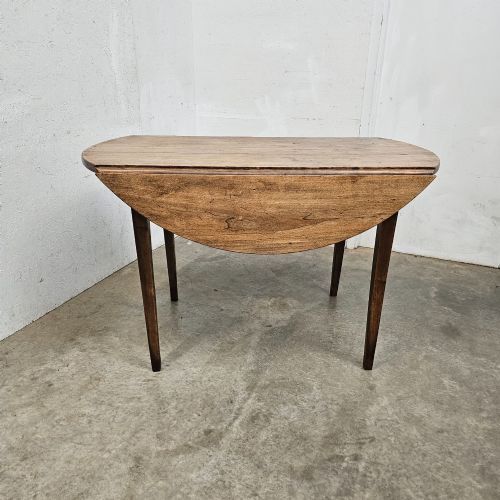
When you search for a rustic oak flap table, you encounter gateleg and drop-leaf tables originating from the seventeenth and eighteenth centuries, alongside later nineteenth and twentieth-century interpretations. These tables feature hinged flaps that fold down to save space or lift up to seat diners when supported by swinging legs.
The versions most frequently met on this page are eighteenth-century and seventeenth-century solid oak gateleg tables, often displaying oval tops and baluster posts. Alongside these dining and side pieces, the selection includes smaller coffee and occasional tables adapted in later decades.
Originating across English and French country traditions, these pieces combine utilitarian strength with domestic warmth. Their patinated timber surfaces reflect centuries of daily use in rural homes.
How they were made
Makers built these tables primarily from solid oak, sometimes combining it with fruitwood, utilising iron and brass for original hinges and fittings. Timbers were cleft or sawn by hand, yielding boards with varied grain patterns and natural irregularities.
Construction relied on traditional joinery methods such as mortise and tenon joints to secure the frame. Gateleg mechanisms utilised pivoting wooden posts or swing legs to support the drop leaves when raised.
Listings span seventeenth-century origins through to twentieth-century coffee tables, constructed primarily in solid oak with occasional fruitwood.
What varies in quality
Quality in these tables rests upon the integrity of the timber and the retention of original surface patination. Pieces retaining their original iron hinges and untouched timber finishes stand apart from those altered by extensive restoration or replacement hardware.
Structural proportion and the crispness of turning on the baluster posts distinguish finer examples. The balance between the fixed centre section and the folding flaps dictates how smoothly the table functions in daily use.
The Rustic Oak Flap Table Glossary
- Gateleg table
- A table with hinged leaves supported by one or more legs that swing out like a gate. This design allows the surface area to expand or contract significantly.
- Drop-leaf table
- A table featuring a fixed centre section and two hinged flaps that lower at the sides. It provides flexible surface space for smaller rooms.
- Baluster post
- A turned vertical wooden support shaped like a pillar or vase. These posts frequently form the structural legs on seventeenth and eighteenth-century tables.
- Patina
- The deep sheen and surface character acquired by wood through age, wear and polishing over many decades. It serves as an indicator of authenticity.
- Pembroke table
- A small rectangular table with two hinged drop leaves on opposing sides and a drawer below. It developed during the eighteenth century for versatile domestic use.
Rustic Oak Flap Table: Frequently Asked Questions
How do I seat people comfortably?
Raise both hinged leaves and swing the supporting gatelegs outward until they lock firmly beneath the extended top. Ensure the floor is even so the pivoting legs bear the weight correctly.
Position chairs to avoid the fixed stretcher rails underneath, which can restrict legroom depending on the table's seventeenth or eighteenth-century proportions.
Can I use a gateleg daily?
These solid oak pieces are built for regular domestic service and handle everyday dining or serving tasks with ease. Their sturdy hardwood construction withstands consistent weight on the folding leaves.
Protect the historic timber surface by using coasters and placemats to prevent moisture rings or heat marks from damaging the antique finish.
How do I tell periods apart?
Examine the leg turnings, stretcher placements, and joint construction to gauge the age of the woodwork. Seventeenth-century examples often feature heavier baluster posts and distinct tool marks from manual shaping.
Eighteenth-century and later revival pieces show refinements in turning style and hardware integration, while twentieth-century coffee table adaptations feature reduced heights.
How do I clean the wood?
Dust the surface regularly with a soft, dry cloth to prevent grit accumulation in the grain. Avoid modern chemical polishes that can build up and dull the historic patina.
Apply a traditional beeswax sparingly when the timber appears dry, buffing it gently to maintain the natural sheen accumulated over centuries.