

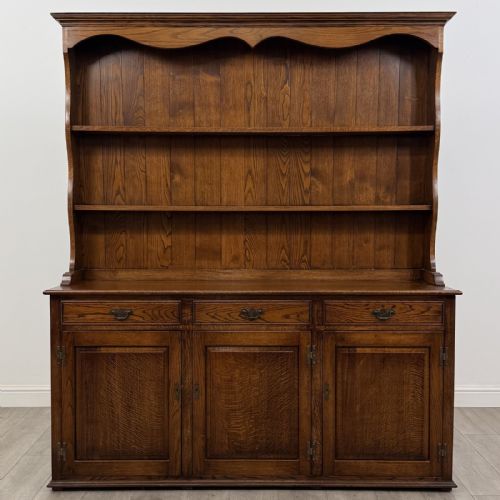
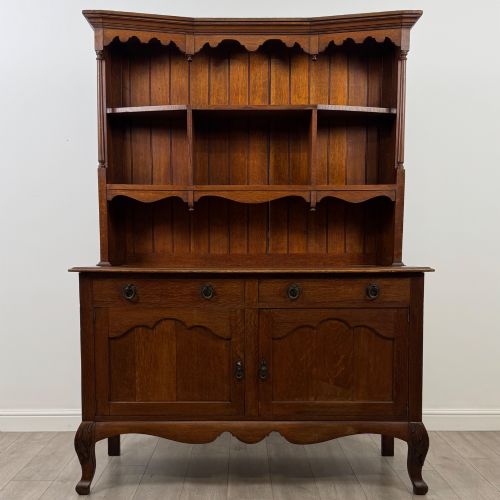
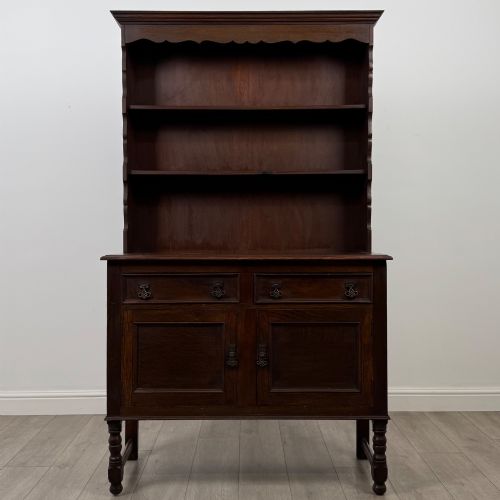


Rustic Oak Display Hutch
A rustic oak display hutch brings immediate warmth and practical storage to a room, offering sturdy shelves for display and enclosed space below.
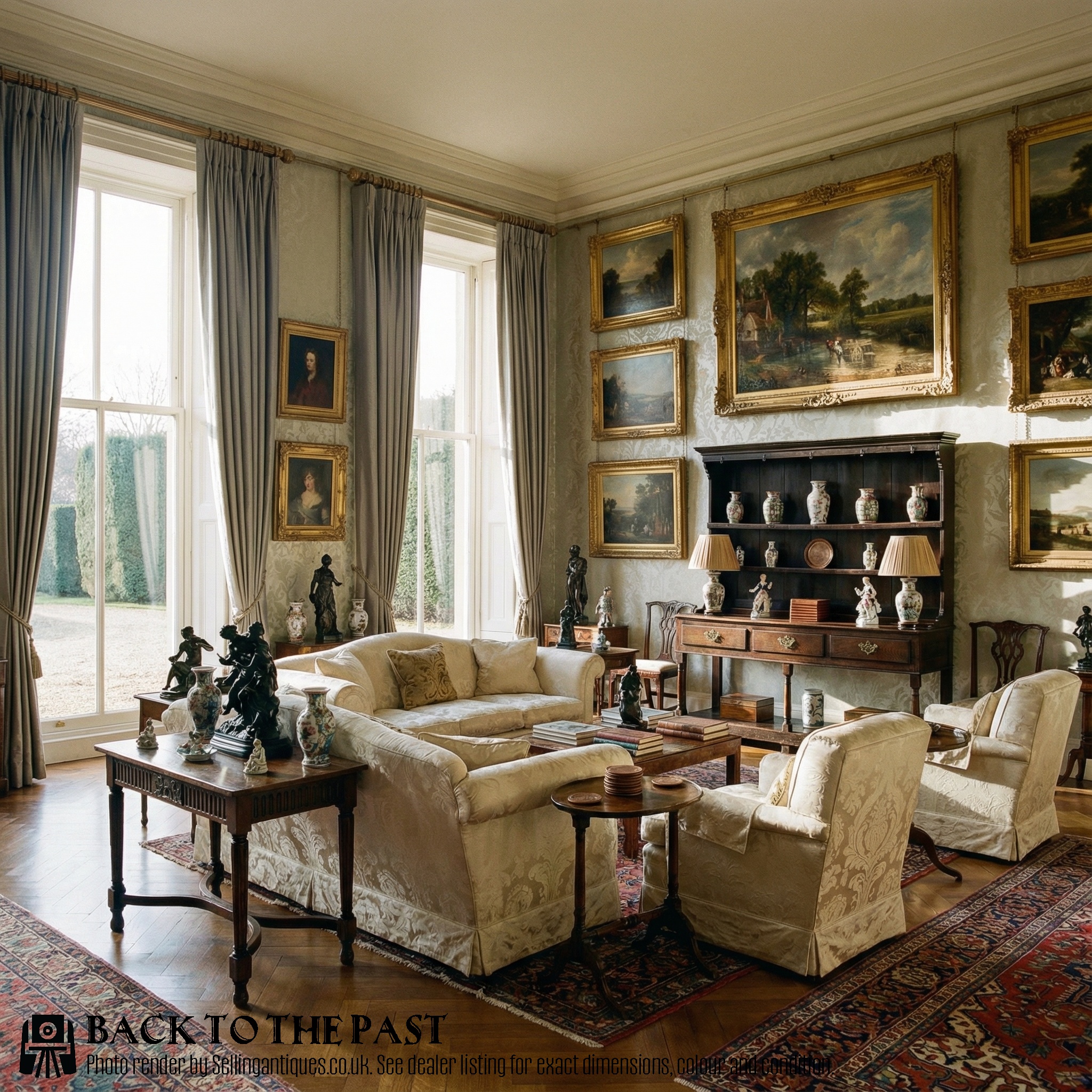
Rustic Oak Display Hutch
When you search for a rustic oak display hutch, you are looking at substantial pieces of furniture designed for both utility and presentation. The pieces on this page are predominantly Welsh dressers and country dressers spanning several centuries from the seventeenth century through to the Edwardian period and the early twentieth century.
The most common forms you will encounter are oak dressers featuring upper display shelves combined with lower cupboards or drawers. These items originate primarily from British country workshops, reflecting English, Welsh, and Georgian vernacular traditions.
The styles range from plain utilitarian country pieces to structured Georgian designs and Carolean influences. Buyers seeking a rustic oak display hutch will find examples varying from two-part modular units to single joined constructions.
Materials and construction
Construction methods rely on traditional joinery techniques appropriate to their period, including joined panels and pegged framing. Master carpenters utilised local timber resources, resulting in surfaces that show the natural grain and texture of the wood.
Rustic Oak Display Hutch Retail Price Guide 2026
Typical asking prices for rustic oak display hutch among the pieces listed under this phrase on Sellingantiques today, from the lower quarter to the upper quarter. They describe what is for sale here now, not the wider market.
Some seventeenth-century plates left behind shadowy silhouettes in the wood where generations of Sunday dinners rested.
Judging quality and character
Quality in these pieces is dictated by the integrity of the original timber and the subtlety of the hand tool work. Finer examples display carefully selected oak boards with rich figuring and minimal replacement of structural parts.
The proportion between the upper display section and the lower base defines the visual success of the piece. Untouched surface patination and original brass or iron hardware elevate an example above later assembled or heavily restored alternatives.
The Rustic Oak Display Hutch Glossary
- Welsh dresser
- A traditional kitchen or dining room furniture form featuring plate racks or shelves above a base of drawers and cupboards. They were originally used for storing and displaying domestic tableware.
- Breakfront
- A cabinet design where the central section projects forward from the flanking wings. This configuration adds architectural depth and visual complexity to the piece.
- Joined oak
- Furniture constructed using mortise and tenon joints secured with wooden pegs rather than metal nails. This technique provides exceptional structural stability.
- Patina
- The surface sheen and mellowing of colour developed by wood and metal over decades of handling and exposure to light. It is a key indicator of age and authenticity.
- Vernacular
- Furniture designed by local craftsmen for everyday regional use rather than following high-style London fashions. These pieces prioritise practical domestic utility.
Rustic Oak Display Hutch: Frequently Asked Questions
What is a rustic oak display hutch used for?
These pieces function as combined storage and display units for dining rooms and kitchens. The upper shelves hold ceramics and glassware whilst the lower cupboards conceal tableware.
Historically, they served as the central workspace and storage hub in country houses. Today, they provide prominent display space while hiding everyday clutter.
How do I date an oak dresser?
Dating relies on examining construction marks, timber preparation methods, and stylistic details. Hand-cut joints and original ironware point to earlier centuries.
Secondary woods and backboard construction also help determine the era. Stylistic clues range from seventeenth-century carved panels to Edwardian proportions.
Are these pieces made from solid oak?
The primary visible surfaces and structural framework are constructed from solid oak. Secondary timbers like pine often appear in internal drawer linings and backboards.
Country pieces utilised accessible local wood for hidden structural elements. This mixed timber construction is entirely authentic to vernacular cabinet making.
How do I care for antique oak furniture?
Maintain the wood by applying natural beeswax sparingly to nourish the dry surface. Avoid placing the furniture in direct sunlight or near heat sources.
Keep indoor humidity stable to prevent timber movement. Dust regularly with a soft, dry cloth to preserve the historic finish.