




Rustic Kitchen Carver
A rustic kitchen carver brings honest vernacular design and solid wood construction directly to the daily dining table.
Rustic Kitchen Carver
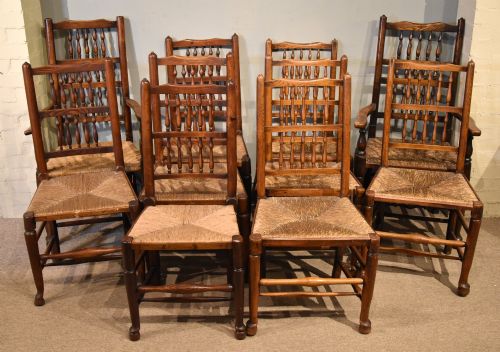
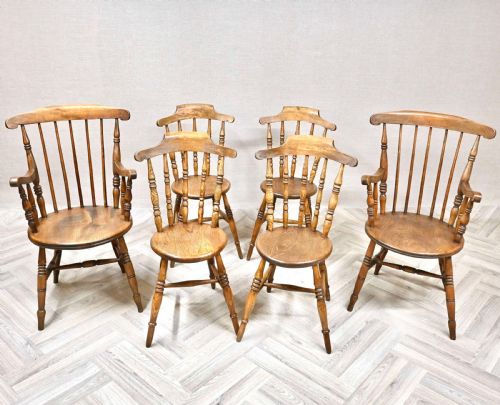
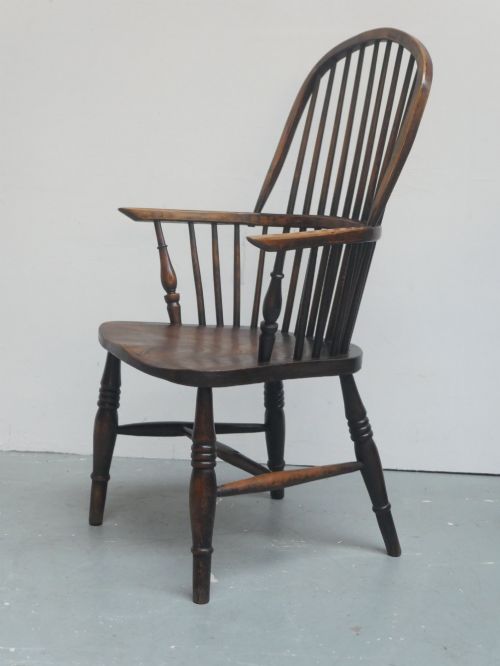
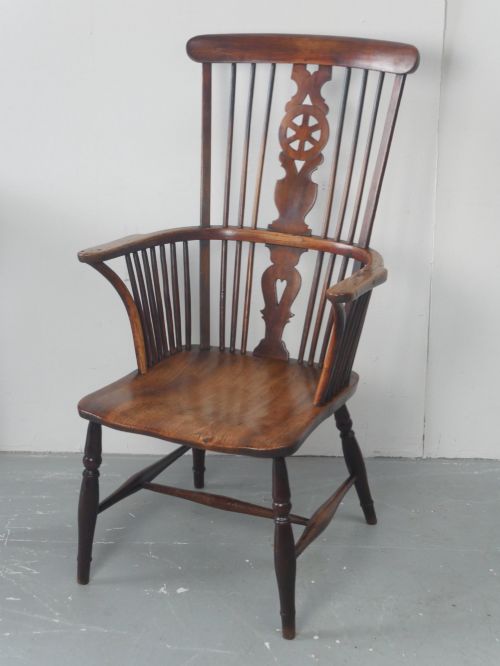
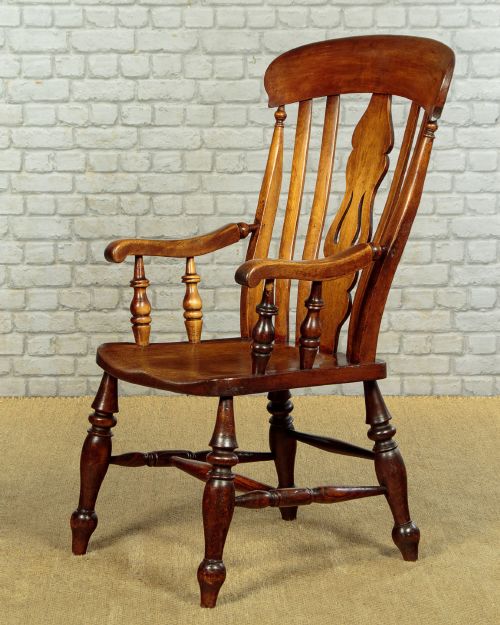
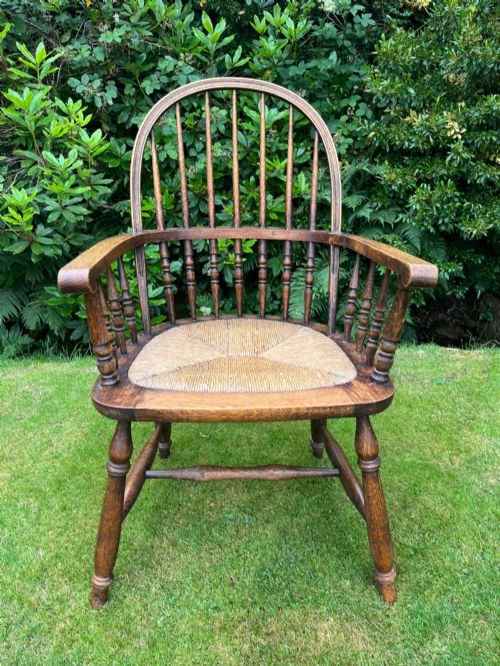
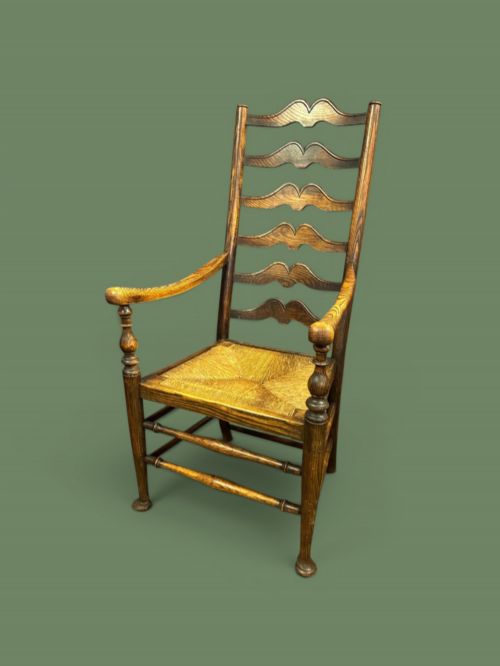
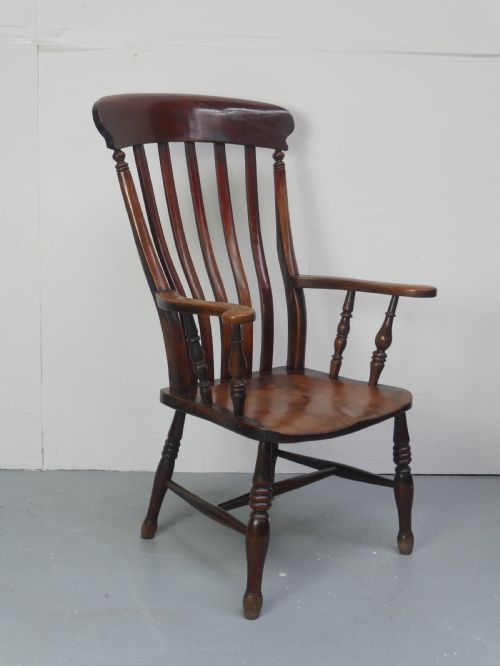
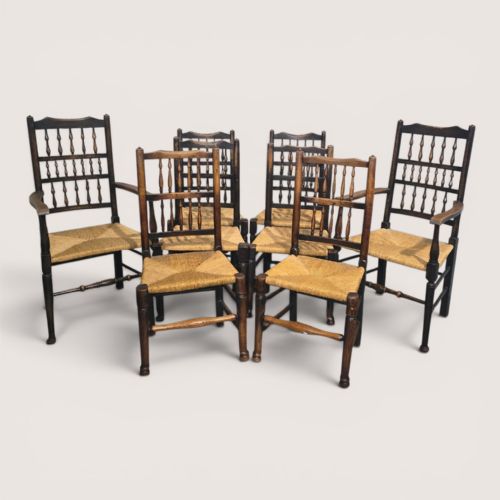
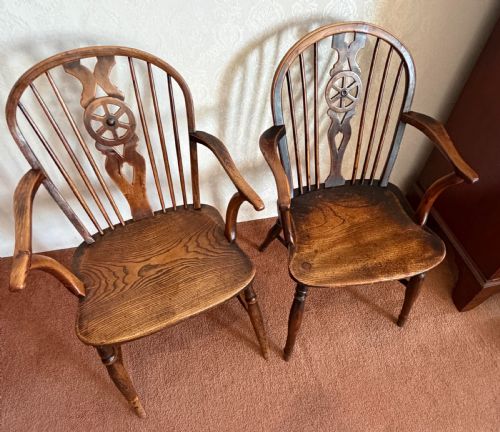
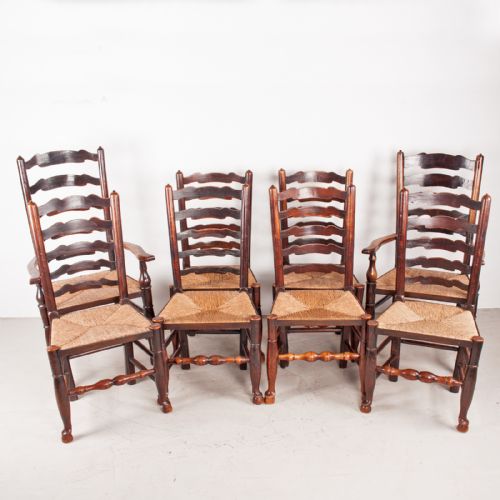
A rustic kitchen carver is a sturdy timber armchair designed for utility in country settings, often featuring high backs and generous seating. Buyers searching for a rustic kitchen carver encounter forms such as Windsor armchairs, spindle backs, and ladder backs.
The pieces on this page span the nineteenth century and the early twentieth century, taking stylistic cues from English country traditions and Victorian farmhouse vernacular. These chairs were built for daily domestic service rather than formal display.
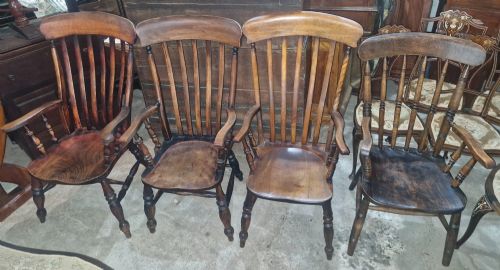
Makers utilised native timbers to construct durable seating that survived generations of heavy use in farmhouse kitchens and dining rooms. Common configurations include individual armchairs alongside sets that incorporate matching side chairs.
Materials and construction
Makers relied on strong domestic hardwoods such as elm, ash, beech, and oak for frames, spindles, and legs. Elm frequently provided the solid, dished seats required for everyday comfort.
Traditional joinery techniques governed the assembly, utilising pegged mortise and tenon joints or steam-bent components for arched backs and armrests. Rush seating also appears across specific ladder back variants.
Rustic Kitchen Carver Retail Price Guide 2026
Typical asking prices for rustic kitchen carver among the pieces listed under this phrase on Sellingantiques today, from the lower quarter to the upper quarter. They describe what is for sale here now, not the wider market.
Many a farmhouse carver bears the polished elbows of generations who sat too close to the fire.
Factors affecting quality
The integrity of the timber and the retention of original surface patination distinguish superior examples from heavily altered pieces. Chairs featuring native woods with minimal replacement parts command greater interest from traditionalists.
Construction robustness varies between individual country workshops and larger regional production centres, influencing the weight and stability of the frame. Elegance in the turning of spindles and the shaping of arms separates standard utility items from finer vernacular work.
The Rustic Kitchen Carver Glossary
- Carver
- An armchair designed with scrolling or open arms, traditionally positioned at the head of a dining table.
- Windsor
- A chair built with a solid wooden seat into which the legs, back spindles, and bow are separately socketed.
- Ladderback
- A chair back constructed from horizontal wooden slats placed between two upright posts.
- Rush
- Seating material woven from dried marsh grass to create a durable, textured surface.
- Vernacular
- Everyday utilitarian objects made by local tradesmen using regional materials rather than following high-style academic designs.
Rustic Kitchen Carver: Frequently Asked Questions
What is a kitchen carver?
A kitchen carver is an armchair designed for daily domestic use around a farmhouse table. These pieces combine robust wooden construction with comfortable seating proportions.
They typically feature high wooden backs or supportive armrests to accommodate long hours of work or dining. The design prioritises utility and strength above ornamental display.
How do I date a Windsor chair?
Dating a Windsor chair involves examining the turning of the legs, the thickness of the seat, and the timber combinations used in construction. Earlier pieces often display thicker saddle seats and simpler, heavier undercarriages.
Tool marks and assembly methods also offer clues to the period of manufacture. Regional workshop traditions changed over the nineteenth century as turning styles evolved.
Are these chairs suitable for daily use?
These wooden carvers were originally built for heavy farmhouse service and remain exceptionally durable for modern dining spaces. Solid timber construction ensures they handle regular seating demands.
Proper care of the wood and rush surfaces keeps the furniture stable for everyday meals. Many households mix these armchairs with matching side chairs around a main table.
What woods were used?
Cabinet makers and local joiners utilised native hardwoods readily available in the British countryside. Elm was frequently chosen for seats because its interlocking grain resisted splitting.
Ash, beech, and oak provided the strong uprights, bent bows, and spindles necessary for structural support. Occasional pieces incorporated fruitwoods or yew for decorative contrast.