
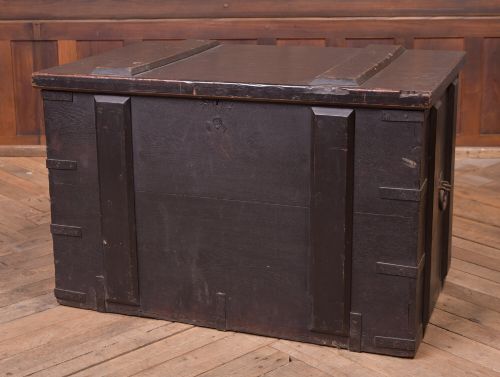
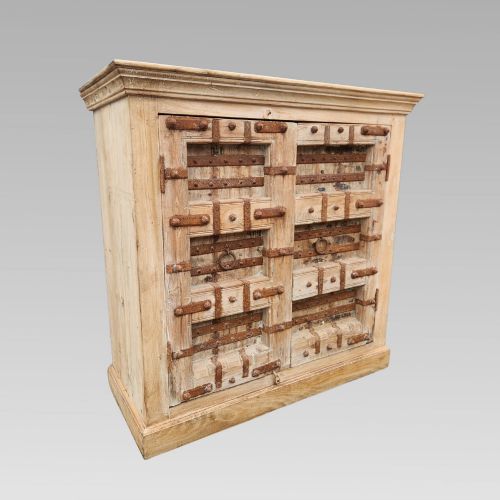
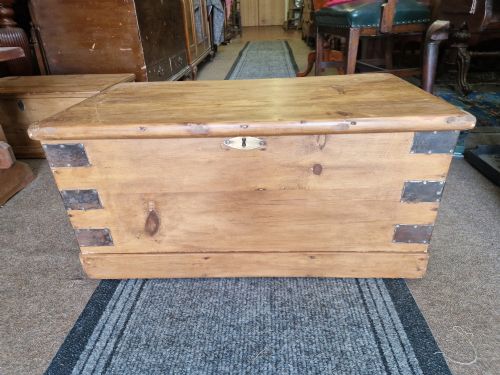
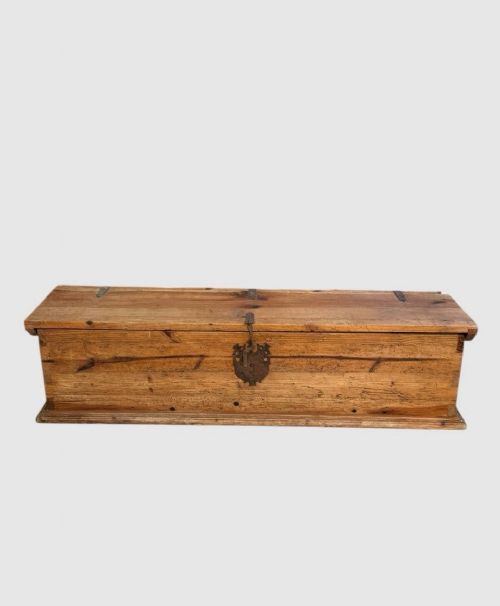
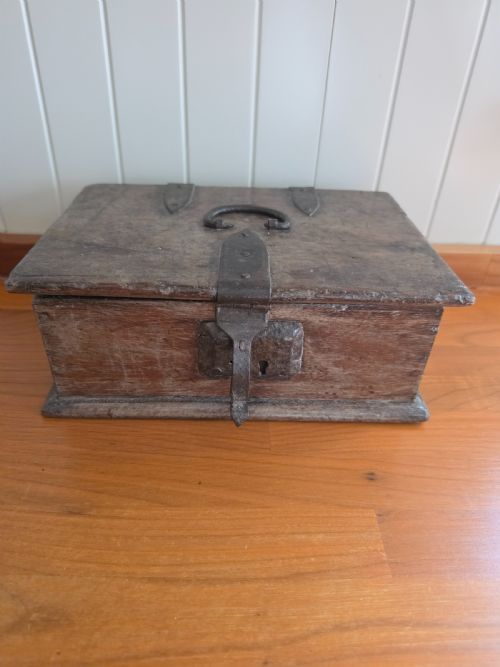
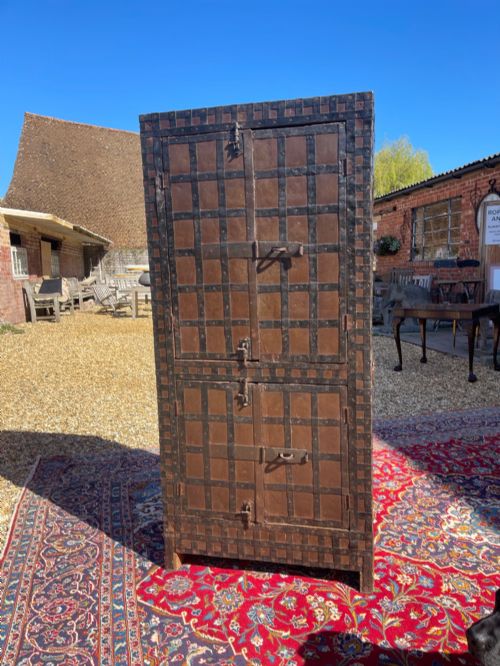

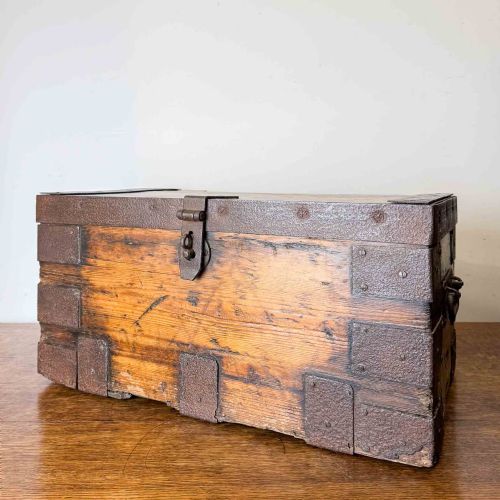


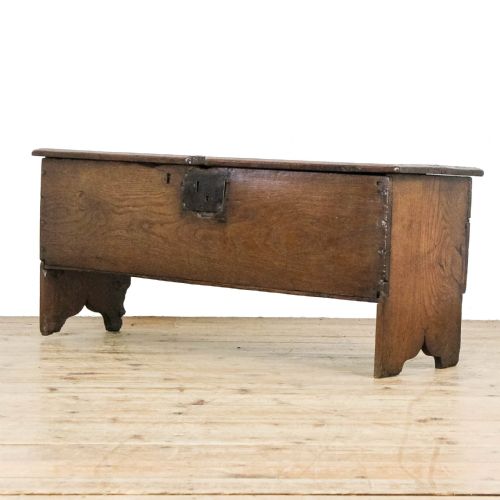

Rustic Iron Bound Chest
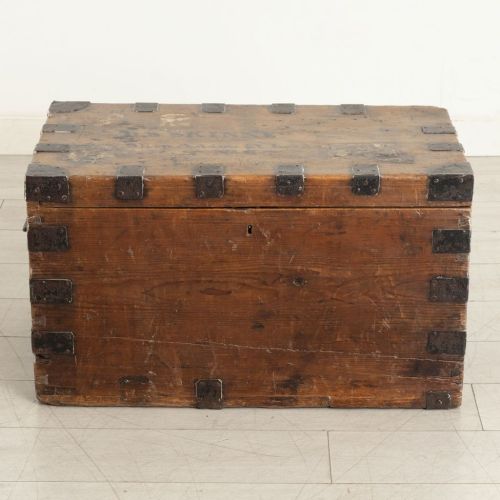
A rustic iron bound chest brings heavy timber and forged metal together for practical storage with strong visual presence.
Rustic Iron Bound Chest
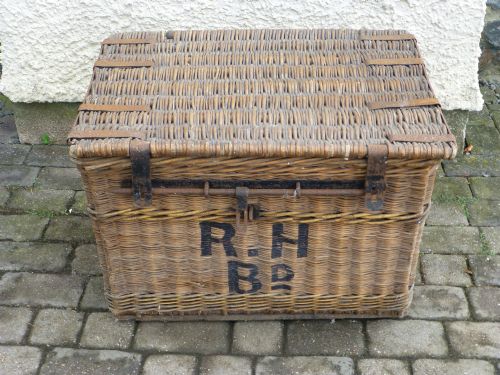
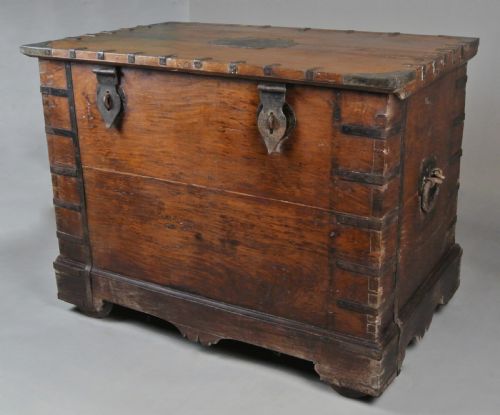
A rustic iron bound chest serves as a robust container built for travel, security, or household storage. You encounter pine, oak, and teak versions spanning multiple centuries, often reinforced with metal strapwork.
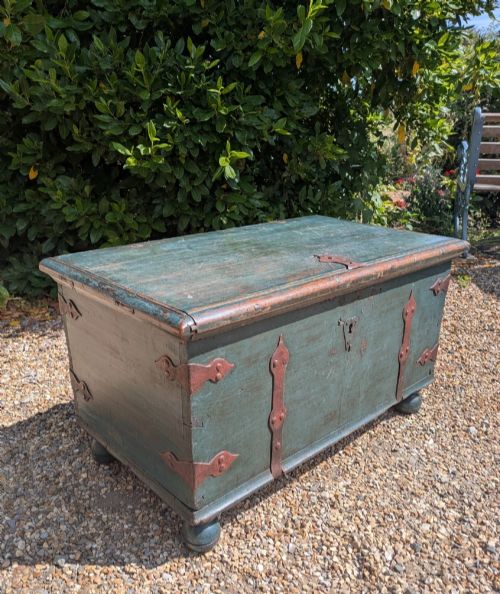
The pine and painted Swedish marriage chests or Scandinavian folk art boxes dominate the selection. These pieces range from simple travel trunks to heavy dowry chests and strongboxes.
Makers utilised durable local timbers fitted with protective iron bands to withstand long journeys or daily domestic use. The results include campaign chests, silver chests, and large storage trunks.
How they were made
Carpenters joined sturdy timbers such as pine, oak, and teak using traditional joinery methods suited to heavy loads. Surfaces often received coats of paint or remained natural depending on regional tradition.
Blacksmiths forged hand-shaped iron strapwork, hinges, and corner brackets to reinforce the wooden frames. These metal bands were secured with handmade nails or rivets to provide structural strength and security.
Listings feature pine, oak, teak, and elm chests alongside painted Swedish folk art boxes spanning the sixteenth to the nineteenth centuries.
What varies in quality
The standard of forging on the iron strapwork marks the difference between basic utilitarian hardware and artistic execution. Heavier, more complex hand-forged reinforcement separates better examples from simpler boxes.
The preservation of original painted surfaces and traditional hardware dictates overall character. Examples retaining their untouched folk art decoration or early surface treatments hold greater visual integrity.
The Rustic Iron Bound Chest Glossary
- Iron band
- A strip of metal fixed around the exterior of a box or chest to reinforce the wooden construction. This element provides both structural strength and protection against impacts.
- Strongbox
- A secure container built with thick timber and heavy iron fittings for storing valuables. These boxes often feature complex locking mechanisms.
- Dowry chest
- A large storage chest traditionally used to hold household goods and linens for a wedding. Examples frequently display painted decoration or maker details.
- Campaign chest
- A portable storage trunk designed for military officers on the move. These pieces often feature recessed brass handles and sectional construction.
- Cofer
- An early form of heavy storage chest, typically covered in leather, hide, or fitted with iron bands. They served secure domestic and travel functions.
Rustic Iron Bound Chest: Frequently Asked Questions
What is a rustic iron bound chest?
A rustic iron bound chest is a sturdy wooden storage container reinforced with metal strapwork and iron fittings. These pieces were built for travel, security, or holding household goods across various centuries.
You find them constructed from timbers like pine, oak, and teak, often featuring hand-forged hardware. Their designs range from simple domestic boxes to large Scandinavian folk art trunks and military campaign chests.
How were these chests used historically?
Historically, these chests served as secure containers for transporting personal belongings, silver, or trade goods during travel. They protected contents from moisture, pests, and rough handling on long journeys.
In domestic settings, smaller strongboxes held valuables while larger dowry chests and blanket boxes stored textiles and household provisions. Their heavy construction allowed them to double as sturdy tables or benches.
How do I date a rustic iron bound chest?
Dating relies on examining the timber species, construction techniques, and the style of the iron hardware. Hand-forged strapwork and specific regional painting styles point to particular periods like the eighteenth or nineteenth century.
Secondary woods, nail types, and lock mechanisms also provide clues to the age of the piece. Comparing construction methods against known historical examples helps narrow down the decade of manufacture.
How do I clean and maintain the ironwork?
Maintenance involves keeping the timber and metal clean using dry cloths and avoiding excessive moisture. Gentle cleaning preserves the natural finish of the wood and any original surface treatments.
If the iron shows active corrosion, a light application of protective wax helps stabilise the metal without removing historical character. Regular dusting prevents grime buildup in the crevices of the strapwork.