
Rustic Housekeeper Cupboard
A rustic housekeeper cupboard provides capacious domestic storage, bringing honest utility and weathered charm to a modern kitchen or hallway.
Rustic Housekeeper Cupboard
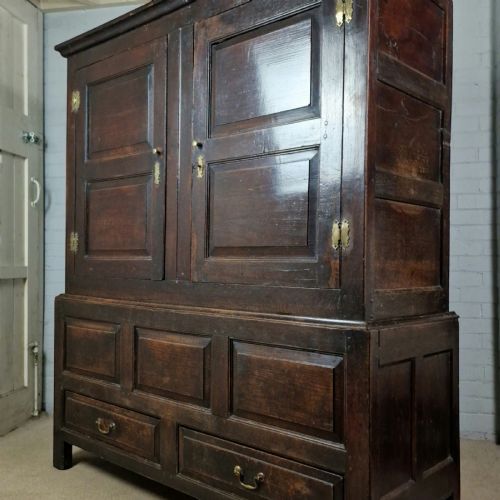
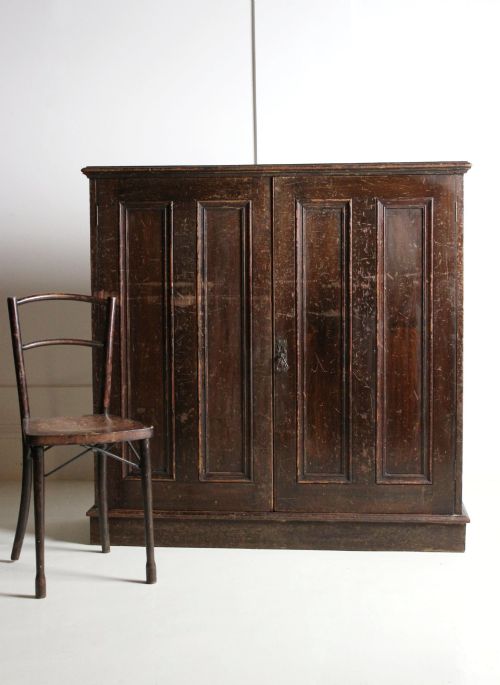
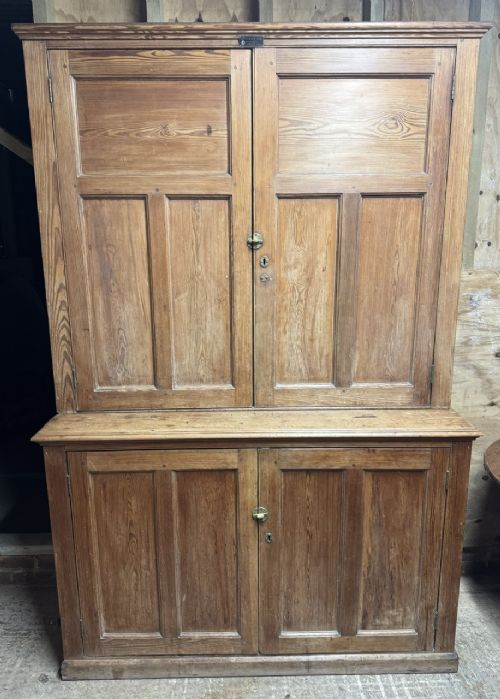
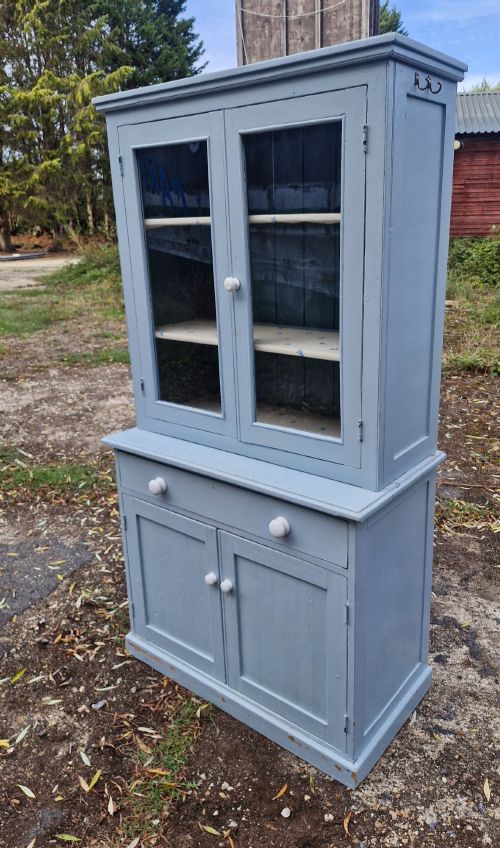
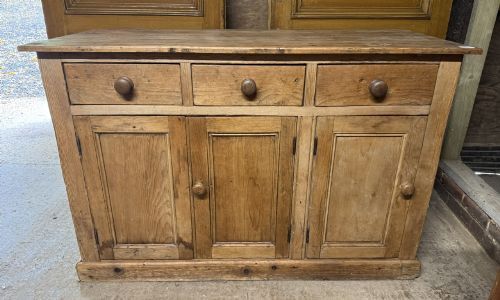
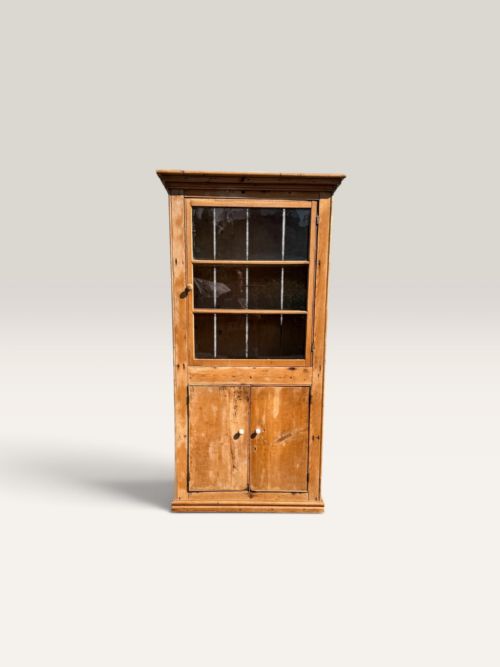
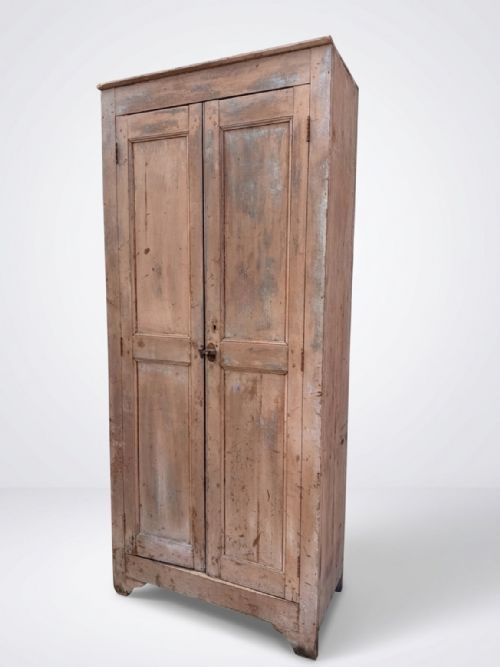
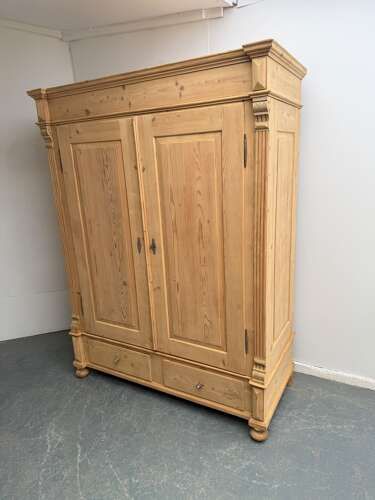
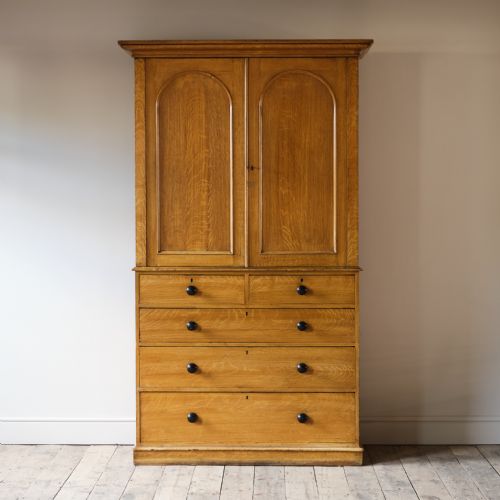
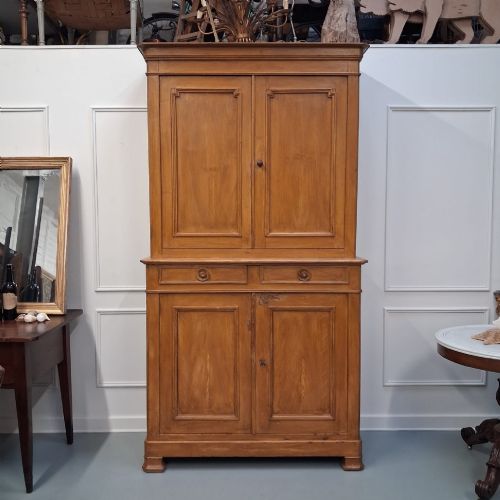
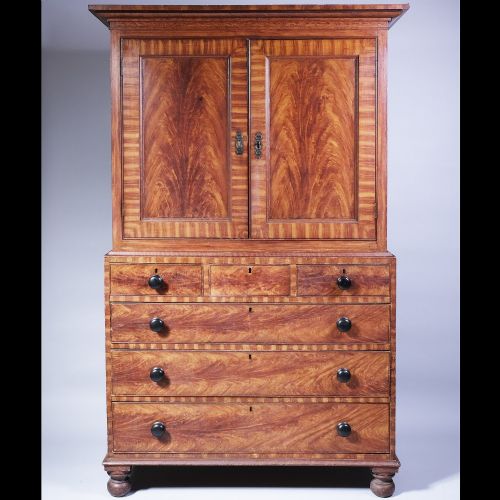
A rustic housekeeper cupboard is a substantial storage piece designed for organising household provisions, linens, and tableware. These items appear across the Georgian, Victorian, and Edwardian periods, reflecting the practical needs of large domestic spaces.
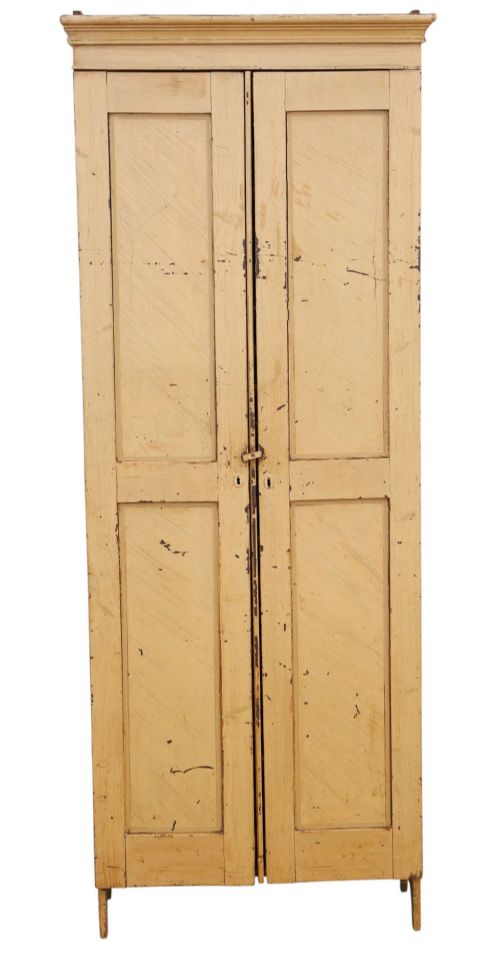
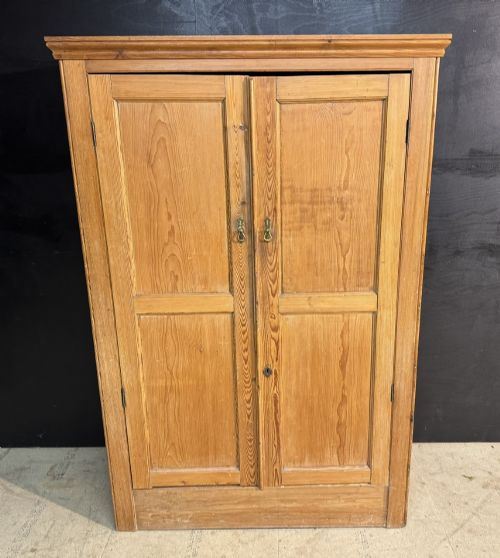
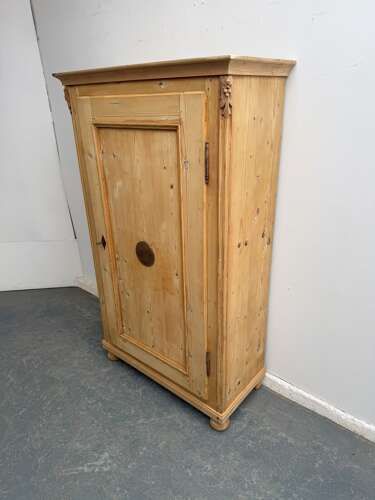
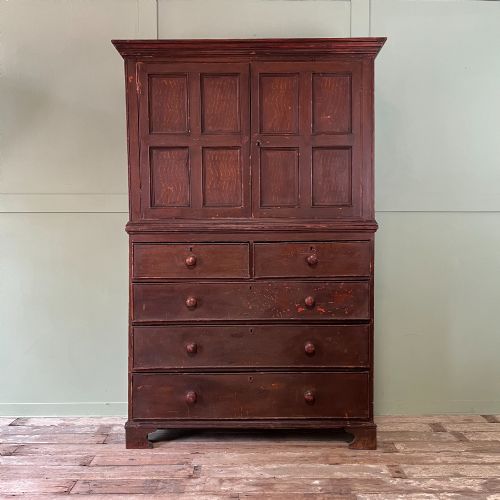
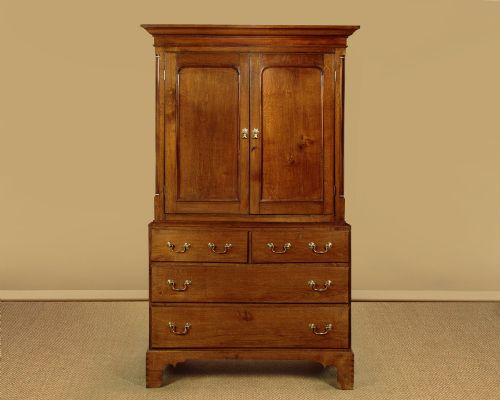
The versions met most frequently on this page are constructed from pine, often bearing traces of original paint, scumble finishes, or waxed surfaces. They range from tall two-door storage units and linen presses to narrow kitchen larders and two-part cupboards.
Originating in domestic contexts ranging from English and Welsh country houses to French provincial settings, these cabinets emphasise straightforward utility over ornate decoration. Their forms include single-door configurations, multi-door wardrobes, and shelved food cupboards.
Materials and construction
Makers relied primarily on pine, oak, and walnut, selecting timber for its strength and availability in local regions. Structural integrity was achieved through pegged joints, solid backs, and sturdy shelving designed to bear heavy domestic loads.
Surfaces were frequently treated with utilitarian finishes such as lead-based paint, scumble glazes, or simple wax. Hardware in iron and brass provided functional hinges, latches, and pulls that stood up to daily use in busy kitchens and storerooms.
Listings feature pine and oak constructions spanning the Georgian, Victorian, and Edwardian periods, including French and English country regional styles.
Assessing quality and character
Quality in these utility pieces lies in the integrity of the original timber and the retention of honest surface treatments like historic paint or scumble glazes. Pieces that retain their original knockdown construction, interior shelving configurations, and straightforward brass or iron hardware demonstrate superior craftsmanship.
Proportion and scale also dictate distinction, with well-balanced proportions in tall or shallow formats offering greater versatility in placement. The degree of unaltered joinery and the harmonious ageing of the wood separate everyday storage from exceptional examples.
The Rustic Housekeeper Cupboard Glossary
- Scumble painted
- A decorative technique involving translucent or opaque glaze dragged or mottled over a base coat to imitate finer woods or create textured depth.
- Linen press
- A tall cabinet specifically designed with interior sliding trays or shelves for storing household textiles and folded linen.
- Knockdown wardrobe
- A large piece of furniture engineered to be easily dismantled into panels and sections for transport and reassembly.
- Fielded
- A panel with bevelled or recessed edges set within a heavier frame, adding structural stability and subtle depth to cabinet doors.
Rustic Housekeeper Cupboard: Frequently Asked Questions
What is a rustic housekeeper cupboard used for?
These large cabinets served primarily for storing household provisions, dry goods, and freshly laundered linens in domestic quarters.
Today, they function effectively as freestanding larders, kitchen pantries, or general storage furniture in modern homes.
How do I date a pine cupboard?
Dating relies on construction methods, such as hand-cut dovetails, handmade iron or brass fixings, and the type of timber preparation.
Clues also emerge from the style of panelling, the presence of original paint layers, and overall proportions typical of periods like the Georgian or Victorian eras.
Are these cupboards easy to dismantle?
Certain large wardrobe and press formats were specifically constructed as knockdown pieces to allow for relocation between rooms or properties.
These designs utilise pegged joints or wedge systems rather than permanent glue, though one should check individual listings to confirm construction.
What finish is typical for country cupboards?
Many utility pieces were originally finished with practical protective coatings such as oil, wax, or utilitarian lead paint.
Over decades, these surfaces have developed patinas, and some pieces retain their original scumble paint or decorative finishes from the nineteenth century.