





Rustic French Sofa Table
A rustic french sofa table brings robust provincial character to a room, offering practical surface space through time-worn timbers and simple construction.
Rustic French Sofa Table
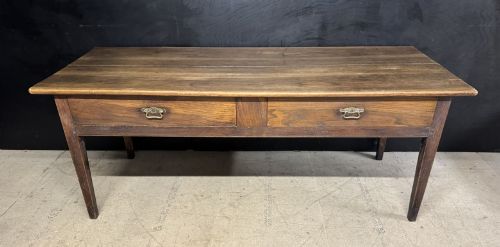
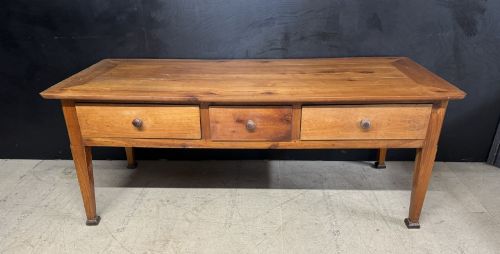
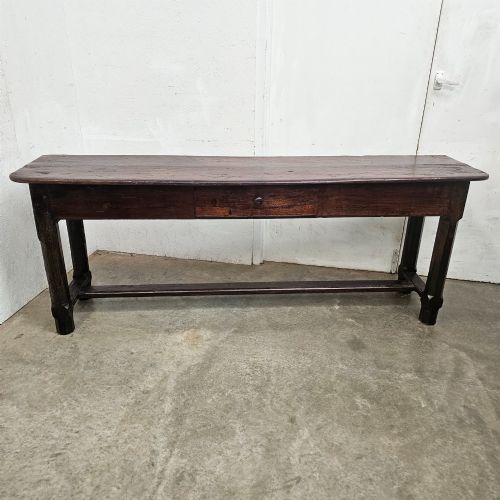
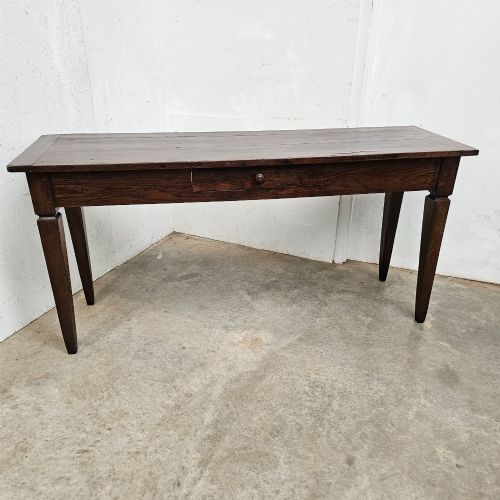
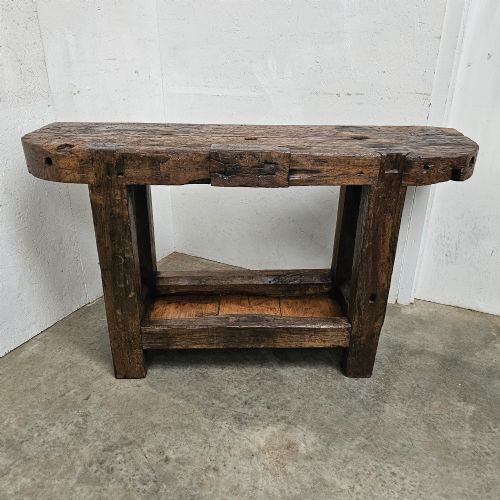
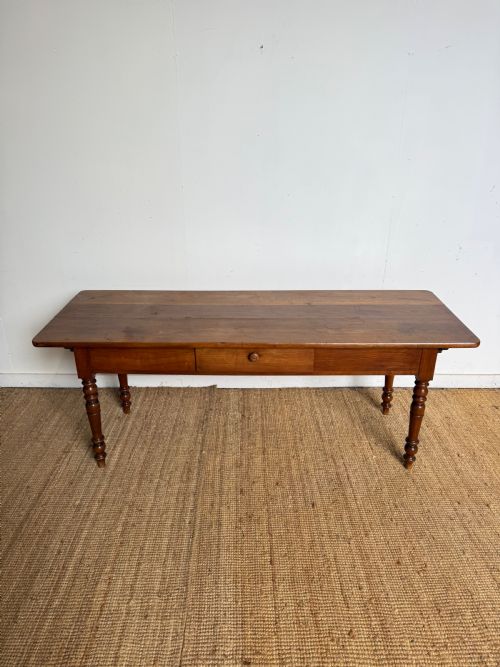
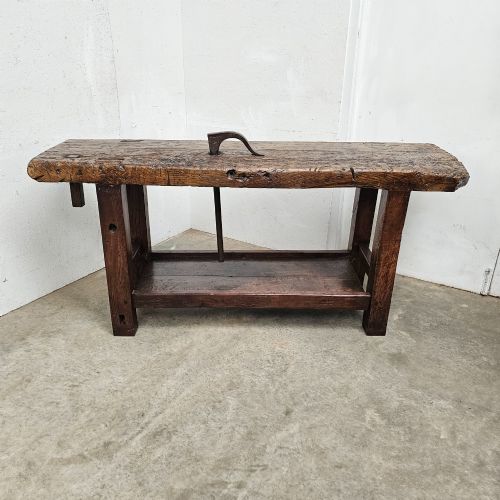
When you search for a rustic french sofa table, you encounter practical console tables, serving tables, and workbenches originating from French provincial and country traditions. These pieces often serve narrow spaces behind sofas or along hallways, functioning as console or serving tables with straightforward rectangular proportions.
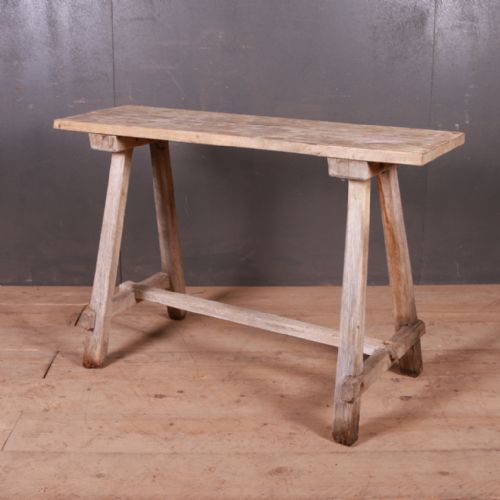
The selection ranges across the eighteenth and nineteenth centuries, including Edwardian and early twentieth-century examples shaped by French provincial, rustic farmhouse, and primitive styles. Oak, cherrywood, chestnut, and fruitwood dominate the forms, frequently appearing alongside painted finishes and simple trestle or drawer configurations.
How they were made
Joinery on these tables relies on solid timber construction using regional hardwoods such as oak, fruitwood, chestnut, and cherrywood, alongside pine and elm in simpler forms. Workshops utilised traditional pegged joints and sturdy trestle bases or single-drawer arrangements to ensure stability.
Surface treatments range from natural waxed grain and bleached oak finishes to old painted surfaces. Practical additions like clamping bars on workbenches and lower potboards demonstrate utility built into everyday domestic and workshop furniture.
Rustic French Sofa Table Retail Price Guide 2026
Typical asking prices for rustic french sofa table among the pieces listed under this phrase on Sellingantiques today, from the lower quarter to the upper quarter. They describe what is for sale here now, not the wider market.
Materials span oak, pine, timber, paint, brass, cherrywood, fruitwood, and chestnut.
What varies in quality
Quality depends upon the choice of timber and the integrity of the original construction, with dense hardwoods like oak and fruitwood holding up better than softer woods. Finer examples display balanced proportions, untouched surface patination, and well-executed joinery rather than heavy modern alterations.
The Rustic French Sofa Table Glossary
- Console table
- A table designed to stand against a wall, often narrow in depth to fit hallways or spaces behind seating. These forms provide surface area without obstructing movement.
- Potboard
- An open lower shelf beneath a table top, traditionally utilised for storing pots and heavy kitchen utensils. This feature frequently appears on provincial trestle designs.
- Trestle table
- A table construction where the top rests on two or more upright frames connected by a horizontal beam. This design offers robust support and maximum legroom.
- Fruitwood
- Timber harvested from fruit-bearing trees such as cherry, pear, or apple, valued for its fine grain and warm tone. Provincial cabinetmakers favoured it for regional tables.
- Bleached oak
- Oak timber treated to lighten its natural tone, creating a pale, neutral finish favoured in nineteenth-century decorative schemes. This treatment softens the appearance of heavy timber.
Rustic French Sofa Table: Frequently Asked Questions
How are these tables used today?
These tables function effectively as narrow console tables behind sofas, serving surfaces in dining areas, or practical desks in studies. Their modest depth allows them to fit comfortably into hallways and tighter spaces.
Their robust timber construction also suits daily use in kitchens and living rooms, where surface space and utilitarian character matter most.
What woods were commonly used?
Regional makers utilised available local hardwoods and softwoods, predominantly oak, cherrywood, chestnut, and fruitwood. Elm and pine also appear frequently in workbenches and simpler provincial tables.
These timbers developed rich patinas over decades of domestic use, showing the varied grain and natural warmth of solid wood.
How do I identify a nineteenth-century piece?
Nineteenth-century examples show hand-cut joinery, pegged joints, and timber surfaces shaped by manual woodworking tools rather than modern industrial machinery. Tool marks and natural board width variations indicate older manufacture.
Construction details like single-drawer configurations, trestle frames, and integrated potboards align with the domestic and workshop forms recorded across this period.
Can I place these tables in modern interiors?
The neutral tones of bleached oak, natural fruitwood, and painted finishes blend easily into contemporary living spaces. Their straightforward lines complement minimalist or eclectic interior schemes.
Such tables add texture and historical depth without overwhelming a modern room, serving as functional focal points.