


Rustic Earthenware Pot
A rustic earthenware pot brings tactile warmth and history into a room, shaped from simple clay for daily domestic labour.
Rustic Earthenware Pot
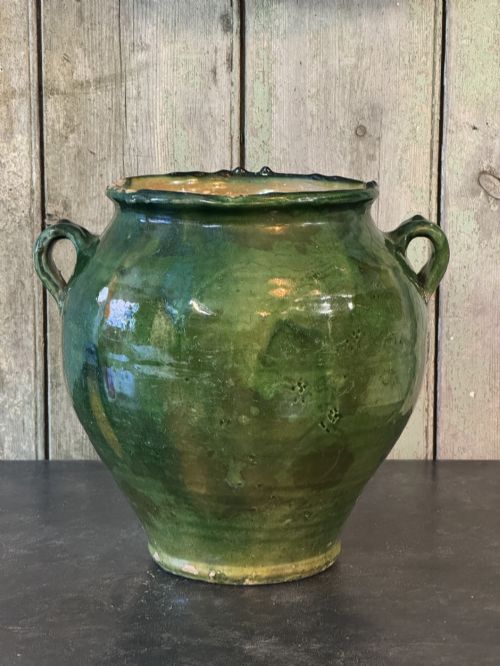
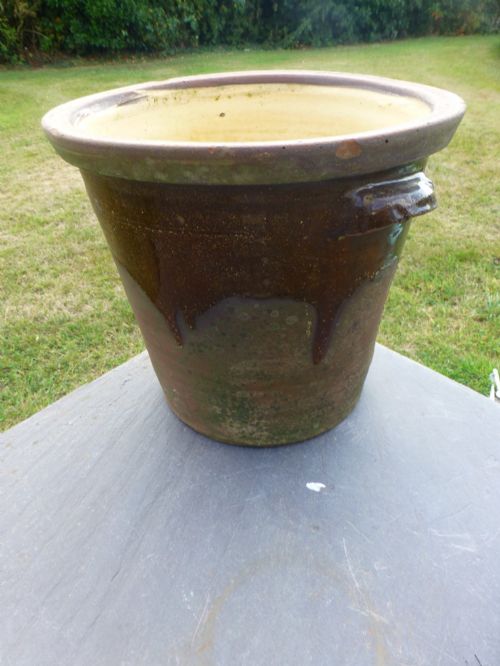
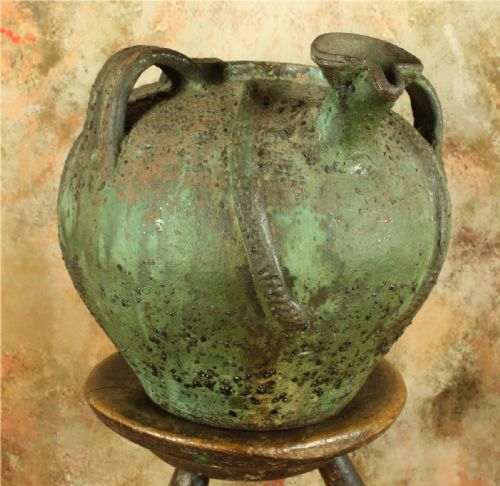
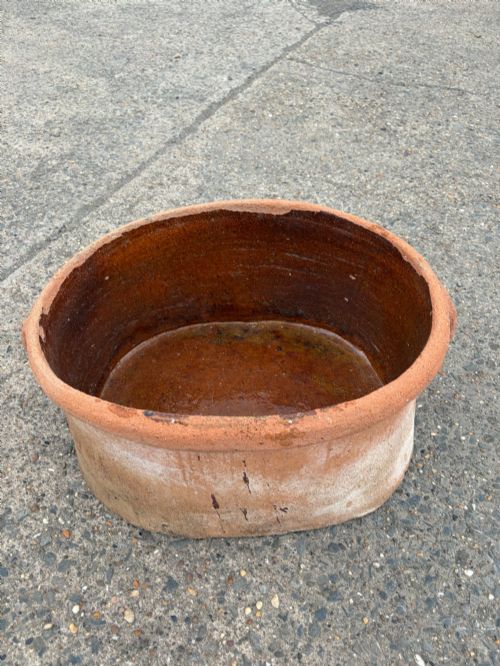
A rustic earthenware pot encompasses utilitarian vessels created for storage, preservation and estate tasks across the eighteenth, nineteenth and early twentieth centuries. Buyers seeking a rustic earthenware pot encounter utilitarian forms such as French confit pots, olive jars, dairy salting crocks and amphorae from regional European traditions.
The selection on this page centres primarily on nineteenth-century examples alongside eighteenth-century olive jugs and early twentieth-century garden vessels. French country and Mediterranean vernacular styles dominate, reflecting domestic and agricultural origins where function dictated every curve.
How they were made
Potters shaped these vessels from local clay and terracotta, throwing them by hand on a wheel or forming them for heavy daily service. Many pieces received lead-based or green lead glazes poured over the upper portions to ensure liquid retention during food storage.
Iron fittings such as wrought iron handles occasionally accompanied larger storage jars to assist with lifting heavy loads of oil, butter or grain. Subsequent firing in traditional kilns left characteristic variations in surface tone and texture across each individual body.
The listings show materials spanning terracotta, earthenware, stoneware, and wrought iron across nineteenth-century French and Mediterranean vernacular traditions.
What varies in quality
Quality in these domestic objects relates to the integrity of the surviving glaze, the balance of the thrown form and the honesty of the wear. Rich, pooling green glazes and intact handles elevate a utilitarian storage jar above plain, heavily weathered counterparts.
The degree of preservation across the porous terracotta body also dictates the standing of a piece, distinguishing items kept safely indoors from those exposed to centuries of garden damp.
The Rustic Earthenware Pot Glossary
- Confit pot
- A French storage vessel traditionally utilised for preserving meats such as duck or pork in fat. These pots usually feature two loop handles and a partially glazed body.
- Terracotta
- Fired unglazed or slip-glazed clay of a brownish-red colour, commonly utilised for garden planters, amphorae and agricultural vessels.
- Olive jar
- A large bulbous storage vessel designed in Mediterranean regions for holding pressed oil or olives, often resting on a dedicated iron stand.
- Salt glaze
- A glassy coating formed on pottery by throwing common salt into the kiln during high-temperature firing, creating a textured surface.
- Amphora
- A tall ancient storage vessel with two handles and a pointed base, adapted in later Mediterranean folk traditions for transport and liquid containment.
Rustic Earthenware Pot: Frequently Asked Questions
What were confit pots used for?
French households utilised confit pots to preserve meats like duck, goose or pork by sealing the cooked portions beneath a layer of rendered fat.
Their deep bodies and interior glazing kept the contents secure during long months of storage in cool cellars.
How do I clean an antique earthenware pot?
Wash the vessel gently using warm water and a soft brush, avoiding harsh chemical detergents that might penetrate the porous clay.
Allow the piece to dry thoroughly afterwards to protect the historic fabric and any surviving glaze.
Can I use these pots for plants?
Many nineteenth-century terracotta jars, salting crocks and garden urns suit planting when paired with adequate drainage protection.
Householders should line unglazed vessels carefully to prevent moisture damage from altering the interior walls over time.
How do I date a rustic clay pot?
Dating relies upon observing the forming technique, the consistency of the glaze and the specific regional form recorded in the evidence.
Eighteenth-century examples often display heavier, asymmetrical thrown profiles while later nineteenth-century pieces show more standardised production.