




Rustic Country Scene Painting
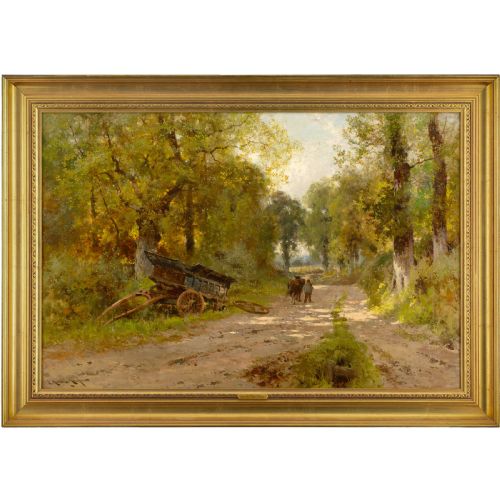
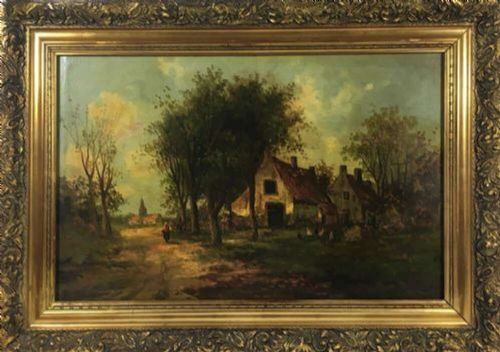
A rustic country scene painting brings the quiet atmosphere of rural life, farmyards and cottages directly onto the wall.
Rustic Country Scene Painting
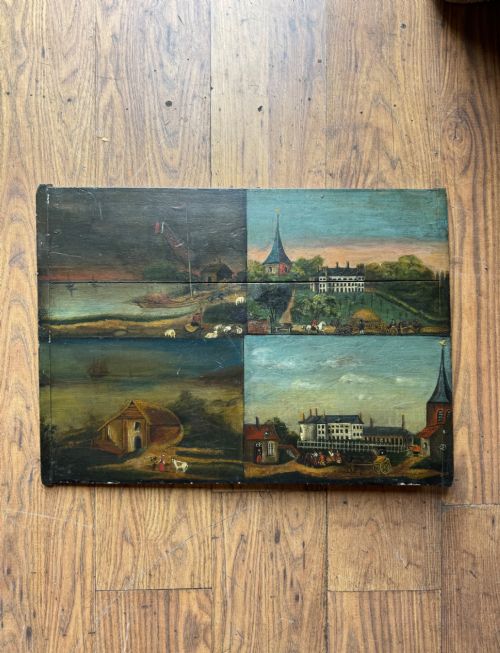
When searching for a rustic country scene painting, buyers encounter works depicting farmyards, agricultural labourers, cottages and pastoral landscapes. These pieces capture the rural character of past centuries through direct observation of agricultural life.
The selections available range from 18th century canvases to mid 20th century compositions. Victorian realists and British impressionists dominate the output, alongside provincial naive folk art and continental European works.
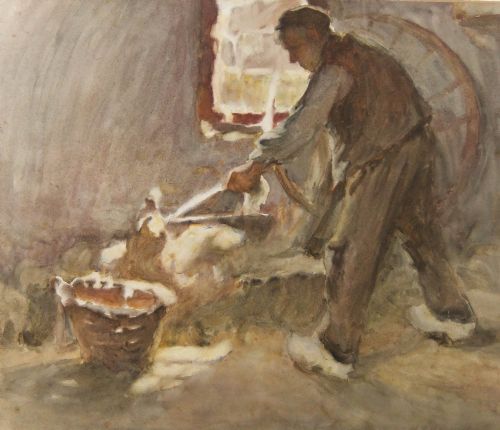
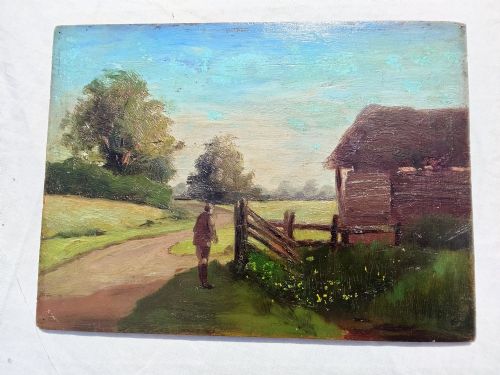
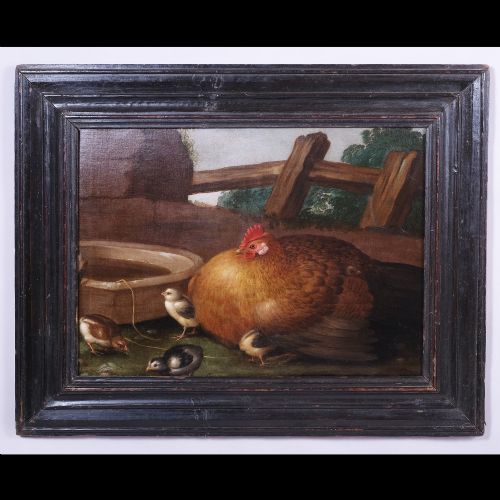
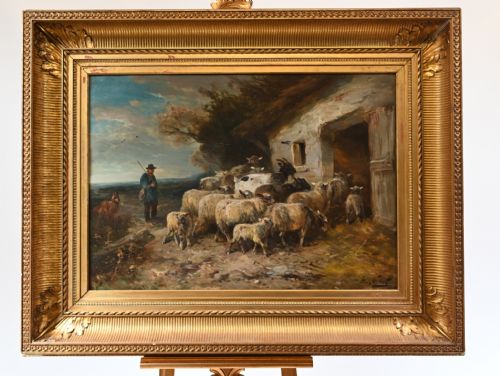
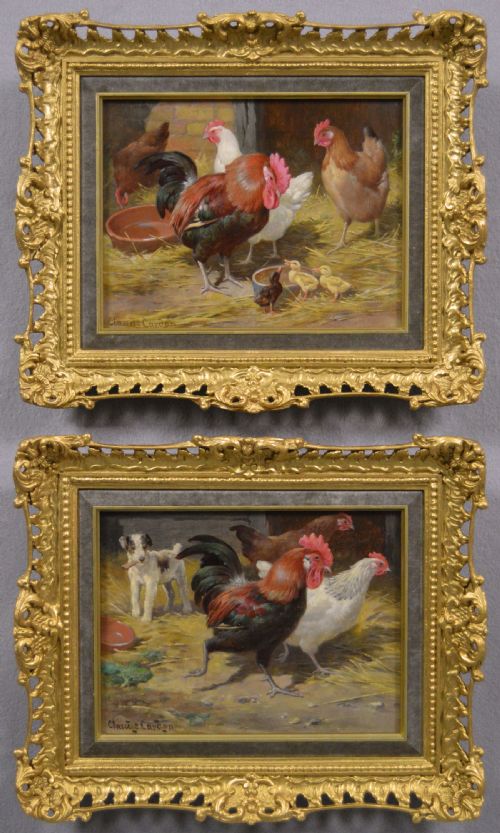
Common motifs include horses and carts, blacksmiths, shepherds with flocks, and poultry in farmyard settings. The formats vary from small tondo boards to large framed canvases and detailed watercolours.
Materials and Techniques
Artists painted primarily in oil on canvas or wooden board, and in watercolour on paper. Oil paint allowed rich texture and depth, particularly in depicting animals, foliage and weathered farm structures.
Supports range from stretched canvas and prepared wooden panels to heavy watercolour paper. Many works retain their original giltwood or gesso frames, which complement the traditional palette of the rural subjects.
Chickens, ducks and pet kids make frequent appearances, proving that farmyard animals were the true superstars of the 19th century.
Judging Quality
Quality rests upon the artist's handling of light, atmosphere and anatomical accuracy in figures and livestock. Accomplished brushwork brings movement to a farmyard group, whereas lesser works rely on stiff repetition and flat colour.
Provenance and attribution to recorded artists elevate certain pieces above anonymous provincial student work. The integration of the painting with its period frame also influences the overall integrity of the piece.
John Horace Hooper·Henry Silkstone Hopwood·Edgar Hunt·Miles Birkett Foster·Henry Schouten·Charles Edward Wilson·Claude Cardon·John Bell·Henry John Yeend King·Andre de Moller·Percival Glenfern·John Henry Dell·John Inigo Richards·Thomas James Lloyd·Owen Bowen·David Woodlock·William Miller Frazer·John Syer junior·Henry Sylvester Stannard·John Frederick Herring·John R. K. Duff·Edward Killingworth Johnson·Robert McGregor
The Rustic Country Scene Painting Glossary
- Oil on Canvas
- Pigment mixed with drying oil applied to a woven fabric stretched across a wooden frame. This medium provides durability and allows for rich colour blending.
- Watercolour
- Pigment suspended in a water-based solution applied to paper. It creates transparent washes that capture light effectively in pastoral views.
- Giltwood
- Wood carved and coated with gold leaf or a gold-coloured metallic finish. It frames many 19th century and Edwardian works.
- Gesso
- A paint mixture consisting of a neutral binder mixed with chalk, gypsum or pigment. It served as a smooth preparation base for wooden panels and frames.
- Provincial Naive
- Art created outside academic traditions by self-taught or locally trained painters. These works show honest perspective and direct charm.
Rustic Country Scene Painting: Frequently Asked Questions
What periods do these paintings date from?
The works span from the 18th century through the Victorian and Edwardian eras up to the mid 20th century. Earlier examples show Georgian and picturesque traditions.
Later pieces reflect British Impressionism and rural realism. Each period brings distinct clothing, farming methods and architectural details to the canvas.
How were these pastoral artworks displayed?
Owners traditionally hung these framed paintings in parlours, dining rooms and country houses. They provided urban residents with a visual connection to agrarian life.
Many retain their original period frames, which were selected to complement the domestic interiors of the 19th and early 20th centuries.
How do I identify a watercolour from an oil painting?
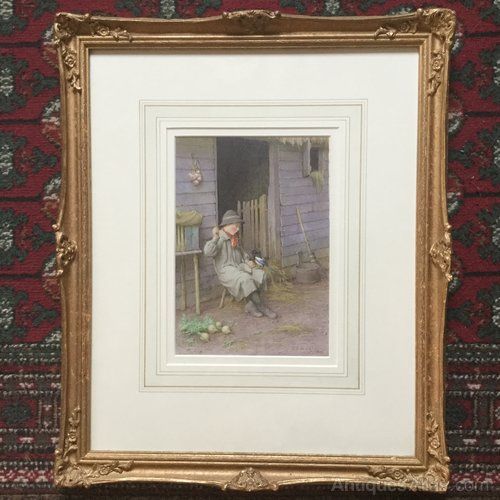
Watercolours utilise transparent washes on paper, usually protected behind glass within a mat and frame. They offer a lighter, more delicate rendering of atmospheric country views.
Oil paintings feature textured pigment applied to canvas or wooden board without glass. The paint surface often shows visible brushstrokes and heavier impasto.
What subjects appear most frequently?
Farmyard scenes featuring chickens, ducks and horses are particularly common. Landscapes frequently incorporate thatched cottages, rustic inns and agricultural labourers at work.
Animals such as sheep flocks with shepherds and working horses also appear regularly. These subjects reflected contemporary interest in traditional rural trades.