
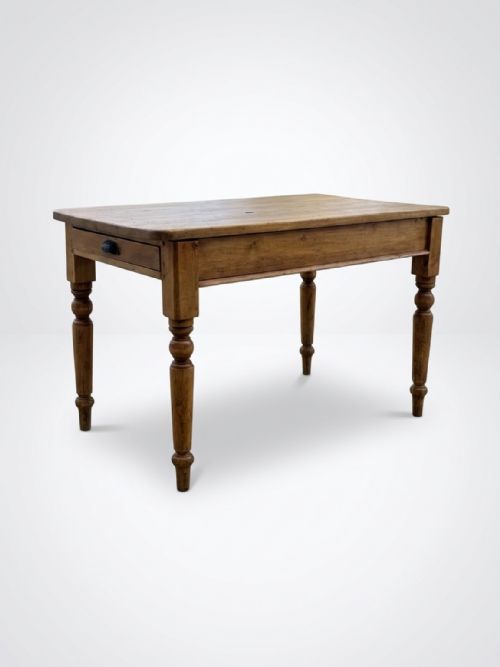
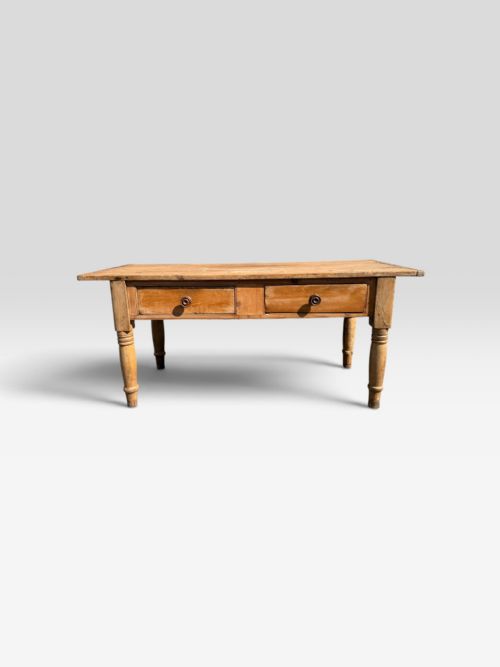
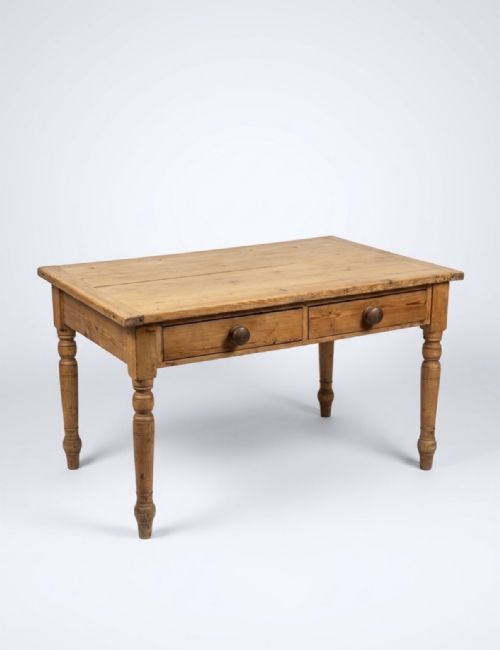
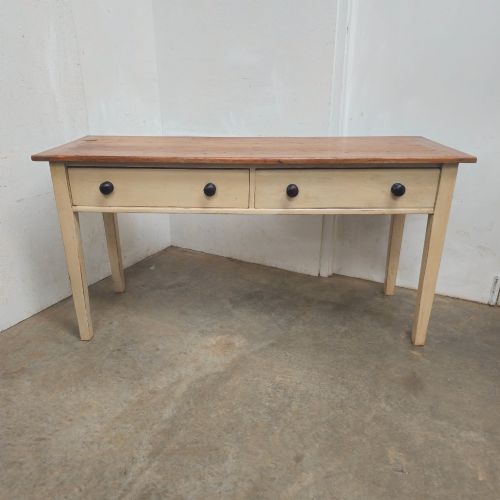
Rustic Country Prep Table
A rustic country prep table brings hardworking utility and honest timber surfaces straight into a modern interior.
Rustic Country Prep Table
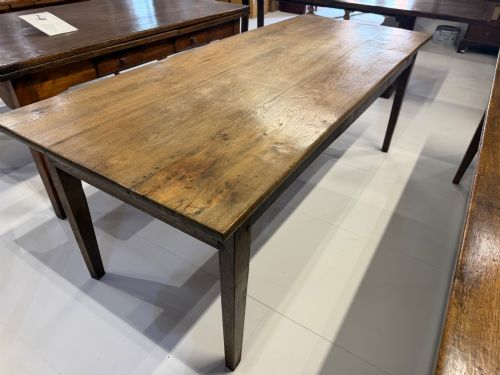
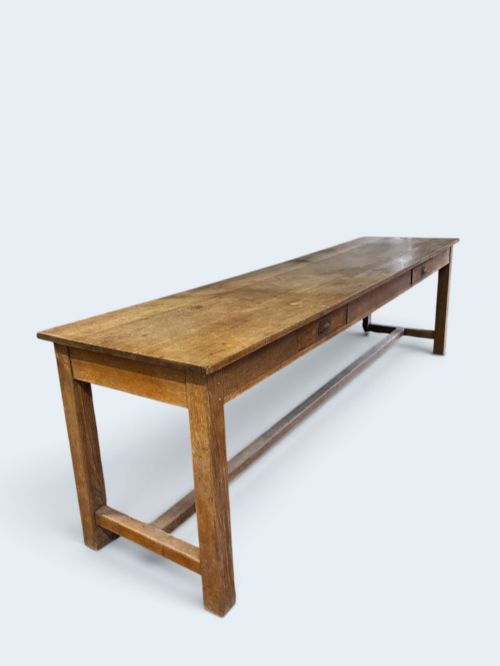
When you search for a rustic country prep table, you are looking at utilitarian working tables originating from dairies, sculleries, kitchens, and bakeries. These pieces were built for heavy domestic labour rather than formal dining, which dictates their straightforward proportions and sturdy frames.
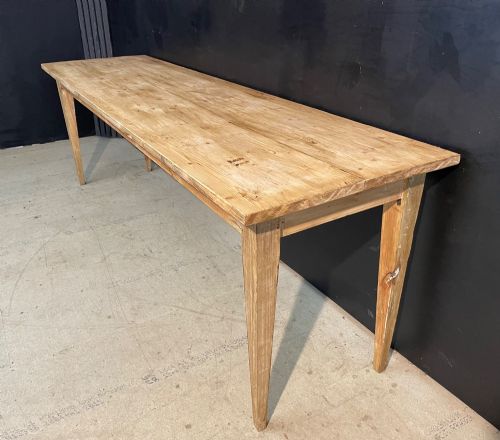
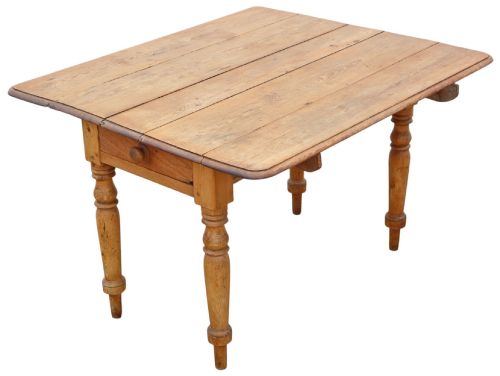
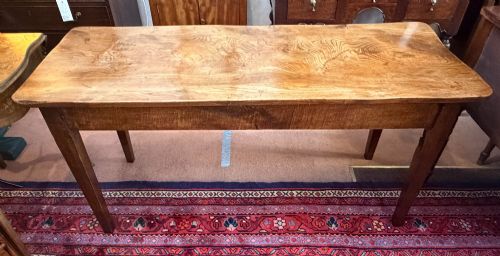
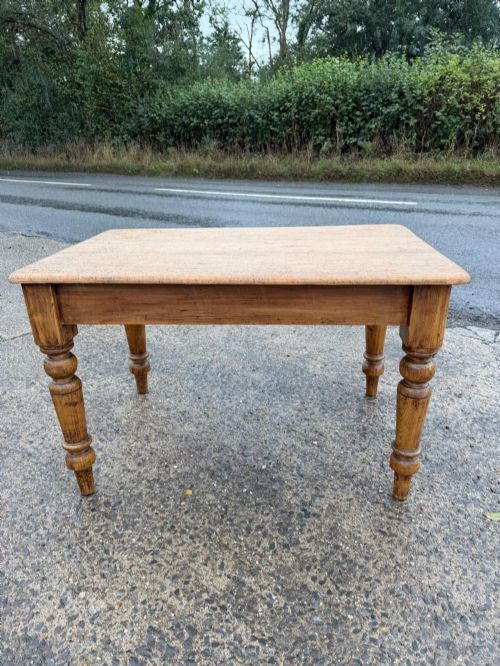
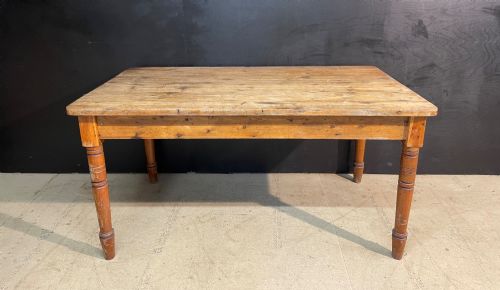
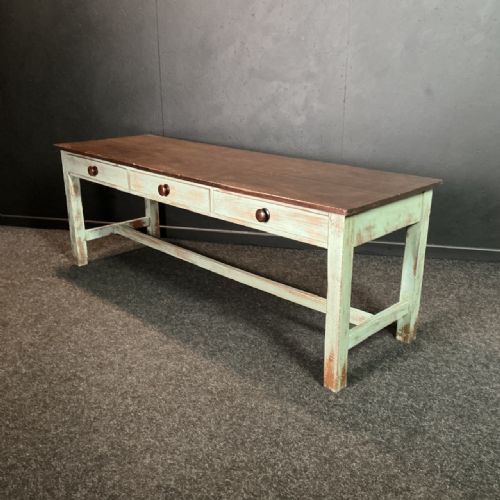
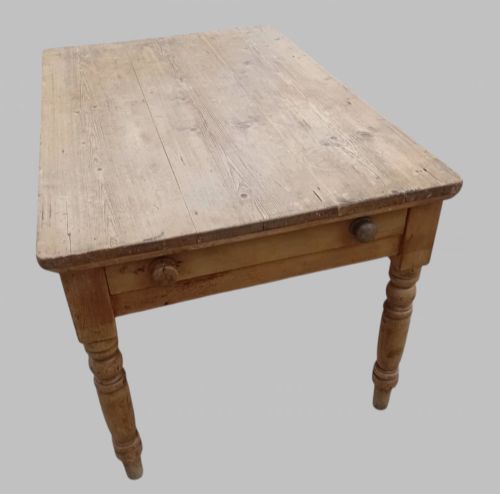
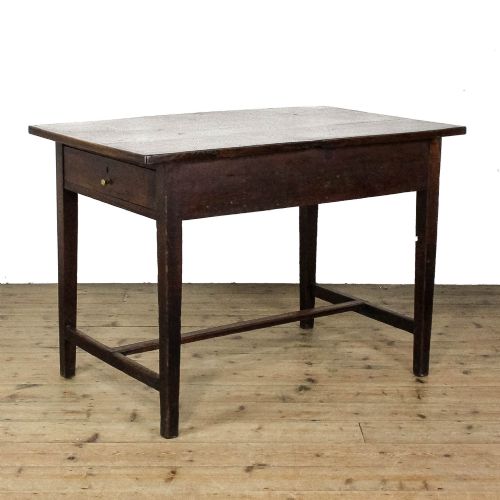
You are most likely to meet 19th-century and Victorian pine examples on this page, often featuring single drawers, scrubbed tops, or painted friezes. Alongside pine, variants emerge in oak, elm, fruitwood, and pitch pine, sometimes paired with marble tops for specialist food preparation.
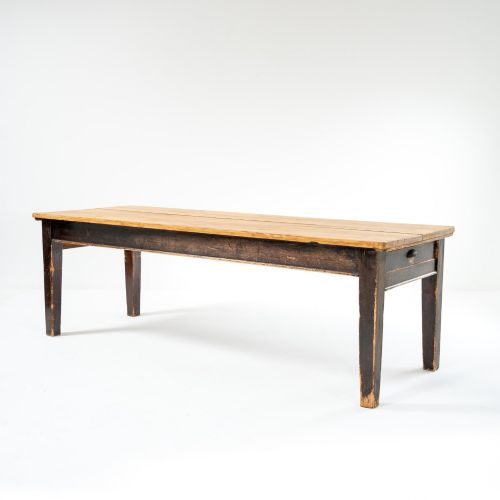
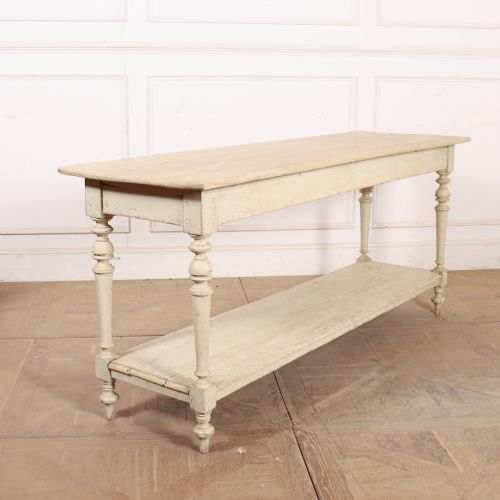
The forms span dedicated prep tables, servers, harvest tables, and drapers tables, reflecting their varied service in French, English, Welsh, and Italian country settings. Their practical origins mean they function effortlessly today as kitchen islands, side tables, or console surfaces.
How they were made
Makers constructed these tables predominantly from solid pine, oak, elm, and fruitwood, selecting native timbers for sheer strength and availability. Scrubbing tops formed a standard part of their upkeep, leaving timber boards pale and clean from regular scouring during their working lives.
Secondary materials include iron and brass hardware for drawer pulls or structural bracing, alongside marble inserts chosen for cold-surface pastry work in French patisseries and charcuterie settings. Paint finishes appear frequently, ranging from original surfaces to later decorative layers on dairy and kitchen tables.
Several pieces preserve the quiet dignity of flour dust embedded deep within nineteenth-century oak grain.
What varies in quality
The integrity of the timber and the honesty of the surfaces separate the standard examples from the exceptional ones. Tables that retain their original proportions, uncompromised drawers, and genuine working patination carry a stronger character than those altered extensively over time.
The Rustic Country Prep Table Glossary
- Scrub top
- A bare wooden tabletop repeatedly scoured with water and abrasive to keep it hygienic for food preparation. This process leaves the grain raised and pale.
- Frieze
- The horizontal band beneath the tabletop that often houses one or more utilitarian drawers. In these tables, the frieze is typically plain or finished in paint.
- Harvest table
- An exceptionally long, narrow table traditionally used to feed large groups of agricultural workers during seasonal gathering. They frequently incorporate multiple legs for stability.
- Dairy table
- A specialised functional table, often featuring scrubbed pine or sycamore boards, designed for cool environments where milk and cheese were processed.
- Drapers table
- A long counter-like table originally utilised in mercers and drapery shops for measuring and folding textiles. They often include lower tiers or multiple drawers for storage.
Rustic Country Prep Table: Frequently Asked Questions
What is a rustic country prep table?
A rustic country prep table is a heavy, functional wooden work table originally designed for kitchens, sculleries, and dairies. These pieces were built for practical daily tasks rather than display.
They typically feature sturdy timber frames, scrubbed tops, and occasional storage drawers. Today, they serve as versatile kitchen islands or console tables in residential interiors.
How were these tables used originally?
These tables served as central surfaces for chopping, kneading, food preparation, and dairy work in busy rural households. Commercial variants also functioned in bakeries and drapers shops.
Their robust construction allowed them to withstand constant scrubbing and heavy loads. They stood at the heart of domestic and agricultural production before modern fitted kitchens.
How do I live with a prep table?
Living with a prep table involves embracing its honest, marks-and-all character as a functional centrepiece. The hardy wooden surfaces tolerate daily kitchen use remarkably well.
Positioning the table as a freestanding kitchen island or a dining surface brings warmth and history to a room. Regular maintenance simply requires appropriate care for the natural timber top.
How do I tell periods apart?
Telling periods apart relies on observing timber selection, construction joints, and hardware details across different eras. Earlier pieces from the Georgian and early 19th-century periods often utilise heavier native hardwoods and hand-cut joinery.
Victorian and later examples frequently showcase pitch pine or softer deal timbers with simpler drawer construction. Paint finishes and structural wear further help anchor a piece to its specific decade.