


Rustic Country Child Chair
These rustic country child chairs are small-scale vernacular seats built for everyday domestic use, offering charming proportions and honest regional construction.
Rustic Country Child Chair
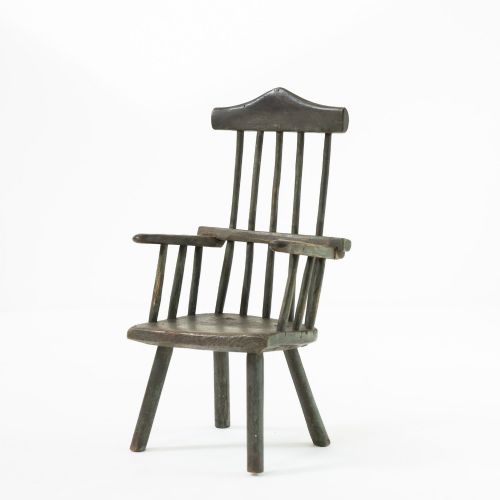
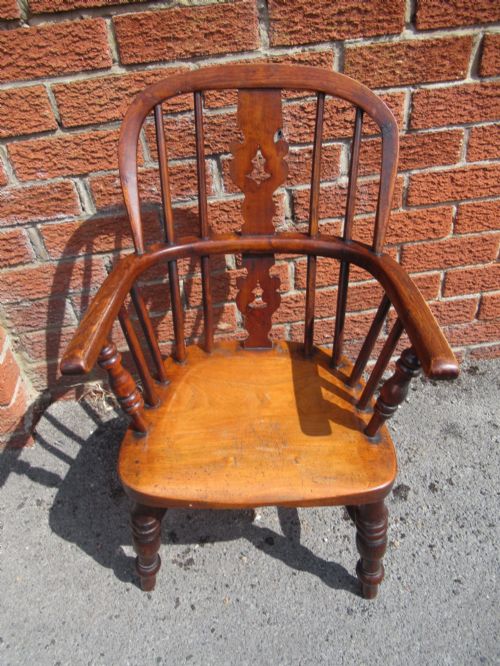
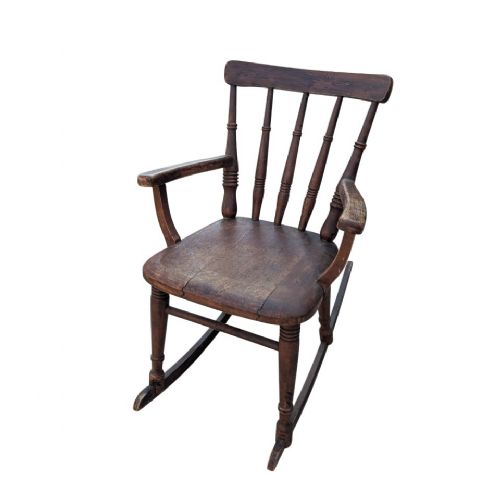
A rustic country child chair encompasses a variety of miniature seating forms, from simple stick-back armchairs and ladderbacks to high chairs and rocking chairs. These pieces span several centuries, with examples originating from the seventeenth century through to the twentieth century.
Buyers are most likely to encounter nineteenth-century windsor models and stick-back forms on this page, often constructed by regional makers. The selection also includes Swedish rocking variants, Welsh lambing chairs, and primitive folk art pine items reflecting distinct local traditions.
Woods and construction
Local joiners utilised native hardwoods such as elm, oak, ash, beech, and yew, frequently combining woods within a single piece depending on what was available. Rush seating provides a woven base on specific ladderback and high chair versions.
Construction relies on traditional vernacular techniques like pegged joints, natural forms, and spindle backs, occasionally finished with simple paint or left in a natural state.
The listings on this page span several centuries of country furniture, featuring native timbers such as oak, elm, ash, and yew alongside rush and paint.
Integrity and proportion
Quality rests upon the integrity of the original construction and the balance of the miniature proportions relative to full-sized seating. Pieces retaining their original surface patination and uncompromised structural joints stand apart from heavily altered examples.
The sophistication of the turning on spindles and the careful shaping of comb backs or stick backs distinguish standard utility pieces from exceptional folk art items.
The Rustic Country Child Chair Glossary
- Stick back
- A chair construction method where turned or shaped wooden spindles are inserted directly into a solid seat slab. This method is common in vernacular seating traditions.
- Windsor
- A chair style featuring a saddle-shaped wooden seat into which the legs and back spindles are tenoned. These sturdy chairs are frequently seen in both adult and child scales.
- Lambing chair
- An enclosed wooden chair, traditionally featuring high wings or sides to protect the occupant from draughts. Welsh examples are particularly noted in early domestic forms.
- Rush seat
- A woven seating surface made from dried marsh grasses twisted into cords. This technique provides a resilient and comfortable base for ladderback chairs and high chairs.
- Vernacular
- Everyday objects designed for practical local use rather than high-style academic fashion. These pieces rely on regional materials and traditional building methods.
Rustic Country Child Chair: Frequently Asked Questions
How were child high chairs used?
These elevated seats allowed young children to join the family at the dining table during meals. They provided safety and height in domestic spaces before modern mass-produced furniture existed.
Many incorporated footrests or enclosed rails to keep smaller occupants secure. Their solid construction meant they withstood daily use by generations of children.
Are these chairs safe for children?
While these pieces were built for actual use, their antique status and historic construction mean they are better suited for display today. Structural joints may have weakened over centuries of domestic life.
Collectors generally treat them as decorative objects or stable display items rather than functional nursery furniture. Careful placement ensures their preservation for the future.
What is a stick back chair?
A stick back chair uses simple cleft or turned wooden rods pinned directly into the seat board. This method represents an efficient and sturdy approach to regional chair making.
Such chairs often display primitive folk art characteristics through their unpretentious design. They reflect the practical skills of local country woodworkers.