
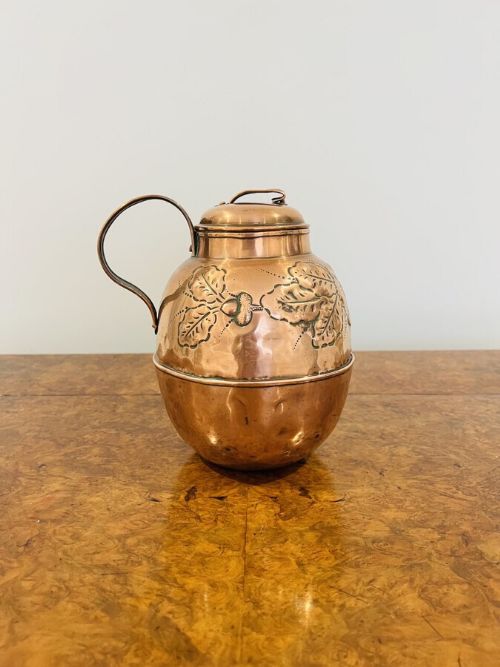


Rustic Copper Water Jug
A rustic copper water jug brings warmth and weight to a room, offering practical utility alongside centuries of metalwork heritage.
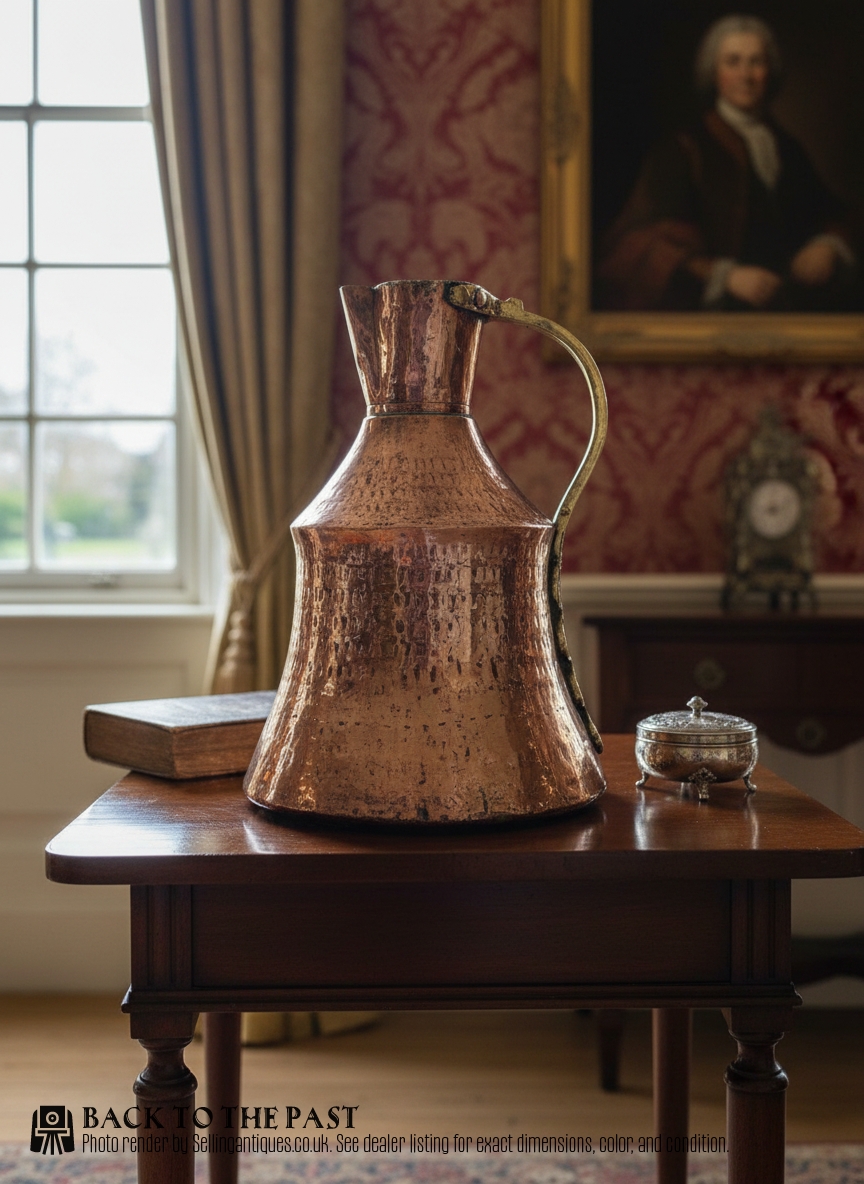
Rustic Copper Water Jug
A rustic copper water jug represents functional vessels used across domestic and agrarian settings over the past few centuries. Buyers searching this phrase encounter substantial forms designed for carrying or pouring liquids in kitchens and dairies. Pieces range from modest two-pint vessels to colossal lidded pitchers holding multiple gallons, reflecting the diverse demands of past households.
The selection on this page leans heavily towards domestic utility items originating from the eighteenth, nineteenth, and early twentieth centuries. Styles span Georgian elegance through Victorian robustness to the distinct hammered surfaces of the Arts and Crafts movement. Jersey cans and milk jugs appear alongside general decorative pitchers, showing the variety of regional and period forms available.
How they were made
These vessels rely primarily on heavy gauge copper, shaped by hand or early mechanical hammering to create durable bodies capable of holding liquids. Many examples incorporate contrasting brass elements, such as handles or rims, secured with rivets or brazing to ensure structural integrity. Tin linings frequently coat the interior surfaces to prevent copper contamination of the water or milk contained within.
Makers utilised traditional sheet metal techniques, beating flat copper plates over stakes to achieve seamless curves or joining seams with folded edges and solder. Surface textures range from smooth polished finishes to the visible hammer marks characteristic of Arts and Crafts workshops. Handles are cast or forged in brass and riveted securely to the body to bear the heavy weight of full liquid capacity.
Rustic Copper Water Jug Retail Price Guide 2026
Typical asking prices for rustic copper water jug among the pieces listed under this phrase on Sellingantiques today, from the lower quarter to the upper quarter. They describe what is for sale here now, not the wider market.
Current listings span periods from the eighteenth century through the Georgian and Victorian eras up to the Arts and Crafts movement, utilising copper, brass, and tin.
What varies in quality
The distinction between ordinary utility items and superior examples lies in the weight of the metal and the deliberateness of the construction. Heavier gauge copper retains its structural rigidity over centuries of use, whereas thinner metal distorts more easily under pressure. Superior pieces display clean joins, well-proportioned handles, and balanced spouts that pour without spilling.
Artisanal execution separates standard workshop production from exceptional craftsmanship, particularly visible in the hand-beaten surfaces of later periods. The integration of brass fittings, such as sturdy handles and decorative rims, shows the maker's attention to durability as well as appearance. Original internal tinning remaining intact also contributes to the desirability of a piece.
The Rustic Copper Water Jug Glossary
- Jersey can
- A distinctive traditional tall cylindrical jug featuring a narrow neck and a hinged or fixed lid, originating from the Channel Islands. These vessels were primarily used for measuring and storing milk or water.
- Georgian
- A style and period spanning the eighteenth and early nineteenth centuries, characterised by classical proportions and restrained ornamentation. Copper water jugs from this era display balanced, utilitarian forms.
- Arts and Crafts
- A design movement emerging in the late nineteenth century that valued hand craftsmanship and visible material textures over mass production. Jugs from this period often exhibit prominent hammer marks and brass detailing.
- Pitcher
- A large vessel designed for holding and pouring liquids, typically featuring a single handle and a formed spout. In historical metalwork, the term often applies interchangeably with jug.
- Brass
- An alloy of copper and zinc used historically for handles, spouts, and reinforcing bands on copper vessels. Its bright golden colour contrasts against the warm reddish tones of the copper body.
Rustic Copper Water Jug: Frequently Asked Questions
How were these copper jugs used historically?
These vessels served everyday domestic and agricultural functions, carrying and storing water, milk, or other household liquids before indoor plumbing became universal. Larger examples held supplies for communal use in kitchens and dairies.
Smaller capacities functioned closer to the table or hearth, moving water for washing or cooking needs. Their robust construction allowed them to withstand heavy daily handling in busy environments.
How do I identify a Georgian copper jug?
Georgian pieces display clean, utilitarian silhouettes and proportions typical of the eighteenth and early nineteenth centuries. They lack the ornate decoration or heavy embossing seen on later Victorian items.
Construction details on these early pieces often include hand-beaten seams and simple forged brass handles. The metal gauge tends to be substantial, reflecting the functional requirements of the period.
Can I use an antique copper jug for water?
While these vessels held water historically, many older pieces feature internal tin linings that may have worn away or contain historical solders. Using them for display or dry storage preserves the historic interior surfaces.
If usage for liquids is intended, professional inspection of the interior coating is recommended to ensure food safety standards are met.
What is an Arts and Crafts copper jug?
Arts and Crafts jugs date from around the late nineteenth and early twentieth centuries, reflecting a philosophy that celebrated manual labour and honest materials. They often feature visible hammer marks across the copper surface.
These pieces frequently combine copper bodies with contrasting brass handles and rivets, showing structural components clearly rather than concealing them beneath polished finishes.