
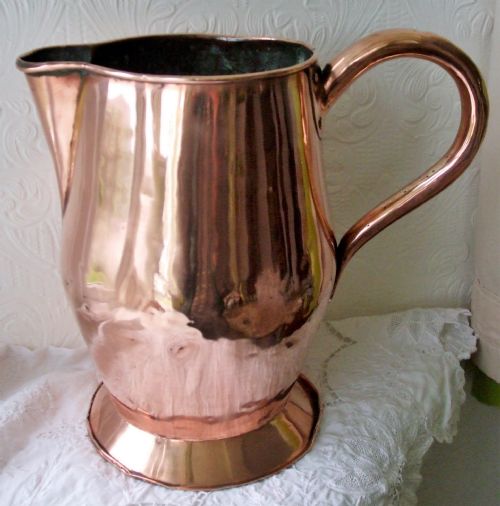


Copper Cider Vessel
These copper cider vessel examples bring heavy metal pouring forms into daily use, offering robust warmth through Georgian and Victorian utility.
Copper Cider Vessel
A copper cider vessel generally takes the form of a heavy jug, flagon, pitcher, or large two gallon measure intended for beverage service and storage. These substantial pieces emerge from Georgian, Victorian, and Arts & Crafts periods, showing practical English origins.
Buyers will most frequently meet capacious vessels holding between two and twelve pints, alongside specific measures like the Liverpool gallon or haystack forms. Jugs and flagons dominate the available selection, often rendered in warm metal with contrasting brass fittings.
Construction and materials
Internal surfaces typically utilise tin linings to prevent metallic contamination of the stored beverages, while lead is sometimes found in solder joints and base weightings. The exterior metal shows the tool marks of hand-shaping and planishing rather than industrial stamping.
Benefit clubs of the Georgian era commissioned giant tavern jugs so every member could share a hearty round of cider.
Judging quality in metal vessels
Quality rests in the weight of the metal gauge and the integrity of the hand-beaten form, where thicker walls provide structural rigidity and presence. Superior examples display clean solder work, crisply fitted brass attachments, and balanced proportions across large volumes.
Inscribed capacity marks, tavern names, or maker stamps add historical depth and denote institutional or high-grade domestic commission. The harmony between the warm copper body and the applied brass handles dictates the visual success of the piece.
Loftus of Oxford Street London·S Hancock
The Copper Cider Vessel Glossary
- Flagon
- A large drinking vessel with a handle and often a lid, used for serving liquids like cider or ale. These pieces often feature substantial brass handles riveted to the heavy copper body.
- Haystack measure
- A distinctively tapered conical liquid measure with a rounded shoulder, resembling a traditional haystack shape. These English measures were standardised for volume verification in trade.
- Planishing
- A metalworking technique involving light hammering with a flat-faced tool to smooth and harden the surface. This process leaves a subtle, pleasing texture across the copper body.
- Gallon measure
- A standardised vessel designed to hold a precise imperial gallon of liquid for commercial or domestic distribution. These large containers often bear verification stamps from various regions.
- Tavern jug
- A robust pouring vessel built for heavy commercial use in public houses and drinking clubs. Such pieces prioritized durability and large capacities such as two gallons.
Copper Cider Vessel: Frequently Asked Questions
What were these copper vessels used for?
These vessels served primarily for measuring, storing, and pouring large quantities of liquids such as cider, beer, and water in domestic and tavern settings. Their generous capacities, ranging from two pints to two gallons, made them practical for communal dining and public house service.
Over time, many transitioned from active hospitality use to decorative display pieces due to their striking warm metal tones and substantial forms.
How do I clean and polish copper?
Maintenance involves gentle cleaning with dedicated metal cleaners designed for copper and brass to remove tarnish while preserving the underlying patina. Harsh abrasives should be avoided to protect the integrity of the hand-hammered surface and historic markings.
Keeping the metal dry prevents active oxidation and maintains the warm glow characteristic of these antique utility objects.
Are these vessels safe for holding drinks?
Most historical vessels feature internal tin linings intended to separate the beverage from direct contact with the reactive copper metal. Over centuries of use and cleaning, these linings can wear down or disappear entirely.
For practical modern use, verification of an intact, food-safe interior coating is necessary, though many owners prefer to keep them strictly for dry display.
How do I distinguish Georgian from Victorian pieces?
Georgian examples often exhibit simpler utilitarian lines, heavier gauges of hand-beaten copper, and early capacity stamps associated with regional standards. They tend to reflect straightforward tavern or domestic utility without ornate decorative flourishes.
Victorian and later Arts & Crafts pieces frequently introduce more expressive brass contrast, refined handles, and varied surface textures that align with revivalist aesthetic movements.