
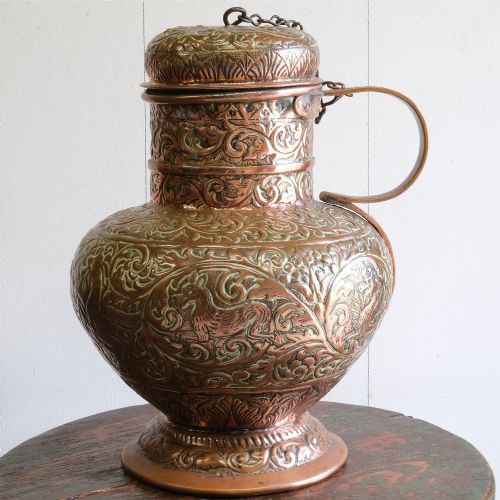
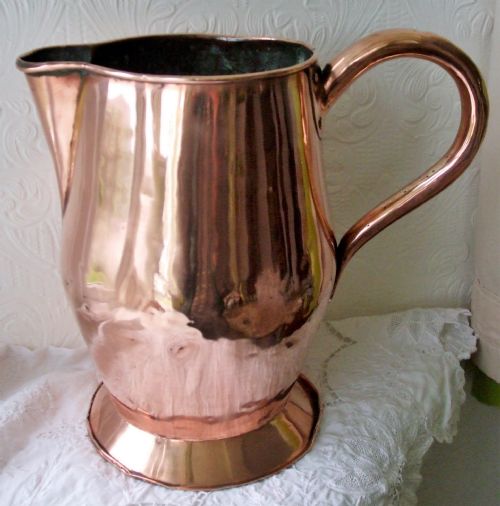


Large Copper Water Pitcher
These large copper water pitcher vessels bring heavy utility into domestic spaces with warmth and strength.
Large Copper Water Pitcher
When you search for large copper water pitcher items, you examine vessels designed for heavy liquid transport and storage. The examples on this page span the Georgian, Victorian, and Arts and Crafts periods, showing how domestic service required robust containers.
You are most likely to meet Georgian and Victorian specimens, alongside Arts and Crafts flagons and measuring jugs. Capacities range from modest three-pint sizes up to colossal four-gallon measures.
Makers shaped these jugs for taverns, clubs, and large households where durability mattered above all else. Their forms include tall silhouettes, lidded bodies, and reinforced spouts designed for daily pouring.
How they were made
Craftsmen built these large copper water pitcher vessels using heavy gauge metal sheets joined at seams. These construction lines often show meticulous hand-beating and hammering across the body.
Many incorporate brass handles, rims, and fixings riveted firmly to the main copper body. Tin linings were often applied internally to prevent the water from reacting with the copper surface.
Listings feature pieces spanning the 18th century through the Arts and Crafts movement, incorporating copper, brass, and tin.
What varies in quality
Quality rests in the thickness of the metal sheet and the integrity of the seams. Thicker gauge copper resists denting and holds its structural shape far better over centuries of handling.
The refinement of the handle attachment and the grace of the spout profile separate standard utilitarian vessels from finer examples. Maker marks or VR verification stamps add documentary weight to the piece.
The Large Copper Water Pitcher Glossary
- Flagon
- A large drinking vessel with a handle and often a lid, used for serving liquids. These often appear in heavier Arts and Crafts designs.
- Seamed
- Joined together at the edges using overlapping metal or soldered joints. This method was essential for forming large cylindrical vessels from flat sheets.
- VR Marked
- Bearing the royal cipher of Victoria Regina denoting official capacity verification. Such marks confirm that a jug served as a legal measure in a public house or club.
- Benefit Club
- A friendly society or mutual aid association that commissioned dedicated tavern gear. These clubs ordered large bespoke vessels for communal gatherings.
Large Copper Water Pitcher: Frequently Asked Questions
How heavy are these large pitchers?
These vessels possess substantial weight due to the heavy gauge metal used in their construction. Lifting them requires two hands once they are filled with water.
The thickness of the copper plate ensures they remain stable when resting on heavy wooden tables or tavern counters.
Can I use these for water today?
Many historical vessels feature original internal tin linings that kept drinking water safe from metallic contact. You should inspect the interior condition before using them for actual service.
Most modern buyers prefer to display them as decorative objects or utilise them as flower vases rather than daily water carriers.
How do I clean old copper?
Gentle washing with warm soapy water removes dust without disturbing the aged surface. Avoid harsh chemical polishes that strip away centuries of character.
A natural patina develops over decades and owners generally prefer to leave this dark oxidation undisturbed rather than scrubbing the metal bright.
What is a tavern jug?
Tavern jugs were utilitarian vessels made to withstand the rough daily demands of public houses. They often display capacity stamps and robust brass handles for constant pouring.
These pieces reflect communal drinking traditions and institutional gatherings across the eighteenth and nineteenth centuries.