

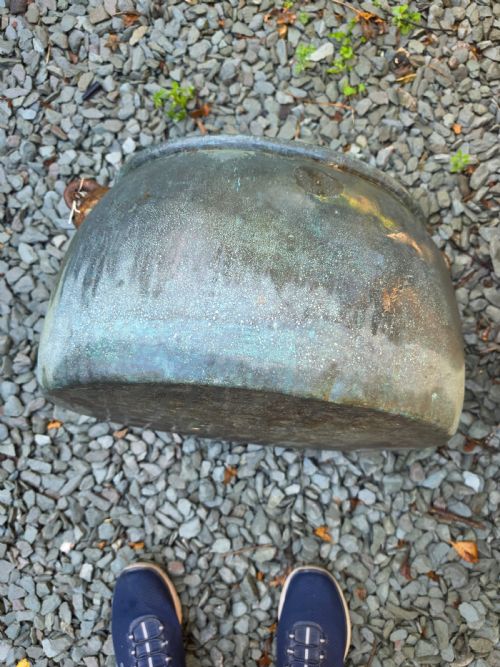
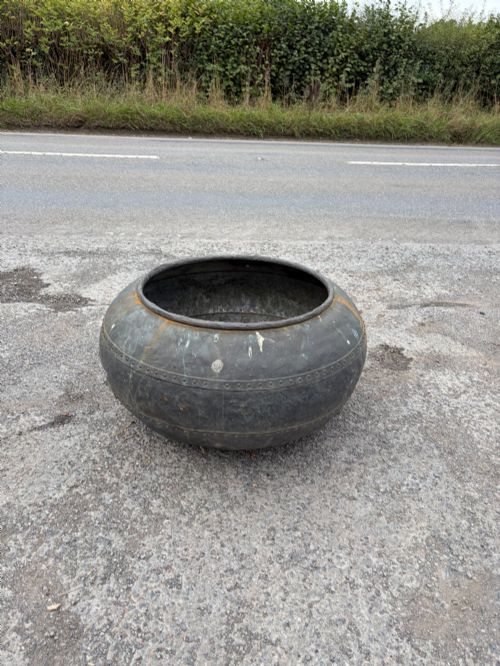
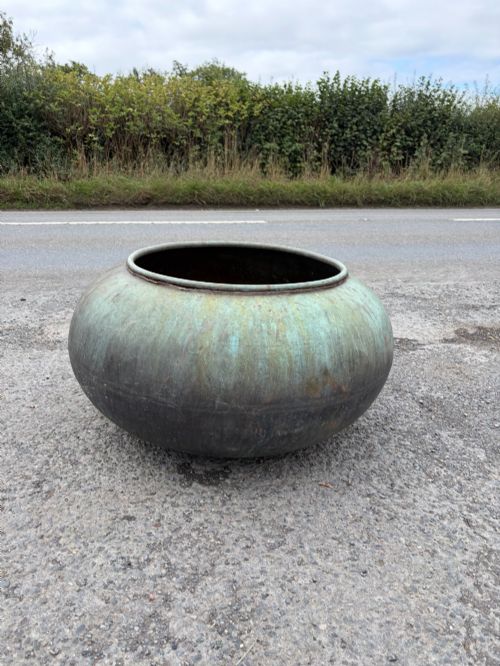
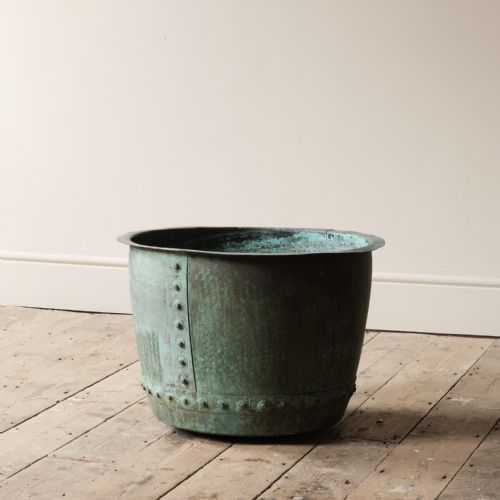

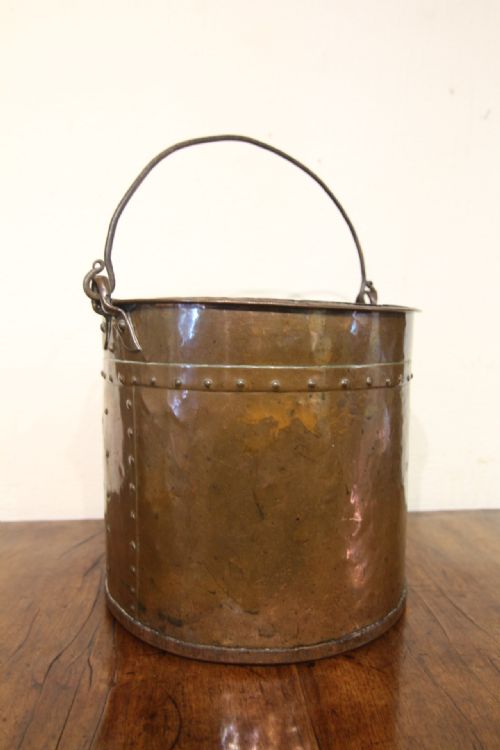


Rustic Copper Pot
A rustic copper pot brings warmth and working history into a room through honest metalwork.
Rustic Copper Pot
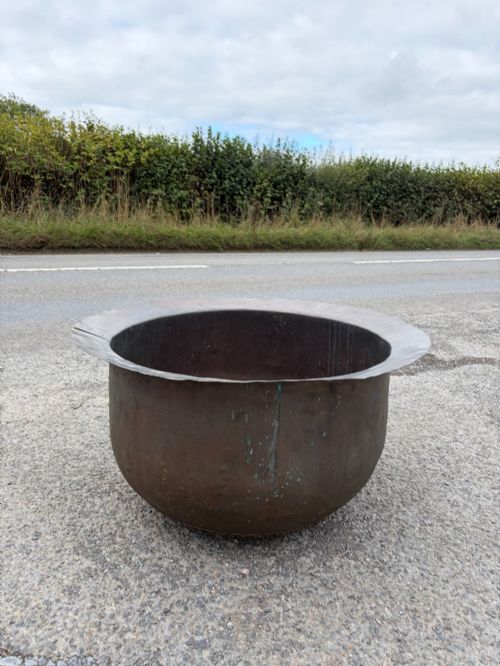
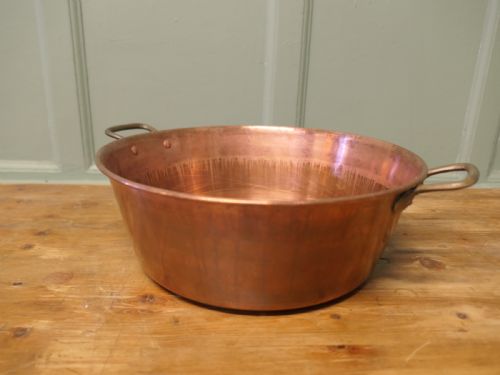
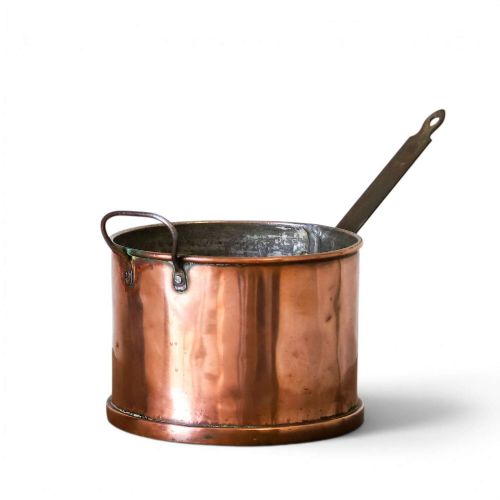
When you search for a rustic copper pot, you encounter practical vessels forged for domestic, culinary, and agricultural labour across the eighteenth, nineteenth, and early twentieth centuries. These objects range from heavy jam pans and preserve kettles to large cauldrons, log bins, and garden planters.
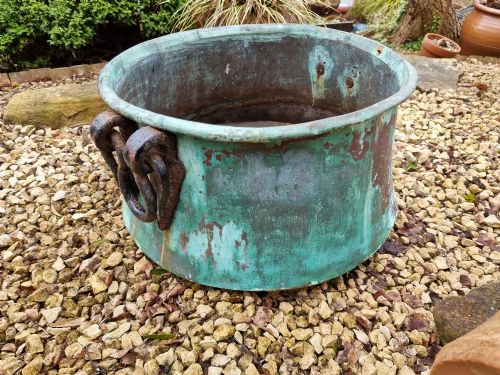
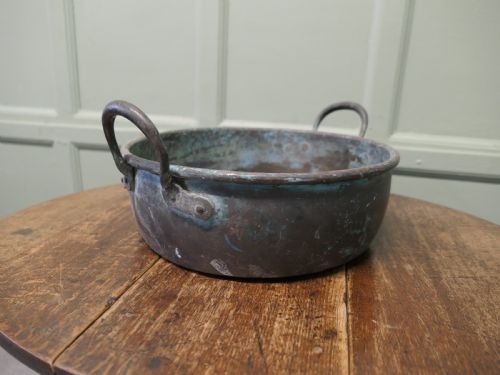
The version you are most likely to meet on this page is a nineteenth-century English or French piece, often showing the marks of heavy use in kitchens, dairies, or firesides. Many of these survive as wide pans with iron handles or deep cylindrical planters with rich patination.
Origins stretch from English country houses and Georgian kitchens to French provincial farmhouses and Middle Eastern workshops. Their forms reflect their original utility, whether meant for boiling preserves over an open hearth or storing logs beside a Victorian fireplace.
Materials and construction
Makers formed these pieces from heavy gauge copper sheets, shaped by hand-beating or hammering over metal stakes to achieve the desired vessel depth. This process created subtle undulations across the metal surface that catch the light differently than modern machine-rolled sheets.
Structural strength relied on robust secondary metals, utilising iron for swing handles, brass for mounts, and wrought iron for sturdy drop handles or fixed bails. Heavy copper rivets secured the overlapping seams of larger pots, cauldrons, and buckets to withstand the weight of liquids and fuel.
Rustic Copper Pot Retail Price Guide 2026
Typical asking prices for rustic copper pot among the pieces listed under this phrase on Sellingantiques today, from the lower quarter to the upper quarter. They describe what is for sale here now, not the wider market.
Several vintage pots crossed the Channel carrying French paint brushes before finding new lives on British display shelves.
Standards of craftsmanship
Quality in these utilitarian objects rests upon the thickness of the metal gauge and the integrity of the original construction. Heavy gauge copper maintains its structural form without excessive buckling, whereas thinner sheets yield easily to dents and distortion over decades of hard use.
The hand of the maker distinguishes superior examples through neat, evenly spaced riveting, well-balanced wrought iron handles, and harmonious proportions. Pieces retain greater character when their surfaces show natural ageing and verdigris rather than aggressive modern cleaning.
The Rustic Copper Pot Glossary
- Verdigris
- A green patina or crust that forms naturally on copper over time through exposure to moisture and the atmosphere. Collectors often prize this weathered surface for its decorative depth.
- Cauldron
- A large round metal pot with a wide opening, traditionally used over an open fire for boiling liquids or cooking. Examples in this category usually feature sturdy iron swing handles.
- Jam pan
- A wide, shallow cooking vessel designed for evaporating fruit and sugar mixtures evenly. They typically include one or two handles for lifting heavy contents from the hearth.
- Gauge
- The thickness of the sheet metal used to construct the vessel. Heavier gauges indicate robust utilitarian manufacture designed for commercial or large household kitchens.
- Bail handle
- A curved semicircular metal handle attached to opposite sides of a pot or bucket. In older pieces, these are frequently forged from wrought iron.
Rustic Copper Pot: Frequently Asked Questions
What were copper preserve pans used for?
Preserve pans served large households and commercial kitchens for boiling fruit and sugar down into jams and jellies. Their wide, shallow shapes allowed moisture to evaporate quickly over an open flame.
The excellent thermal conductivity of copper prevented the sticky mixtures from scorching unevenly on the bottom. Many survive today with sturdy iron handles designed to bear the heavy weight of boiling contents.
How do I clean a vintage copper pot?
Most collectors prefer to leave a natural, aged patina intact rather than polishing the metal to a bright shine. Gentle washing with warm soapy water removes dust and surface dirt without stripping the historical character.
Abrasive cleaners and harsh metallic pads should be avoided because they scratch the soft copper surface and destroy the subtle tonal variations accumulated over centuries.
Can I use an antique copper pot outdoors?
Many large vessels find a second life outdoors as garden planters, log bins, or potting shed accessories. Copper withstands outdoor elements well, gradually developing a rich green verdigris finish when exposed to rain and soil.
Drainage holes are rarely original to these pieces, so planters kept outside should be managed carefully to prevent standing water from accelerating internal corrosion.
How can I tell a Georgian pot from a Victorian one?
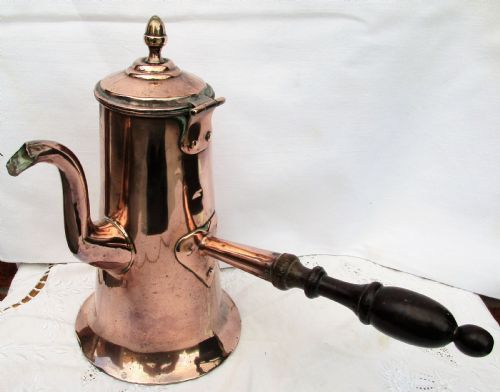
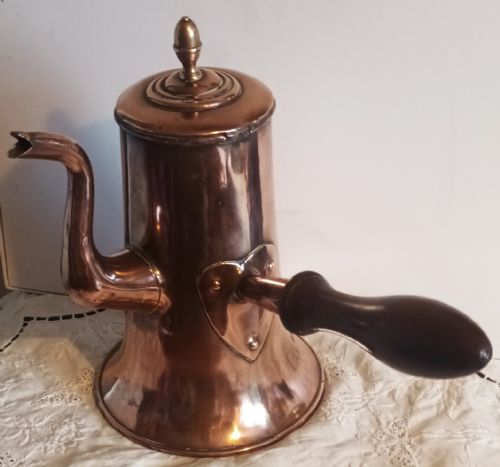
Georgian pieces, dating around the late eighteenth and early nineteenth centuries, often display simpler hand-beaten construction with distinct hammer marks from individual smiths. They frequently served formal kitchens as coffee pots, kettles, or cooking vessels.
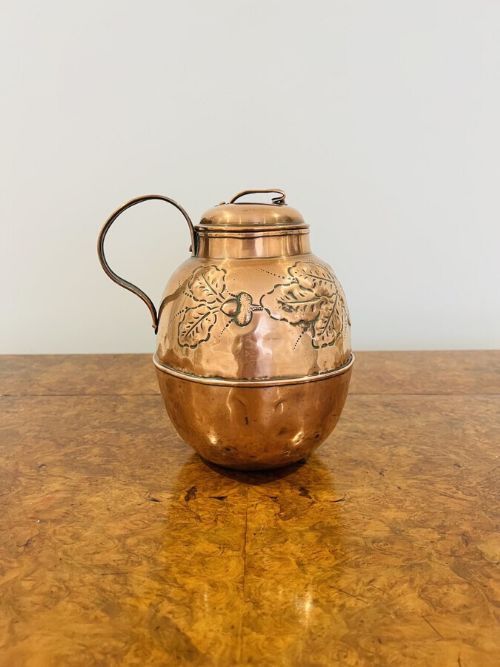
Victorian examples from the later nineteenth century frequently encompass heavier industrial forms, such as riveted coal buckets, Jersey cans, and standardised preserve pans produced in larger quantities.