

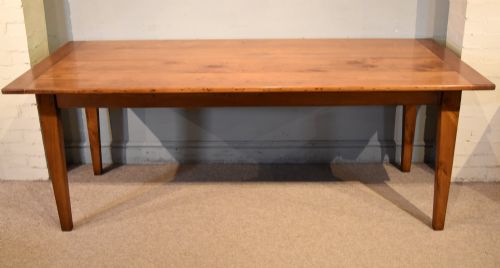
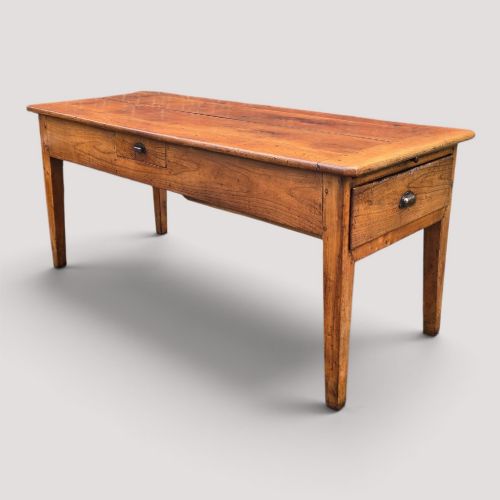
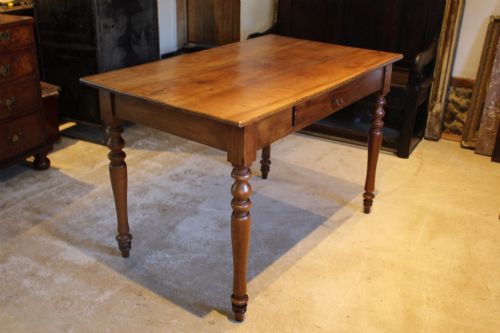
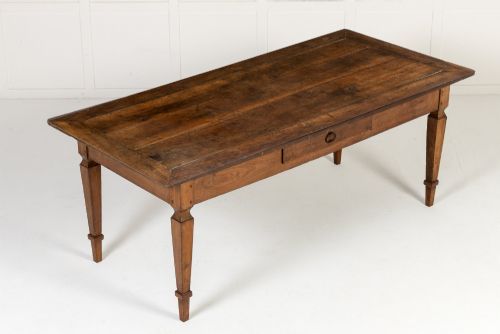
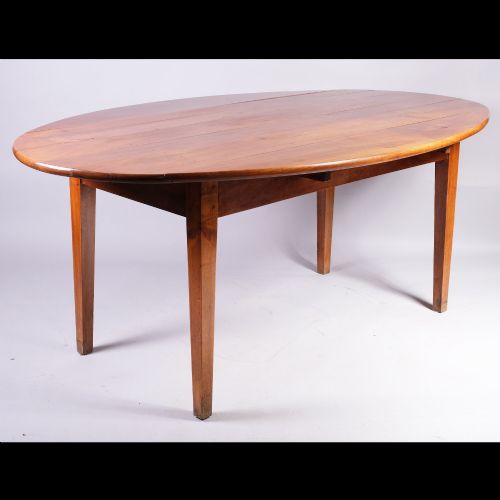
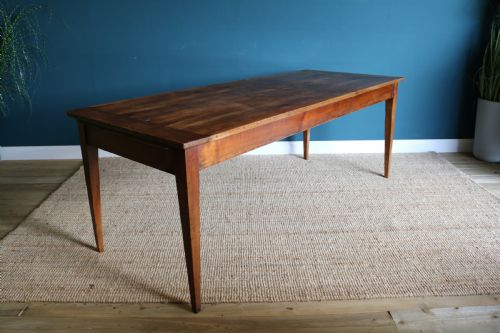
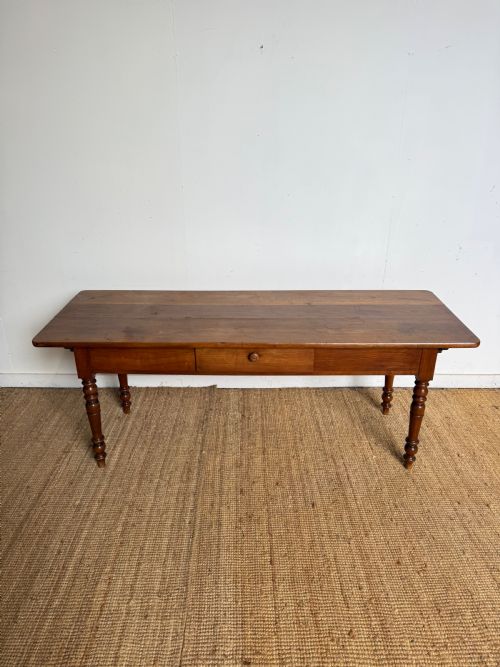
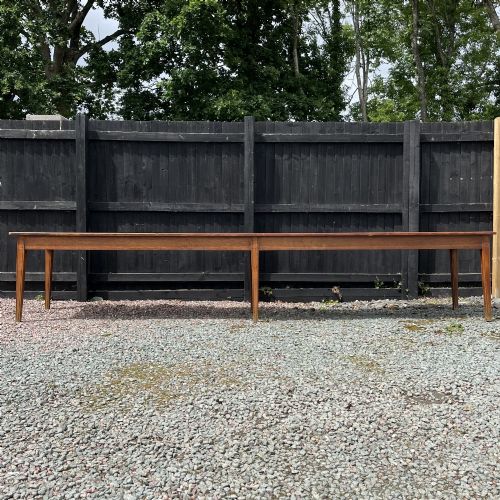
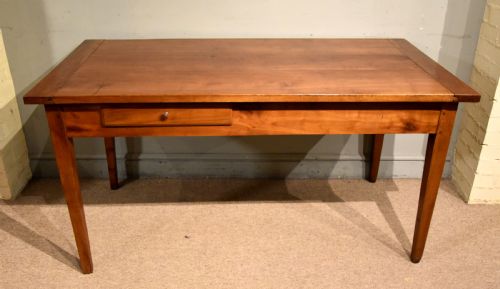


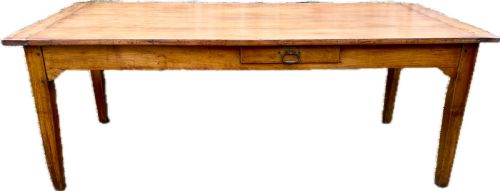


Rustic Cherry Farmhouse Table
A rustic cherry farmhouse table brings warmth and honest joinery into a room, offering a sturdy surface built for daily life.
Rustic Cherry Farmhouse Table
A rustic cherry farmhouse table is a practical working surface rooted in domestic history, predominantly originating from French provincial and country traditions. When searching for a rustic cherry farmhouse table, buyers encounter examples stretching from the eighteenth century through the Edwardian era, reflecting regional kitchen and dining use.
The geographical spread leans heavily toward French regional pieces, particularly from Bresse and broader provincial districts. These tables range from standard domestic dining sizes to substantial refectory proportions exceeding three metres in length.
What varies in quality
Quality in these tables rests primarily on the integrity of the timber selection and the depth of the natural patina. Pieces fashioned from dense, mature cherrywood exhibit a rich tonal variation that develops gracefully over generations, distinguishing them from simpler or later constructions.
Proportional harmony and regional detailing also set pieces apart, such as the execution of cabriolet legs or the precise fitting of sliding bread boards and drawers. The overall stability of the frame and the retention of original structural timber determine the standing of an individual table.
Rustic Cherry Farmhouse Table Retail Price Guide 2026
Typical asking prices for rustic cherry farmhouse table among the pieces listed under this phrase on Sellingantiques today, from the lower quarter to the upper quarter. They describe what is for sale here now, not the wider market.
Object types recorded across the inventory include dining tables, kitchen tables, console tables, coffee tables, and serving tables.
The Rustic Cherry Farmhouse Table Glossary
- Cherrywood
- A dense, close-grained hardwood prized for its warm reddish-brown colour and ability to age with a deep patina. It was a preferred medium for provincial cabinetmakers seeking both durability and refined appearance.
- Refectory table
- A long, narrow dining table originally built for communal dining halls and monastic refectories. In regional contexts, these provide extended seating capacity supported by robust stretcher frames.
- Bread board
- A wooden board integrated into the side or top of a table, historically pulled out to prepare dough or slice bread. Its presence indicates a piece designed for active kitchen work.
- Cabriolet leg
- A furniture leg that curves outward in a convex arc before tapering inward in a concave curve, ending in a foot. This style adds subtle sculptural movement to provincial designs.
- Provincial
- Refers to furniture made in the regions outside a capital city, often displaying local traditions and practical adaptations rather than strict adherence to court fashions.
Rustic Cherry Farmhouse Table: Frequently Asked Questions
Can I use a farmhouse table daily?
These tables were built specifically for heavy everyday use in active kitchens and dining rooms. Their sturdy hardwood construction handles family meals and daily tasks with ease.
Minor marks and bumps accumulated over time only add to the character and authentic patina of the piece. Normal domestic life will not harm a sound antique table.
What is a sliding bread board?
A sliding bread board is a pull-out wooden leaf integrated beneath the main tabletop. Historically, it provided extra workspace for kneading dough or slicing loaves in busy kitchens.
Today, it serves as a charming functional detail that demonstrates the original domestic purpose of the table. You can pull it out to extend the surface area temporarily.
How do I date an antique table?
Examine the construction methods, tool marks, and wear patterns visible on the underside and drawer interiors. Hand-cut joints and uneven timber thicknesses often point to earlier periods of production.
Compare the overall style and wood species with documented examples from similar regions and eras. Gradual fading and surface wear also help confirm the age of the timber.