


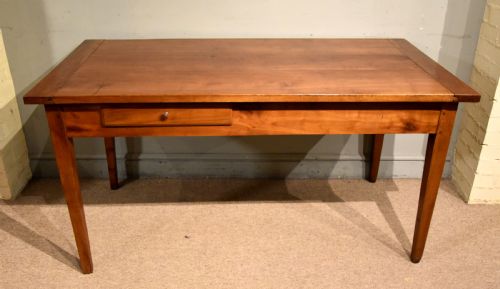


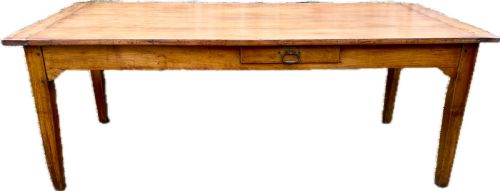


19th Century Cherry Dining Table
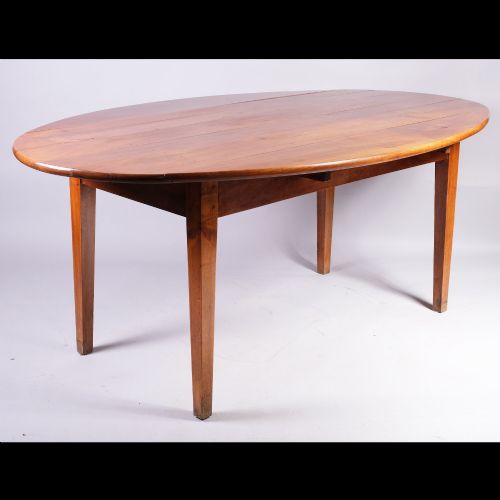
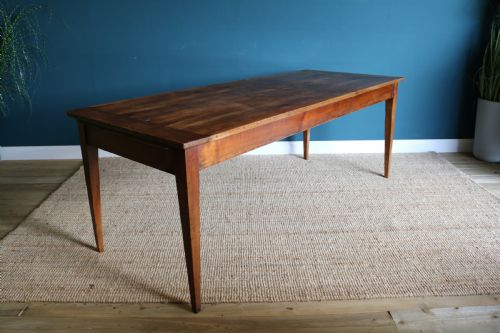
A 19th century cherry dining table brings warmth to a room through rich timber and honest French provincial craftsmanship.
19th Century Cherry Dining Table
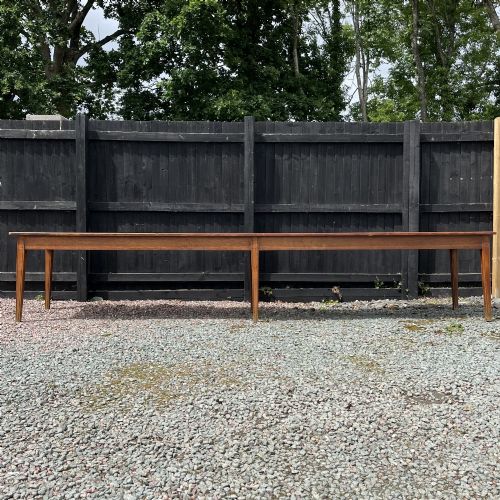
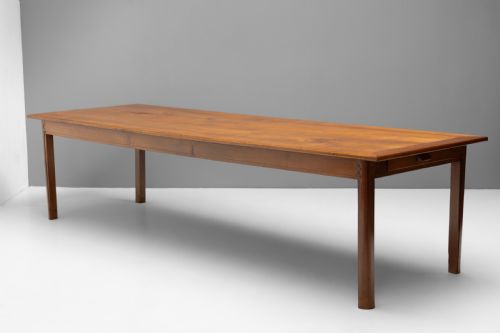
A 19th century cherry dining table serves as a sturdy gathering place, rooted in rural traditions across France. These pieces range from substantial refectory tables to clever extendable formats designed for daily utility.
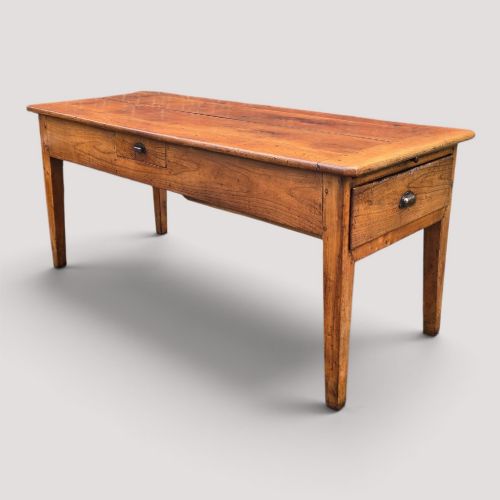
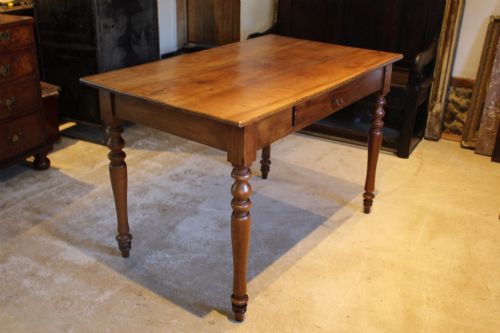
Most examples found here hail from French provincial or country workshops, displaying honest construction tailored for farmhouse or manor kitchens. Buyers frequently encounter forms featuring single drawers, sliding bread boards, or folding mechanisms.
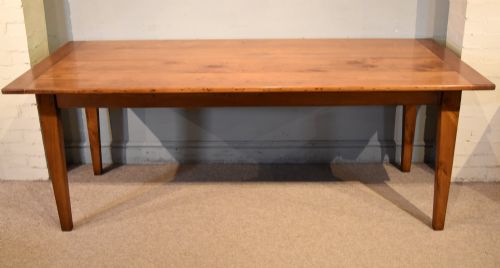
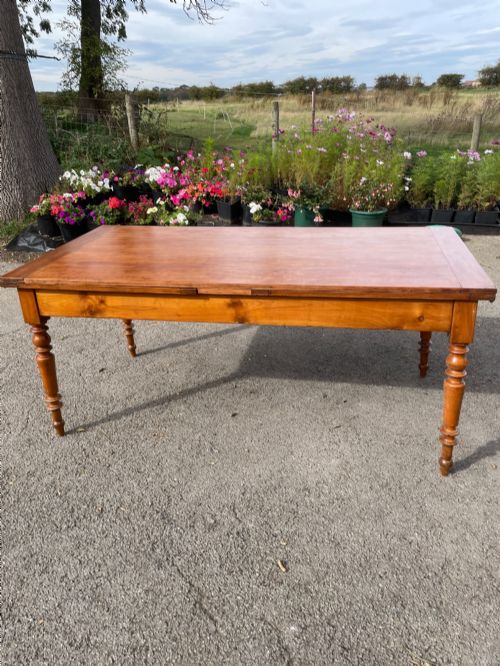
Makers utilised cherrywood alongside oak and fruitwood, creating surfaces that develop a deep, patinated character over decades of use. The typical table balances robust proportions with regional stylistic touches like turned or cabriolet legs.
Materials and construction
Carpenters built these tables primarily from solid cherry wood, often pairing the dense primary timber with structural oak for frames and supports. Fruitwood and general timber also appear, selected for local availability and hard-wearing utility.
Joinery methods focused on endurance, employing refectory framing, draw leaves, and clever folding mechanisms for vendange tasks. Practical elements like integrated drawers and sliding bread boards reflect the domestic routines of nineteenth-century kitchens.
19th Century Cherry Dining Table Retail Price Guide 2026
Typical asking prices for 19th century cherry dining table among the pieces listed under this phrase on Sellingantiques today, from the lower quarter to the upper quarter. They describe what is for sale here now, not the wider market.
Listings feature 19th century cherry dining tables alongside oak, fruitwood, and metal components across French provincial styles.
Judging quality and character
Quality rests in the depth of the cherry timber's patina and the integrity of the original construction rather than uniform perfection. Tables featuring sophisticated mechanical additions like double extensions or clever bread slides demonstrate higher regional ambition.
The choice of supporting architecture, from simple tapered legs to more sculptural cabriolet shapes or turned supports, distinguishes standard utility pieces from finer manor house examples.
The 19th Century Cherry Dining Table Glossary
- Cherrywood
- A dense, close-grained timber harvested from fruit trees that deepens to a rich reddish-brown colour with age. It forms the primary surface material for these regional French tables.
- Vendange table
- A specialised harvest table designed with folding or drop leaves for ease of storage during vineyard work. These clever variants often incorporate robust oak framing alongside cherry.
- Bread slide
- A pull-out wooden board integrated beneath the tabletop surface historically used for slicing bread. This practical feature appears frequently on provincial kitchen tables.
- Refectory
- A long, narrow dining table style traditionally built for communal dining halls. In nineteenth-century rural contexts, these heavy timber tables anchored the farmhouse kitchen.
19th Century Cherry Dining Table: Frequently Asked Questions
How do I care for a cherry wood table?
Protect the surface from excessive moisture and direct heat by using coasters and placemats during daily meals.
Feed the timber periodically with natural wax to maintain the rich lustre of the old finish.
Were these tables used in kitchens?
Many examples served as heavy-duty workspace tables in large farmhouses and manor kitchens before entering the dining room.
Practical additions like drawers and bread boards point directly to food preparation and daily domestic tasks.
How do extension mechanisms work?
Double extending designs utilise internal draw leaves that pull smoothly from beneath the main surface to increase seating.
Vendange tables rely on folding actions, while other formats incorporate clever sliding elements to expand the top.
What defines French provincial style?
This regional aesthetic prioritises sturdy utilitarian construction combined with subtle decorative details like cabriolet legs.
Craftsmen built these tables to withstand rigorous daily farm life while maintaining a warm domestic appearance.