
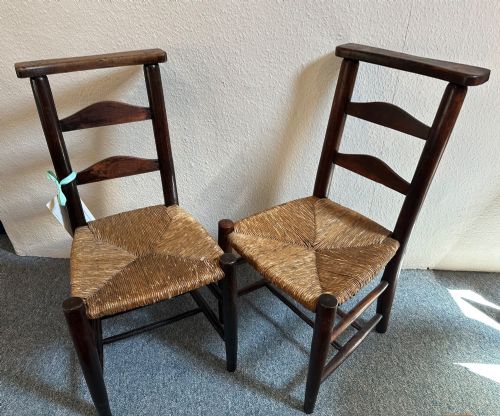


Rush Seated Ladder Backs
Rush seated ladder backs are vernacular wooden chairs defined by horizontal slats and woven rush seats, chosen for their honest construction and rustic utility.
Rush Seated Ladder Backs
Rush seated ladder backs encompass sturdy dining chairs, carvers, armchairs, and rocking chairs originating from English, French, Dutch, and Swedish regional traditions. These domestic seats emerge primarily from nineteenth and early twentieth century workshops, spanning periods from Georgian and Victorian country styles through to the Arts and Crafts movement.
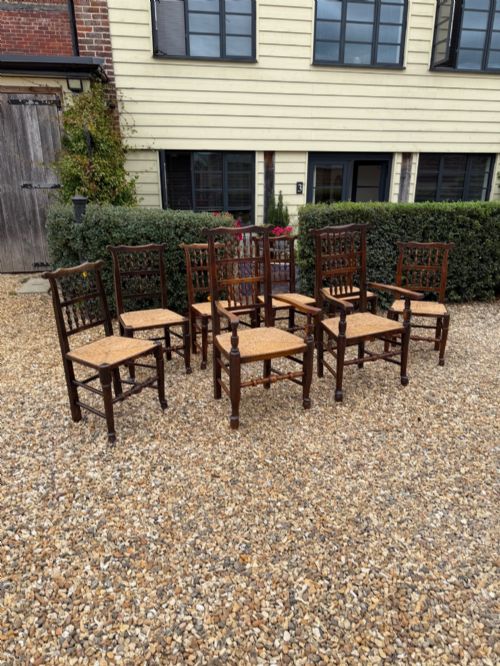
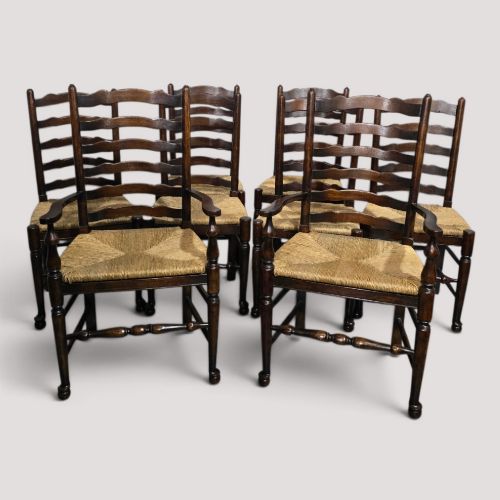
Buyers encounter single examples, matched pairs, and larger dining sets numbering up to ten or twelve pieces. Forms range from simple kitchen seating and child high chairs to refined studio pieces produced by notable makers for specific commissions.
How they were made
Local timbers such as ash, oak, elm, beech, and occasionally mahogany form the structural frames of these chairs, shaped through traditional turning and bending techniques. Frames are constructed with joined stretchers to ensure stability under daily domestic use.
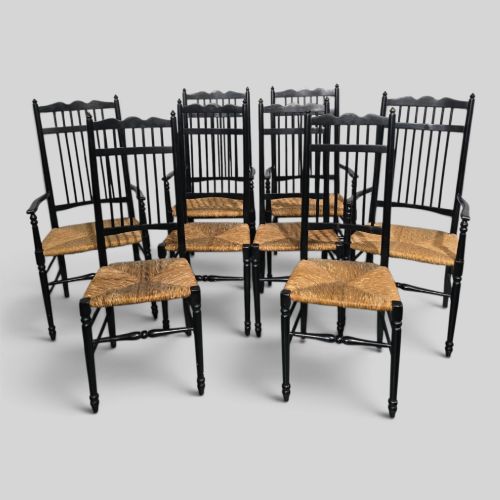
Seats are woven by hand using natural rush materials, threaded tightly around the seat rails to create a durable, textured surface. Some regional examples incorporate painted finishes upon the wooden framework to complement provincial interiors.
Sturdy ladder backs once served institutional dining halls, including authenticated seating marked specifically for St Paul's Cathedral.
What varies in quality
Quality rests upon the integrity of the timber selection and the precision of the frame joinery, distinguishing heavy utilitarian seating from refined maker-attributed pieces. The tightness, gauge, and preservation of the woven rush seat dictate the primary level of craftsmanship.
Proportion, balance, and the subtle tapering of the horizontal back slats separate standard provincial workshop output from the deliberate aesthetic design seen in Arts and Crafts interpretations.
Philip Clissett·Dicon Nance·Lawrence Neal·Edward Gardener·Liberty & Co·Heals
The Rush Seated Ladder Backs Glossary
- Ladder back
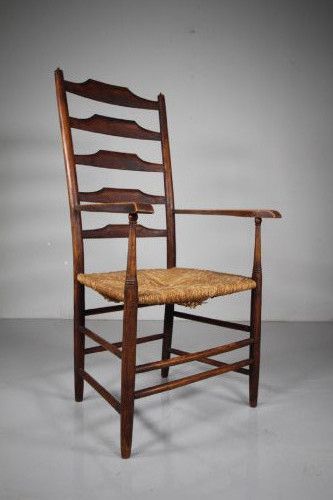
- A chair featuring a backrest composed of multiple horizontal wooden rails or slats stacked between two upright posts. These slats are often curved to fit the contours of the sitter's back.
- Rush seat
- A seating surface tightly hand-woven from dried marsh reeds or flags wound around a wooden frame. This traditional method yields a flexible, hard-wearing texture.
- Spindle back
- A variation of regional seating where vertical turned wooden rods replace horizontal slats in the backrest. These members offer lighter visual weight while maintaining structural support.
- Arts and Crafts
- A design movement spanning the late nineteenth and early twentieth centuries that champions hand-craftsmanship and honest vernacular forms over industrial mass production.
Rush Seated Ladder Backs: Frequently Asked Questions
How do I care for a rush seat?
Keep natural rush seats dry and clean them gently with a soft brush to remove dust. Avoid excess moisture, which can weaken the dried plant fibres over time.
Maintain humidity levels in the room to prevent the material from becoming brittle or cracking under pressure.
Can these chairs be used daily?
Most ladder backs are built for practical domestic dining and kitchen use. Their sturdy wood frames and woven seats handle regular daily sitting.
Ensure joints remain tight and inspect the rush periodically if placed around a busy family dining table.
What is a carver chair?
A carver is an armchair styled to coordinate with a set of side chairs around a dining table. They provide additional arm support for the ends of the table.
Historically, these were slightly larger pieces intended for the head of the household.
How are different periods identified?
Dating relies on timber characteristics, tool marks, and specific regional stylistic markers. Earlier pieces often display hand-turned components and heavier country proportions.
Later Arts and Crafts interpretations exhibit cleaner lines and documented maker stamps or workshop labels.