
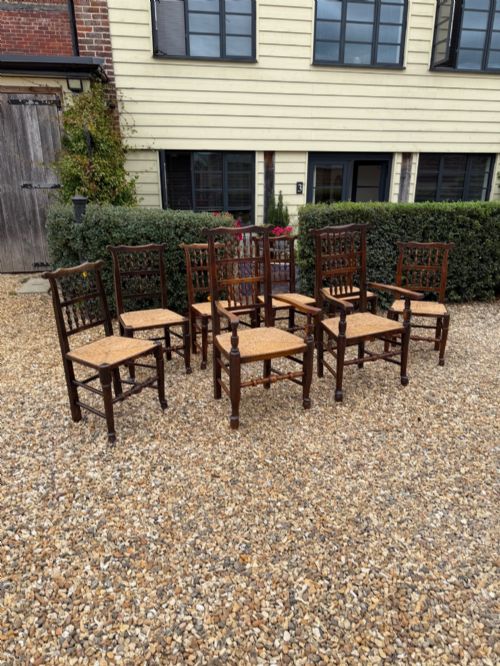
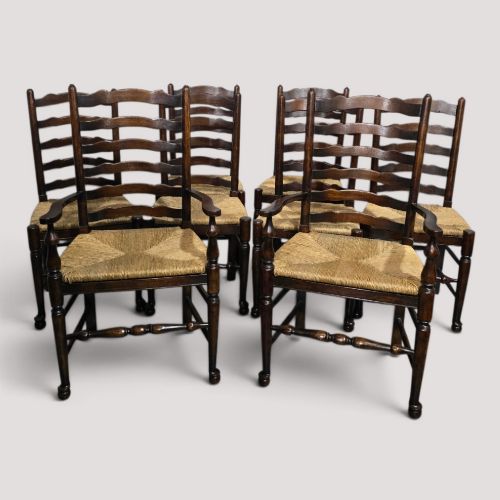


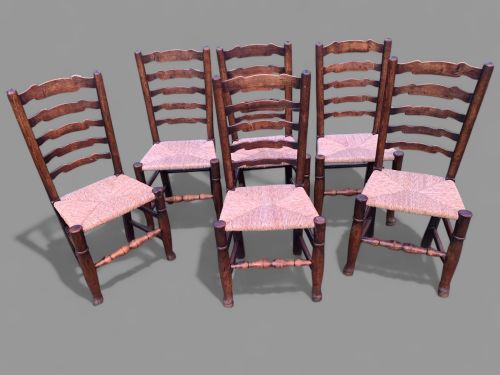


Georgian Oak Ladder Backs
Georgian oak ladder backs are sturdy vernacular seating pieces built for everyday utility, offering timeless country charm to any interior.
Georgian Oak Ladder Backs
Buyers meet sets of dining chairs alongside individual armchairs and rocking variants. Materials extend beyond oak to include ash and elm, often paired with rush seating.
Origins range across English country regions and Ireland, displaying vernacular styles from the Georgian period up to later revival interpretations.
How they were made
Cabinet makers utilised solid native timbers such as oak, ash, and elm for the frames and horizontal slats. Turned uprights and arched ladder rails provide structural support while maintaining a light profile.
Seats utilise woven rush or textile elements, secured within the wooden framework by hand. Construction methods rely on traditional pegged joints rather than metal fixings.
Listings feature oak, ash, and elm combined with rush and textile materials across the eighteenth and nineteenth centuries.
What varies in quality
Construction integrity distinguishes standard regional output from superior examples, particularly in the tightness of the turned joints and the thickness of the frame. Original surface patination and timber selection elevate certain pieces above later or heavily restored equivalents.
The survival of an intact rush seat and matching sets of four, six, or eight chairs determines desirability. Subtle variations in the turning of the rails and the height of the ladder backs reflect the skill of the original provincial workshop.
The Georgian Oak Ladder Backs Glossary
- Ladder back
- A chair featuring multiple horizontal arched rails between the uprights, resembling the rungs of a ladder. This vernacular design gained popularity in country houses.
- Rush seat
- A seating surface woven from dried marsh grasses twisted into cords. It provides a resilient and traditional base for wooden chairs.
- Vernacular
- Everyday furniture built by local tradesmen using regional traditions rather than following metropolitan court styles. These pieces prioritise practical utility over ornamental display.
- Turned
- Shaped on a lathe by rotating the wood against a cutting tool to create cylindrical or spindle-like profiles. This technique decorates the legs and stretchers.
- Elm
- A durable hardwood noted for its interlocking grain and resistance to splitting, frequently used for chair seats. It provides strength in structural components.
Georgian Oak Ladder Backs: Frequently Asked Questions
What periods do these chairs cover?
The listings encompass items from the eighteenth and nineteenth centuries, including specific dates around seventeen-ninety alongside later twentieth-century interpretations.
Craftsmen produced these vernacular designs across generations, maintaining traditional country styles long after formal court tastes shifted.
Which room suits a ladder back?
Dining rooms accommodate sets of ladder back chairs around a central table, whilst individual armchairs or rockers fit comfortably in a living space or hallway.
Their robust construction and straightforward timber frames blend easily into both traditional period interiors and modern rustic settings.
How do I identify regional variations?
Regional differences appear in the turning of the uprights, the arch of the ladder rails, and the choice of native woods such as ash, oak, or elm.
Irish examples and pieces from specific areas like Cheshire display distinct local traditions in their joinery and proportions.
What materials make up the seats?
Traditional rush forms the primary seating material across many of these chairs, providing a textured and supportive surface.
Some examples also incorporate textile additions or velvet elements depending on the specific date and style of the piece.